Three needles, three completely different jobs — that’s the short version of what separates Rejuran, Juvelook, and exosomes, and most of the confusion online comes from treating them as competitors instead of tools for different problems. Rejuran repairs a thin, reactive barrier. Juvelook asks your own skin to build structure it stopped making years ago. Exosomes calm things down fast, which matters more than volume when your face is actually inflamed. None of them are interchangeable, and picking the wrong one wastes a treatment cycle you won’t get back for months.
I was pressing a damp square of paper towel against a pinprick near my jaw, phone propped against a coffee mug, trying to read a reschedule text from the clinic. Three faint red dots, already going pink instead of red. That’s the entire visible aftermath of a skin booster session — which is sort of the appeal, and also, for about 48 hours, mildly annoying when you’re trying to eat toast like a normal person and keep catching your reflection in the toaster.
By 2026, “skin booster” has become one of those umbrella terms that means almost nothing on its own. Ask three different clinics what they inject under that name and you’ll get three different molecules, three different depths, three different recovery timelines. So let’s actually separate them — Rejuran, Juvelook, and exosomes — by what each one is chemically doing under the skin, not by which one has the prettiest Instagram before-and-afters.
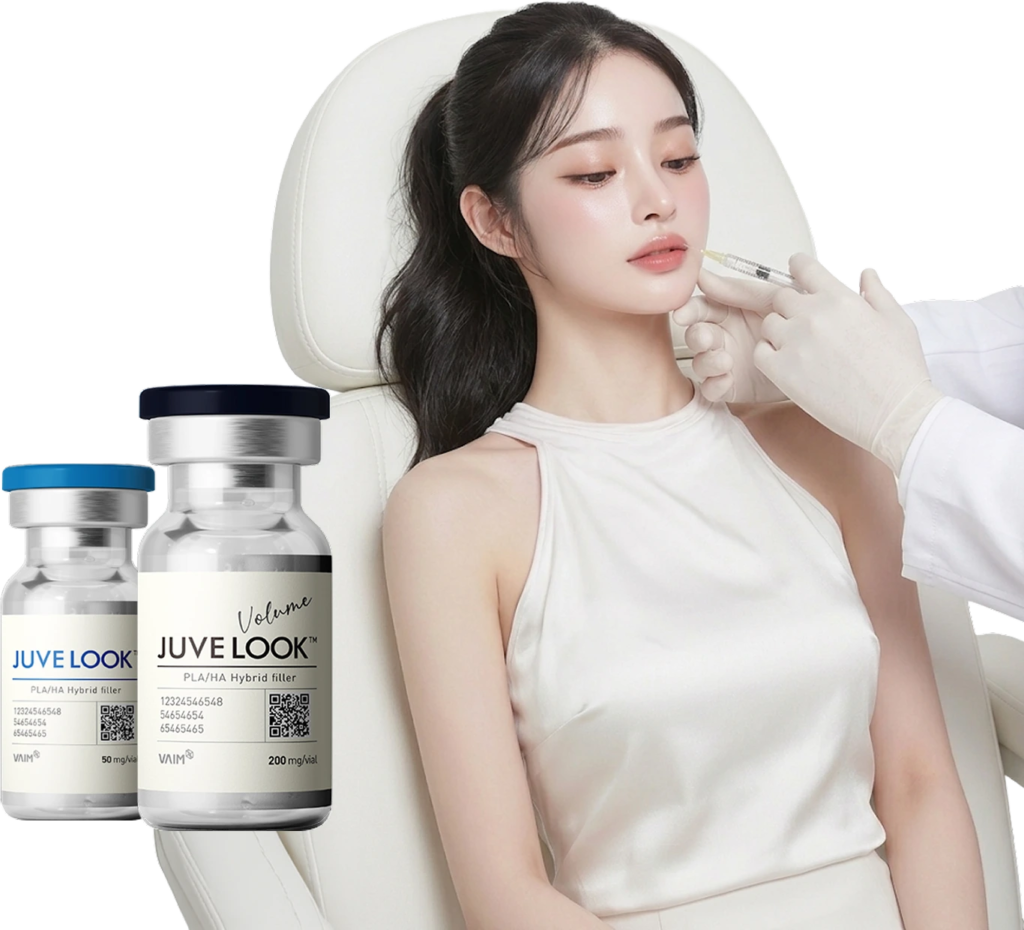
When your barrier feels thin, tight, and won’t hold hydration — Rejuran
Rejuran is built on PN, or polynucleotide — fragments of DNA, in this case sourced from salmon, purified down to a form your body reads as a repair signal rather than as foreign material. (Some clinics still use the older shorthand PDRN, which is technically a related but not identical compound — worth asking your provider which one they’re actually using, since they’re not priced the same.) Once injected into the dermis, these fragments bind to adenosine receptors and nudge fibroblasts into producing more of their own repair proteins. Nothing is “activated” in a dramatic sense — it’s closer to handing the skin’s existing repair machinery a set of instructions it was already capable of following, just not doing efficiently.
Rejuran — PN/PDRN (Salmon-Derived Polynucleotides) | Direct dermal action: targets barrier fragility, chronic dryness, fine textural roughness, and post-procedure or post-sun reactive skin; works primarily by improving the skin’s own hydration retention and reducing inflammatory reactivity, rather than adding volume.
Results build slowly and don’t look dramatic in a mirror-selfie way, which, in fairness, took me longer to appreciate than I expected — I wanted “different” by week two and mostly just got “less tight.” By week six, the difference showed up less in how my skin looked and more in how it behaved: less reactive to a new serum, less prone to that tight, papery feeling by late afternoon.
When you want your own collagen doing the actual work — Juvelook
Juvelook is a different chemistry entirely: poly-D,L-lactic acid, or PDLLA, suspended in a hyaluronic acid carrier gel. The HA does the immediate, short-term job — plumping and hydrating on day one. The PDLLA microparticles are the slower story. They sit in the dermis and gradually degrade over weeks, and as they break down, they provoke a mild, controlled inflammatory response that triggers fibroblasts to lay down new type I and type III collagen around the particle sites. This is neocollagenesis — new collagen formation — and it’s the same broad mechanism behind older PLLA fillers, just refined into a finer, more evenly dispersible particle size meant for boosting rather than sculpting.
Juvelook — PDLLA Microspheres + Hyaluronic Acid Carrier | Direct dermal action: stimulates gradual, self-generated collagen synthesis for enlarged pores, atrophic (pitted) acne scarring, and early skin thinning; the HA base provides immediate hydration while the PDLLA provides the delayed structural benefit over roughly two to three months.
This is the one where patience is the actual price of admission. Most people quit after one session because nothing visible happens for weeks, then feel confused when a friend who did three sessions six weeks apart has noticeably smaller pores by month three.
When inflammation is the real problem, not lack of volume — Exosomes
Exosomes work differently again, and it helps to be plain about what they are: tiny extracellular vesicles, roughly 30 to 150 nanometers, released by stem cells (most commonly derived from adipose tissue or umbilical cord sources, depending on the manufacturer). They don’t add structure the way Juvelook does or repair the barrier matrix the way Rejuran’s PN fragments do. Instead, they carry cargo — proteins, growth factors, microRNA — and deliver it directly into surrounding skin cells, essentially passing along molecular instructions that tell nearby cells to reduce inflammatory signaling and speed up their own repair processes. The effect shows up fast, often within days, because you’re not waiting on the skin to slowly synthesize anything — you’re just delivering signals it already knows how to read.
Exosomes — Stem-Cell-Derived Extracellular Vesicles | Direct dermal action: rapid anti-inflammatory signaling for active rosacea, post-laser redness, sensitized or reactive skin, and situations needing visible calming within days rather than weeks; not primarily a volumizing or structural treatment.
I’ll admit I was skeptical of exosomes going in — the marketing around them still outruns the clinical data in a lot of markets, and regulatory approval varies wildly by country, which nobody selling them tends to mention upfront. That skepticism hasn’t fully gone away. But for a friend with persistent post-laser redness that Rejuran alone hadn’t touched after two sessions, adding an exosome treatment calmed things down within about five days in a way nothing else had.
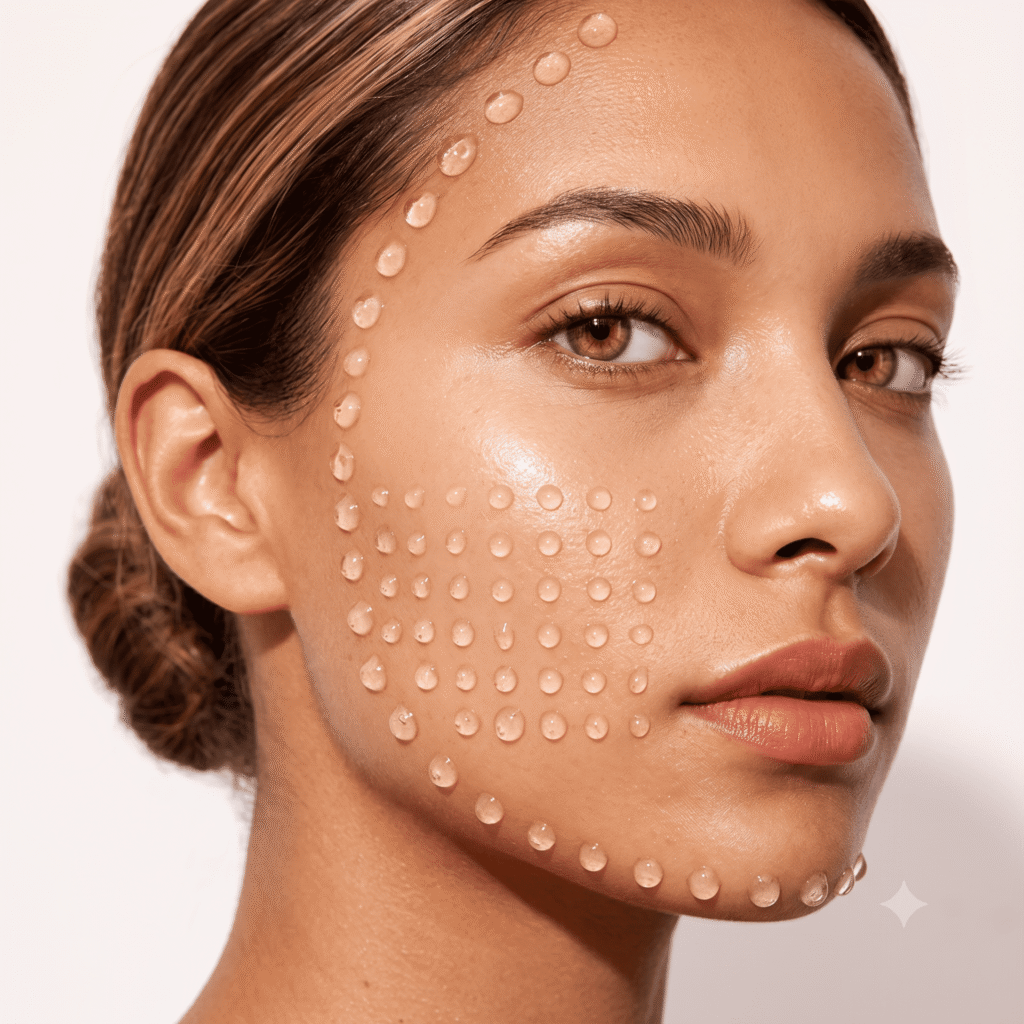
Picking between three needles: how I’d actually choose
Here’s the part nobody puts in a comparison chart: these three aren’t ranked best-to-worst, they’re suited to different starting problems, and a lot of clinics in 2026 are combining two of them in the same visit — Rejuran for barrier groundwork, then exosomes layered in for anyone dealing with active irritation on top of that. If your main complaint is that your skin looks thin and drinks moisturizer without ever looking hydrated, Rejuran’s polynucleotide repair mechanism addresses that directly. If your complaint is structural — visible pores, shallow acne scarring, a general loss of bounce — Juvelook’s slow collagen stimulation is doing something Rejuran genuinely isn’t built to do. And if your skin is actively inflamed right now — flushed, reactive, recovering from something — exosomes are the only one of the three engineered to calm that down quickly rather than build toward it over months.
None of this is instant, and none of it replaces sunscreen, which — I’ll say this once, plainly — undoes more of the year’s treatment budget than any single missed booster session does.
Choosing Your 2026 Skin Booster: The Actual Decision
Editor’s Note: If I had to pick one contrarian stance from all of this, it’s that exosomes are currently the most overhyped of the three relative to how much long-term data actually exists on them — genuinely useful for acute inflammation, genuinely oversold as a universal “reset” for everything else. Rejuran and Juvelook have the longer track record and, frankly, the more predictable results for the money.
How to apply this, by situation:
- Primary concern is dryness, thinness, or barrier reactivity: start with Rejuran; expect a 3–4 session course spaced about two to three weeks apart before judging results.
- Primary concern is enlarged pores or pitted acne scarring: start with Juvelook; give it a full 8–12 week window before evaluating, since the collagen response is inherently delayed.
- Primary concern is active redness, rosacea flares, or post-procedure irritation: exosomes are the more targeted choice, often noticeable within a week.
- Recovering from a laser or peel and skin is reactive: exosomes first for calming, Rejuran layered in afterward for longer-term barrier support.
- Maintenance once initial results are visible: most clinics space touch-ups at three- to four-month intervals rather than a fixed monthly schedule — ask your provider to base it on how your skin is actually behaving, not a generic calendar.
This article reflects general treatment mechanisms discussed publicly by dermatology providers as of 2026 and isn’t a substitute for an in-person skin assessment — your barrier, your scarring, and your redness are yours specifically, and a consult will catch things a comparison article never could.
Leave a Reply