Ice is not the answer, and neither is doing nothing until the redness fades on its own. Thermal skin damage from heat and UV exposure needs a specific, gradual sequence — chilled botanicals before barrier repair, never the reverse — or you end up trading one kind of stress for another. This is the 15-minute window that actually matters, written by someone who has gotten it wrong more than once.
I part my hair to towel-dry it and stop. The comb catches on something tender at the crown — a strip of scalp gone tight and hot, the kind of hot that has its own pulse to it — and I realize I never redid the part-line sunscreen after lunch. Just the part. A half-inch stripe of exposed skin, and somehow that’s the one that hurts the most by evening.
This is where after-sun care usually goes wrong before it even starts: we treat the face and shoulders like the whole story, and forget the seams. Part lines. Ear tips. The bridge of a foot in a sandal. These are thin-skinned, low-melanin, frequently-missed zones, and they’re often the first to register thermal aging — the cumulative breakdown of collagen and lipid structure from heat, distinct from but compounding UV-driven photo-aging.
When flushed skin meets ice, and why that backfires
The instinct is almost universal. Skin is hot, so you reach for the coldest thing in the freezer. I did this once with a bag of frozen peas straight onto my collarbone after a beach day, and within a minute the skin had gone from angry-pink to a strange, blotchy white-and-red pattern that looked worse than the burn itself.
That’s micro-vascular shock, and it’s a real mechanism, not just discomfort. Heat-flushed skin has dilated capillaries doing the work of releasing internal heat — that’s the redness. Slam it with sub-zero temperature and those vessels constrict violently and unevenly, some snapping shut faster than others. You get patchy blood flow, sometimes minor bruising under the surface, and — this is the part people don’t expect — a delayed rebound flush about twenty minutes later that can feel hotter than what you started with. The skin isn’t cooling. It’s panicking.
(I want to be clear this took me an embarrassingly long time to learn, given how obvious it sounds written down.)
Gradual thermal reduction is the actual goal — dropping skin temperature by a few degrees at a time, giving the vascular system room to adjust rather than react. Which is a less satisfying answer than “put ice on it,” I know. It’s also the one that doesn’t leave you with capillary damage on top of sun damage.
The first 15 minutes: an emergency cooling protocol
This isn’t a rigid clock. It’s ordered by what the skin needs to happen first, and each step waits for the previous one to actually register before moving on — sometimes that’s ninety seconds, sometimes it’s four minutes, skin doesn’t run on a stopwatch.
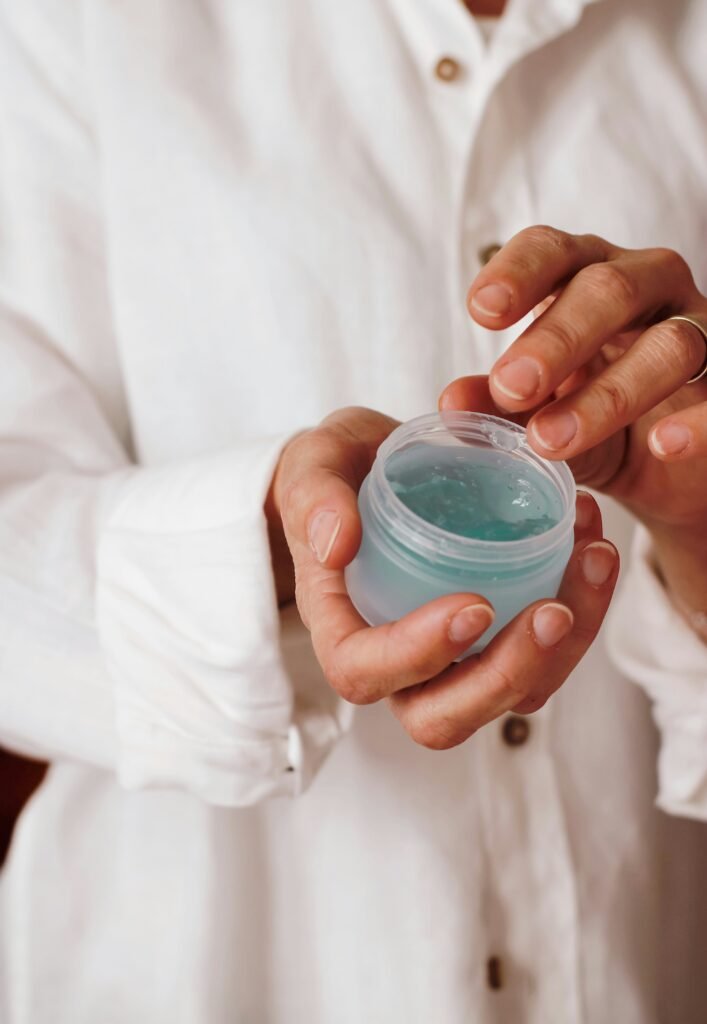
Step 1 — Chilled Centella Asiatica gel, stored at 4–8°C | For skin still radiating visible heat and tightness
Centella asiatica (often labeled cica) contains triterpenoids — asiaticoside, madecassoside — that support collagen synthesis and calm inflammatory signaling at the site. Applied cold but not frozen, it drops surface temperature gradually while the actives start addressing the inflammatory cascade underneath. Pat, don’t rub. Rubbing flushed skin is its own small betrayal.
Step 2 — Aloe Vera gel, room-to-cool, applied in a thin second layer | For residual heat 5–10 minutes after Step 1
Aloe’s polysaccharides form a light hydrating film and its natural cooling comes from evaporative water content, not temperature shock. This is the step that most people skip because it feels redundant with Step 1 — it isn’t. Cica calms; aloe hydrates and continues the temperature taper.
Step 3 — A five-minute pause, hands off | For letting the skin’s own thermoregulation catch up
Nothing applied here. This is the step I most often forget, honestly, because standing around doing nothing to a burn feels wrong. But the skin needs a beat without new input to stabilize before barrier-repair actives go on top of it.
Step 4 — Ceramide-based cream or barrier balm, thin layer | For sealing in moisture without trapping residual heat
More on this below — this is where repair actually begins, not just comfort.
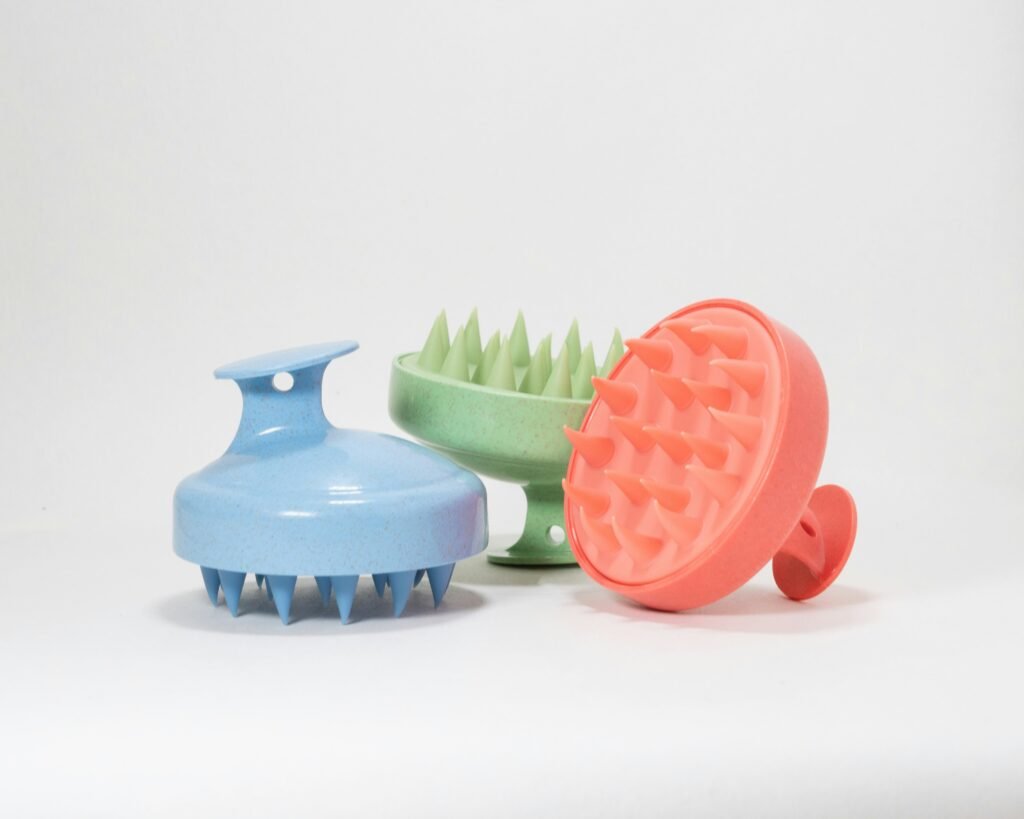
Step 5 — For scalp specifically: a cooling leave-on mist along the part line, fingertip-applied | For zones sunscreen typically misses
The scalp doesn’t tolerate heavy creams well — hair gets in the way, and occlusive layers there just trap heat against skin that’s already inflamed. A lightweight mist with the same cica-and-aloe logic, worked in with fingertips rather than a full massage, does the job without the greasy aftermath.
Rebuilding the barrier once the heat is out
Here’s the part that gets skipped most often: cooling is not repair. It’s triage. The actual damage — thermal aging breaks down the skin’s intercellular lipid matrix, the same ceramide-cholesterol-fatty acid structure that UV degrades over time, except heat does it faster and more acutely — needs a different kind of intervention.
Ceramides are the mortar between skin cells, structurally. Sun and heat exposure strip them, which is why sunburned skin feels tight, papery, sometimes flaky within a day or two — the barrier’s lost its seal and water is escaping faster than it should (transepidermal water loss, if you want the clinical term for it, though I try to avoid leaning on jargon in something meant to feel like advice from a friend rather than a derm’s chart notes).
Layering ceramides after the cooling stage, once skin temperature has actually dropped rather than just feeling less hot, gives the lipid matrix material to rebuild with. Applied too early — onto skin still in active thermal distress — ceramide creams can feel occlusive and heavy, trapping heat under the layer instead of sealing moisture in. Timing matters here almost as much as the ingredient does.
A note on niacinamide, since it shows up in half the after-sun formulas on shelves: it supports barrier lipid synthesis too, and pairs reasonably well with ceramides in a follow-up layer once the acute redness has settled, usually the next morning rather than that same evening.
Repairing the Damage, Not Just the Discomfort
Editor’s Note: Most after-sun advice treats redness as the injury. It isn’t — it’s the visible symptom of a barrier breakdown that keeps happening quietly for days after the skin looks “fine” again. I’d rather see people under-treat the sting and over-treat the barrier than the other way around, which is the opposite of what most product marketing pushes.
How to apply this, by situation:
- Immediate Cooling (skin still hot, within the hour of exposure): chilled cica gel first, aloe second, hands-off pause before anything else goes on — skip ice entirely, even the tempting bag-of-peas kind
- Barrier Repair (once temperature has actually dropped, not just calmed visually): thin ceramide layer, niacinamide follow-up the next day if redness persists
- Moisture Sealing (evening, before sleep, once skin no longer feels warm to the back of your hand): slightly heavier ceramide balm is fine here — the risk of trapping heat is lower once the skin’s actually cooled through
- Scalp and part-line specific: lightweight mist, fingertip application, no heavy oils until the tenderness has fully subsided — usually a day or two later
This is general skin-comfort guidance, not a substitute for medical care — if a burn blisters, covers a large area, or comes with fever or chills, that’s a conversation for a doctor, not a magazine.
Leave a Reply