This is the routine I now run on every long-haul flight, built after one too many puffy-ankled landings and a tray table I’d rather forget. It covers the four habits that actually earned a permanent spot in my carry-on: wiping down high-touch surfaces, laying down a personal seat cover, practicing smarter lavatory habits, and managing the swelling that creeps in somewhere over the ocean. None of it is glamorous. All of it works better than I expected.
Last month at 10:45 PM, somewhere over the Pacific with the cabin lights already dimmed, I reached down to unclip my seatbelt and my fingers landed on something faintly sticky. I couldn’t identify it. I still can’t. That’s the moment this whole routine started — not a wellness epiphany, just a slightly grossed-out realization that I’d been touching a tray table, a screen button, and a seatbelt buckle for nine hours without thinking about any of them once.
I’ve now flown this same long-haul route four times with a version of this system in place, tweaking it each round. Some of it is habit I picked up from frequent flyers I met in transit lounges. Some of it comes from actual research on cabin surfaces and circulation, which I’ll flag clearly wherever it applies. I am not a doctor, and I don’t want to sound like one — I’m an editor who got curious about why my ankles looked like someone else’s by hour eight, and started taking notes.
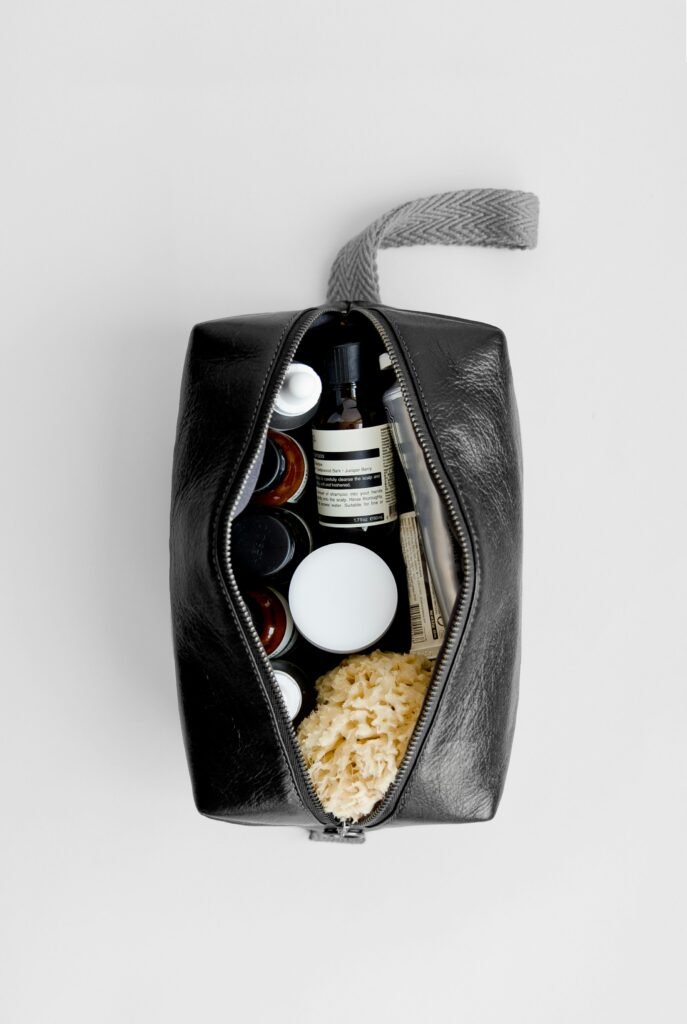
1. Sanitizing the High-Touch Spots Before You Settle In
The first thing I do now, before the safety demo even starts, is wipe down four spots: the tray table, the seatbelt buckle, the screen and its remote if there is one, and the armrest edges. I use individually wrapped alcohol wipes, not a shared travel pack I’ve already opened — sealed ones feel less like a gamble in a space this enclosed.
Tray tables in particular have a bad reputation among frequent flyers, and it turns out that reputation is earned. Aviation hygiene research has repeatedly flagged tray tables as one of the more contaminated surfaces on a plane, partly because cleaning crews have a narrow turnaround window between flights and partly because passengers use them for everything from diaper changes to laptop stands. I used to assume the seatback pocket was the worst offender — or so I assumed, until I actually read up on it and found the tray table beats it by a wide margin in most surface-sampling studies.
My honest admission here: I skipped this step on my very first long-haul flight of the year, told myself I’d “probably be fine,” and landed with a scratchy throat two days later that may or may not have been related. Correlation isn’t proof, but I haven’t skipped the wipe-down since.
2. Bringing a Personal Linen Seat Cover
This one felt slightly precious to me at first — packing a folded cotton seat cover felt like something out of a first-class amenity kit, not something I’d actually use in economy. I was wrong about that. It takes under a minute to lay over the seatback and cushion, and it means my clothes and the back of my neck aren’t in direct contact with upholstery that gets, at best, a vacuum between flights rather than a deep clean.
I now keep a lightweight linen one folded into a packing cube specifically for this. It also doubles as a light blanket over my knees when the cabin gets cold, which was an unplanned bonus the first time I used it. Textile hygiene research on public seating surfaces, including transit seating, generally supports the idea that fabric surfaces hold onto skin cells, oils, and airborne particles longer than hard surfaces do — which is part of why a barrier layer, however simple, seems to make sense.
3. Practicing Smarter Lavatory Etiquette
I’ll admit this section required me to unlearn some genuinely bad habits. I used to go into the lavatory in socks, semi-asleep, and grip the door handle with my bare hand on the way out without a second thought. Not anymore.
The habits I’ve settled into: I never go in barefoot or in just socks — flip-flops or shoes only, even for a thirty-second visit. I grab a paper towel before touching the door handle on my way out, both to open it and to twist off the tap if there’s no motion sensor. And for brushing my teeth, I’ve switched to using bottled water or my own water bottle rather than the tap, along with individually packaged wipes for a quick face and hand refresh instead of the small communal soap dispenser, which by the tail end of a long flight has usually been touched by a lot of people.
Public health guidance on air travel — the Centers for Disease Control and Prevention publishes ongoing recommendations here — generally encourages frequent hand hygiene during travel and caution around shared high-touch surfaces in enclosed transit spaces like lavatories, which lines up with what I’ve started doing instinctively.
4. Managing Circulation and Swelling Mid-Flight
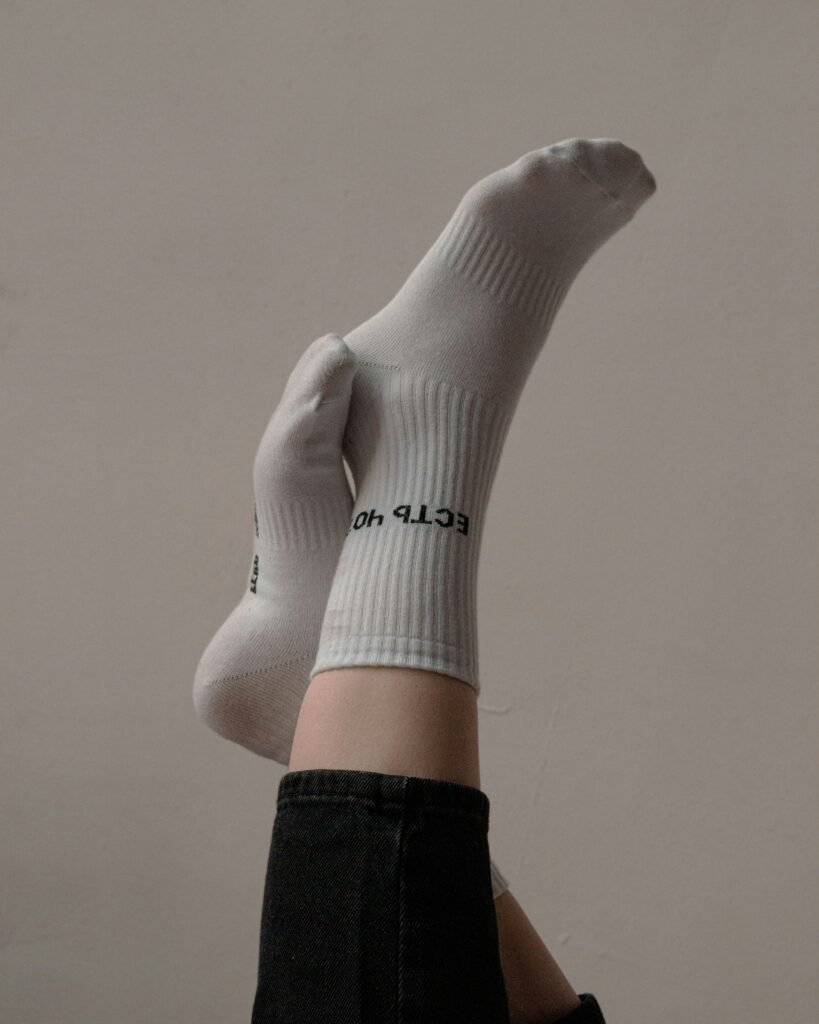
This is the habit that took me longest to take seriously, mostly because I associated compression socks with my grandmother rather than with a 32-year-old in economy. Then I actually wore a pair on an 11-hour flight and compared it to a flight without them, and the difference in how my ankles looked at landing was not subtle.
Graduated compression socks apply more pressure at the ankle and gradually less as they move up the calf, which is thought to support blood flow back toward the heart during long stretches of sitting still. Studies in travel medicine journals — the Journal of Travel Medicine has published work in this area — have looked at graduated compression stockings specifically in the context of long-haul flights and suggest they may reduce visible leg swelling and discomfort, particularly on flights over four hours, though they’re generally studied alongside movement, not as a replacement for it.
Alongside the socks, I’ve built in two more habits. First, electrolyte water instead of plain water or, worse, the coffee I used to default to — cabin air is notably dry, and dehydration seems to make the puffiness feel worse, at least in my own experience across four flights now. Second, simple seated stretches every ninety minutes or so: ankle circles, calf raises using the balls of my feet, and a short aisle walk when the seatbelt sign allows it. None of this is dramatic. It’s closer to fidgeting with intention.
Editor’s Note: I went into this convinced the seat cover would be the gimmick and the compression socks would be the real workhorse, and it turned out to be roughly the reverse — the socks made the most visible difference, but the tray table wipe-down is the habit I now feel oddly anxious skipping. Take that as one editor’s biased ranking, not a verdict.
How to apply this:
- On flights under 3 hours, prioritize the surface wipe-down and lavatory habits — swelling is less of a factor on shorter hops.
- On flights over 5 hours, add compression socks and electrolyte hydration from boarding, not partway through.
- If you have a history of circulation concerns, check in with your own doctor before relying on compression wear for long-haul travel.
- Pack the seat cover and wipes together in one pouch so the routine doesn’t depend on remembering four separate items.
This feature is intended for educational and lifestyle purposes only and does not replace personalized medical advice.
References & Secondary Sources
- Centers for Disease Control and Prevention — travel health and hygiene guidance
- Journal of Travel Medicine — research on graduated compression stockings and long-haul flight-related leg swelling
- Published surface-sampling studies on aircraft cabin hygiene (tray tables, seatback pockets, and lavatory surfaces)
Leave a Reply