Global skincare enthusiasts are shifting from standard retail beauty counters to pharmacy over-the-counter (OTC) aisles. Formulated with high-dose active ingredients like PDRN, Hydroquinone, and Dexpanthenol, these targeted pharmaceutical creams deliver clinical-grade results for barrier repair, dark spots, and redness at accessible price points.
Somewhere between skincare and skinical medicine sits a category that’s quietly taken over social feeds: the pharmacy aisle. Unlike glossy department-store serums built around marketing stories, these formulations were originally developed to treat specific dermatological concerns — inflammation, pigmentation, barrier damage — and are sold without a prescription in most regions.
That distinction matters. A pharmacy-grade cream typically carries a higher concentration of a single, well-studied active ingredient rather than a cocktail of trend ingredients at low doses. For skin that’s dealing with a defined issue — a stubborn dark spot, a compromised barrier, an angry breakout — that kind of precision is exactly what’s driving the shift. Below, we break down ten formulations that have earned a cult following, organized by the concern they’re built to solve.
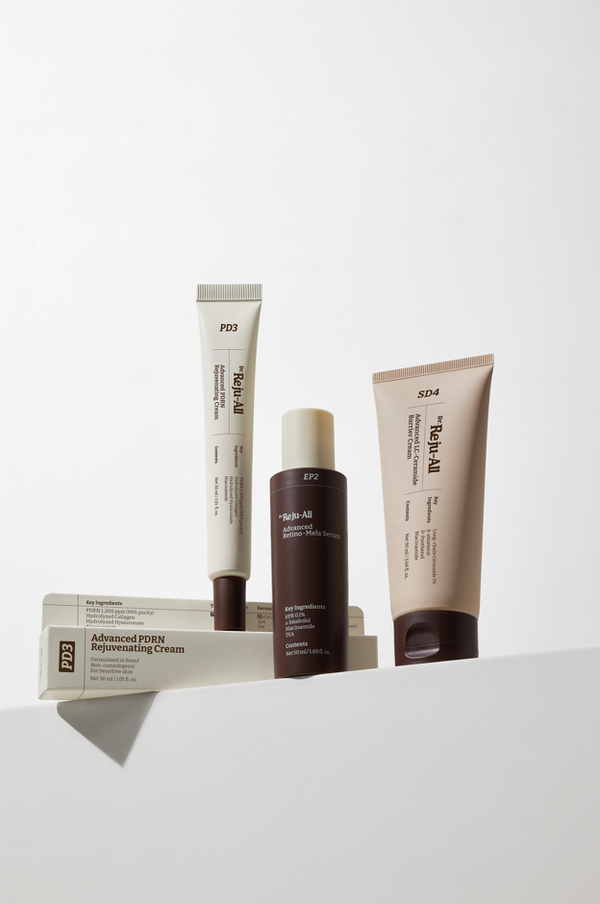
10 Essential Pharmacy Skincare Finds Categorized by Concern
1. Rejuvenex / Rejuall Cream: PDRN Salmon DNA for Deep Cell Regeneration
PDRN (Polydeoxyribonucleotide) is a fragment derived from salmon DNA that signals skin cells to repair themselves faster. Think of it as a “wake-up call” for sluggish, damaged skin — it encourages the tissue to rebuild collagen and restore its own protective barrier rather than simply sitting on the surface. This makes it a favorite for post-procedure recovery, chronic dryness, and skin that generally looks tired or thin.
2. Melatoning Cream: Targeted Hydroquinone 2% for Pigmentation
Hydroquinone works by temporarily slowing down the skin’s melanin production, the pigment responsible for dark spots. At a low, regulated 2% concentration, it’s considered one of the most effective ingredients for fading stubborn, well-defined spots — the kind left behind by old acne marks or sun exposure — without affecting the surrounding skin tone.
3. Acnon Cream: Anti-Inflammatory Solution for Red Breakouts
This formula pairs Ibuprofen Piconol, an anti-inflammatory that calms swelling at the source, with Isopropyl Methylphenol, an antiseptic that helps control the bacteria associated with breakouts. Together, they target the redness and puffiness of an active pimple rather than just drying it out — making it a go-to for calming a breakout overnight instead of aggravating it.
4. Noscarna Gel: Heparin Sodium for Post-Acne Scars
Heparin Sodium improves local circulation, which helps the skin process and fade discoloration more efficiently, while Allantoin softens and smooths rougher, textured tissue. The combination is best understood as scar maintenance — a gentle nudge to help stubborn red or brown post-acne marks fade over time.
5. D-Panthenol Ointment: Non-Sticky High-Dose Vitamin B5
Dexpanthenol is a stable form of vitamin B5 that converts into pantothenic acid once absorbed, helping the skin retain moisture and rebuild its lipid layer. Unlike heavy, occlusive balms, high-dose dexpanthenol formulas tend to feel lightweight, making them ideal for cracked, irritated, or barrier-compromised skin that still needs to breathe.
6. Sebitavi Cream: High-Niacinamide Relief for Skin Redness
Niacinamide (Vitamin B3) is well known in mainstream skincare, but pharmacy-strength formulas use it at concentrations built specifically to calm visible redness and support the skin’s barrier function. It also helps regulate oil production, making it a dual-purpose pick for reactive, easily flushed skin.
7. Aclean Gel: 2% Salicylic Acid BHA for Blackheads
Salicylic Acid is oil-soluble, meaning it can travel into the pore itself to dissolve the buildup of sebum and dead skin that forms blackheads. At 2%, this gel is strong enough to noticeably refine texture and clear congestion, but formulated for spot or zone application rather than an all-over daily layer.
8. Elas-A / Nuvain: Drinkable Lymphatic Circulation Ampoules for Depuffing
These oral ampoules are built around ingredients traditionally used to support lymphatic drainage and circulation. Rather than treating the skin’s surface, they work from within — helping reduce the fluid retention that causes facial puffiness, which is why they’re popular as a “morning of an event” quick fix.
9. Clearteen Solution: Spot Applicator for T-Zone Sebum
This is a liquid, roll-on version of salicylic acid designed for precision. Instead of treating the whole face, it’s dabbed directly onto oily zones — typically the forehead, nose, and chin — for daily sebum control without over-drying the rest of the skin.
10. Dominas Cream: Overnight Intensive Care for Deep Melasma
A long-standing pharmacy classic, this cream is formulated for deeper, more stubborn pigmentation like melasma. Designed for nighttime use, it works while the skin is in its natural repair cycle, targeting discoloration that’s more resistant to lighter, everyday brightening products.
Pharmacy Skincare vs. Daily Need: Active Ingredient Overview
| Product Name | Key Active Ingredient | Targeted Skin Concern | Best Time to Apply |
|---|---|---|---|
| Rejuvenex / Rejuall Cream | PDRN (Salmon DNA) | Barrier repair, cell regeneration | PM |
| Melatoning Cream | Hydroquinone 2% | Dark spots, hyperpigmentation | PM |
| Acnon Cream | Ibuprofen Piconol + Isopropyl Methylphenol | Inflamed, red breakouts | PM |
| Noscarna Gel | Heparin Sodium + Allantoin | Post-acne scars, discoloration | AM/PM |
| D-Panthenol Ointment | Dexpanthenol (Vitamin B5) | Dryness, barrier restoration | AM/PM |
| Sebitavi Cream | Niacinamide | Redness, sensitivity, oil balance | AM/PM |
| Aclean Gel | Salicylic Acid 2% | Blackheads, texture | PM |
| Elas-A / Nuvain | Circulation-support complex | Facial puffiness, fluid retention | AM |
| Clearteen Solution | Salicylic Acid (liquid) | T-zone sebum control | AM/PM |
| Dominas Cream | Pigment-targeting complex | Deep-set melasma | PM |

Essential Safety Guidelines for OTC Skincare Layering
Because these formulas are more concentrated than typical retail products, they reward a slower, more deliberate routine:
- Introduce one active at a time. Give your skin a week or two to adjust before adding a second targeted product, especially when combining exfoliating acids with brightening agents.
- Prioritize hydration and SPF. Ingredients like hydroquinone and salicylic acid can increase sun sensitivity, so daily sunscreen isn’t optional — it’s what protects your results.
- Treat spot-specific, not all-over. Many of these creams (like Melatoning or Dominas) are designed for targeted application on specific spots, not the entire face.
- Watch for irritation, not just dryness. Mild tightness can be normal during adjustment; persistent redness, stinging, or peeling is a sign to scale back frequency.
- Don’t skip the basics. A pharmaceutical-grade active works best layered on top of — not instead of — a simple, consistent cleansing and moisturizing routine.
RAWZY’s Final Notes
- On Combining Actives: Don’t overload your skin barrier. Instead of layering BHA and Hydroquinone at the same time, split them up—Salicylic Acid in the morning to refine texture, Hydroquinone at night for targeted pigment care. Introducing them one by one is the safest way to avoid unwanted redness or irritation.
- OTC vs. Prescription: Regulations around targeted active creams depend heavily on where you’re based. Many low-to-mid concentration formulas can be bought over-the-counter, but higher-strength Hydroquinone often requires a clinical prescription. Double-check your local pharmacy guidelines before purchasing.
Note: Active ingredients work best on a resilient foundation. Always pair high-dose treatments with a broad-spectrum SPF during the day to protect your progress.
Disclaimer: The information provided in this article is for educational and informational purposes only and does not constitute dermatological or medical advice. Always perform a patch test and consult a qualified healthcare provider or dermatologist before applying over-the-counter pharmaceutical products.
Leave a Reply