Aesthetic skincare is most effective when aligned with your skin’s biological decade. From hydration-focused polynucleotide skin boosters in your 20s to collagen-stimulating radiofrequency and targeted ultrasound lifting in your 40s and 50s, choosing the right clinical procedures at the right time ensures natural, long-lasting resilience without over-treating.
Aesthetic medicine has quietly shifted its center of gravity. Where clinics once specialized in reactive correction — smoothing what had already changed — the modern approach is anticipatory. Practitioners in advanced clinical hubs worldwide now build treatment plans around a simple premise: skin ages in stages, and each stage has a biological signature that responds best to a specific kind of intervention.
This is the philosophy behind preventative anti aging — not a single dramatic procedure late in life, but a series of smaller, well-timed clinical decisions made across decades. The goal isn’t to chase a fixed idea of youth. It’s to support your skin’s own structural systems before they need rescuing.
This guide walks through that roadmap decade by decade, translating the biology into a practical, skin treatments by age framework you can actually use.
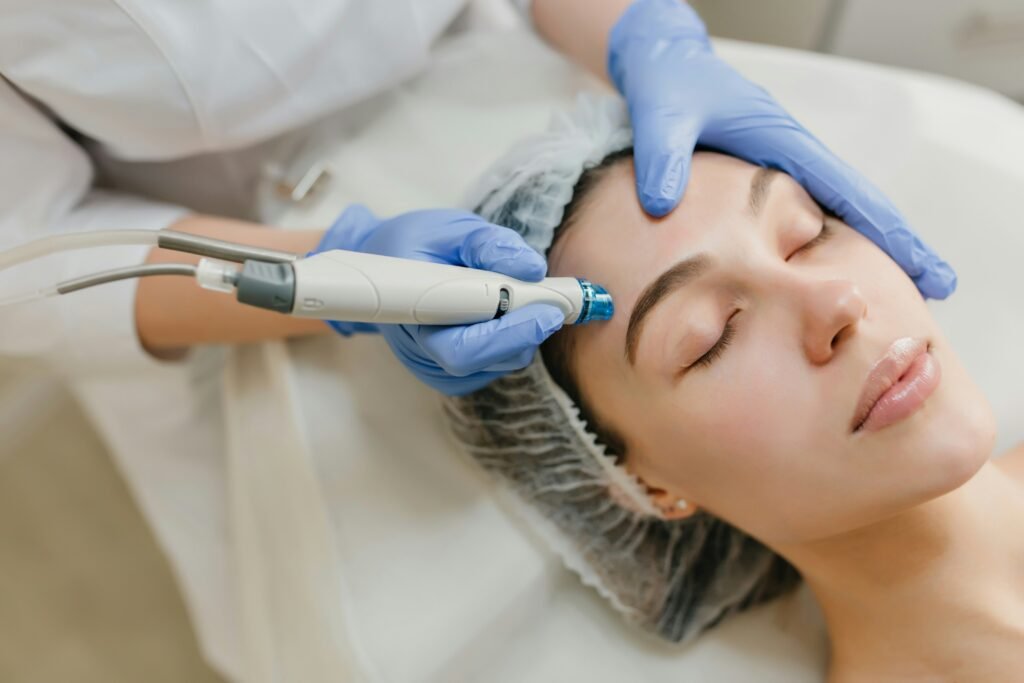
Biological Aging: How Your Skin Changes Each Decade
Skin doesn’t age in one continuous line — it moves through distinct phases, each governed by a different layer of tissue.
In your 20s, the skin’s outer barrier and oil-water balance are still highly efficient, but they’re also the first systems to show strain from environmental stress, inconsistent sleep, and fluctuating hormones. This is a barrier-maintenance phase, not a collagen-loss phase.
In your 30s, something quieter begins: collagen production, which had been abundant and self-replenishing, starts a gradual, measurable decline — roughly one to two percent per year. You won’t see dramatic changes overnight. Instead, fine lines start forming where movement is most repetitive, and skin density subtly thins.
In your 40s and 50s, the shift moves deeper still — from the surface and mid-layer collagen network down into structural support. Fat pads shift, underlying connective tissue laxifies, and the skin’s scaffolding loses tension. This is why concerns in this stage are less about individual lines and more about overall contour, firmness, and elasticity.
Understanding which layer is changing — surface barrier, mid-layer collagen, or deep structural tissue — is what allows a treatment plan to actually work with your skin’s biology instead of against it.
The Age-by-Age Treatment Roadmap
| Age Range | Primary Skin Goal | Focus Biological Layer | Benchmark Treatments | Recommended Frequency |
|---|---|---|---|---|
| 20s | Hydration & barrier defense | Epidermis / skin barrier | Polynucleotide boosters (Rejuran), Hyaluronic Acid boosters, gentle barrier facials | Every 4–6 weeks (booster series), then quarterly maintenance |
| 30s | Early collagen stimulation & fine-line prevention | Superficial to mid-dermis | Collagen biostimulators (Juvelook), mild radiofrequency, preventative botulinum toxin | Every 2–3 months for boosters; RF sessions seasonally |
| 40s | Collagen remodeling & tissue firmness | Deep dermis & subdermal layer | Micro-focused ultrasound (Ultherapy/Shurink), monopolar RF (Thermage), biostimulator fillers | 1–2 times per year |
| 50s | Structural lifting & contour restoration | Deep tissue / SMAS-level support | High-intensity HIFU, Thermage RF, volumizing biostimulators | 1–2 times per year, combined modality plans |
Navigating Your Decade: Tailored Clinical Interventions

In Your 20s: Barrier Protection and Deep Hydration
Your 20s are less about correction and more about reinforcement. The skin barrier — the thin outer layer responsible for locking in moisture and keeping irritants out — is your priority tissue at this stage.
What tends to work well:
- Polynucleotide boosters (Rejuran-type treatments): These use tissue-repair molecules to support the skin’s regenerative capacity, improving resilience and hydration retention over a short series of sessions.
- Hyaluronic acid–based boosters: Delivered in fine layers just beneath the surface, these replenish moisture at a cellular level rather than sitting on top of skin.
- Consistent barrier-supportive skincare: Ceramide-rich moisturizers, SPF discipline, and antioxidant serums do more heavy lifting in this decade than almost any clinical procedure.
The goal here isn’t aggressive intervention — it’s building a strong foundation so future treatments have healthier tissue to work with.
In Your 30s: Early Collagen Defense and Pore Refinement
This is the decade where prevention starts paying real dividends. Collagen decline is underway, but it’s still early enough that stimulation — rather than restoration — is the more efficient strategy.
What tends to work well:
- Collagen biostimulators (Juvelook-type treatments): These introduce a bioresorbable material that gradually encourages the skin’s own collagen-building cells to activate, improving density and texture over several weeks.
- Mild radiofrequency: Lower-intensity RF sessions gently heat the mid-dermis, encouraging collagen renewal without significant downtime.
- Preventative botulinum toxin: Used sparingly in areas of repetitive movement (forehead, brow, crow’s feet), this softens the formation of lines before they become etched.
The 30s reward consistency over intensity — smaller, more frequent interventions tend to outperform infrequent, aggressive ones.
In Your 40s & 50s: Deep Tissue Remodeling and Structural Lifting
By your 40s and 50s, biological aging has moved into the deep tissue layer, and surface-level treatments alone won’t address what’s actually changing: the loss of structural tension that holds facial contours in place.
What tends to work well:
- Micro-focused ultrasound (Ultherapy, Shurink): These deliver focused ultrasound energy to the deep foundational layer beneath the skin — the same layer addressed in surgical lifts — triggering a controlled collagen-remodeling response that gradually lifts and tightens over two to three months.
- Monopolar radiofrequency (Thermage): A single-session treatment that heats a broad area of deep tissue uniformly, encouraging long-term collagen remodeling and improved skin tension.
- Biostimulator fillers: Rather than simply adding volume, these encourage the body to rebuild its own structural collagen, restoring contour in a way that ages naturally alongside you.
At this stage, treatments are often combined — ultrasound for lifting, radiofrequency for tightening, and biostimulators for volume — as part of a coordinated structural plan rather than a single fix.
3 Essential Rules Before Booking Your First Treatment
- Consult before you trend-chase. A treatment that’s popular isn’t automatically right for your skin’s current biological stage. A proper clinical consultation should assess your skin layer by layer before recommending a procedure.
- Home care and clinical care are partners, not substitutes. No booster or lifting treatment will perform at its best without consistent barrier support, sun protection, and hydration at home.
- Respect your tissue’s healing timeline. Collagen remodeling is a biological process that takes weeks to months. Spacing treatments appropriately — rather than stacking them too closely — is what determines whether results look natural or overdone.
RAWZY’s Final Notes
- On 20s Collagen Treatments: More isn’t always better. In your 20s, your skin’s natural repair machinery is already running efficiently. Instead of jumping into intensive RF collagen stimulation too early, prioritize deep hydration and barrier support—saving energy treatments for when natural collagen synthesis actually begins to slow.
- Boosters vs. Fillers: Know what your skin actually needs. Skin boosters like Rejuran act as cellular recovery agents—improving texture, hydration, and resilience without changing your face shape. Fillers, on the other hand, physically add volume to structural hollows. They address completely different layers of the aging process.
Note: Aesthetic longevity is a marathon. Subtle, preventative care always yields more natural results over time than sudden, high-intensity interventions.
Disclaimer: The information provided in this article is for educational and informational purposes only and does not constitute dermatological or medical advice. Always consult a licensed dermatologist or medical professional to determine the most appropriate treatments for your individual skin condition.
Leave a Reply