Red wine polyphenols do measurable things in a lab dish — activate SIRT1, blunt oxidation, thin the blood a little — but the dose that matters clinically is nowhere near a dose anyone drinks. The French Paradox was a data artifact wearing a beret. What’s left, once you strip out the mythology, is a genuinely decent low-sugar, high-tannin option for people who drink anyway — not a longevity supplement. Below is the actual math, and what to do with it.
I was wiping a stubborn ring of dried red wine off the wooden counter — the kind that’s gone tacky and dark, the kind you have to scrape at with a thumbnail — when I started wondering, not for the first time, whether the glass that made it was doing me any good at all. Or just staining things. Mine included.
That’s the honest starting point. Not a feeling. A stain.
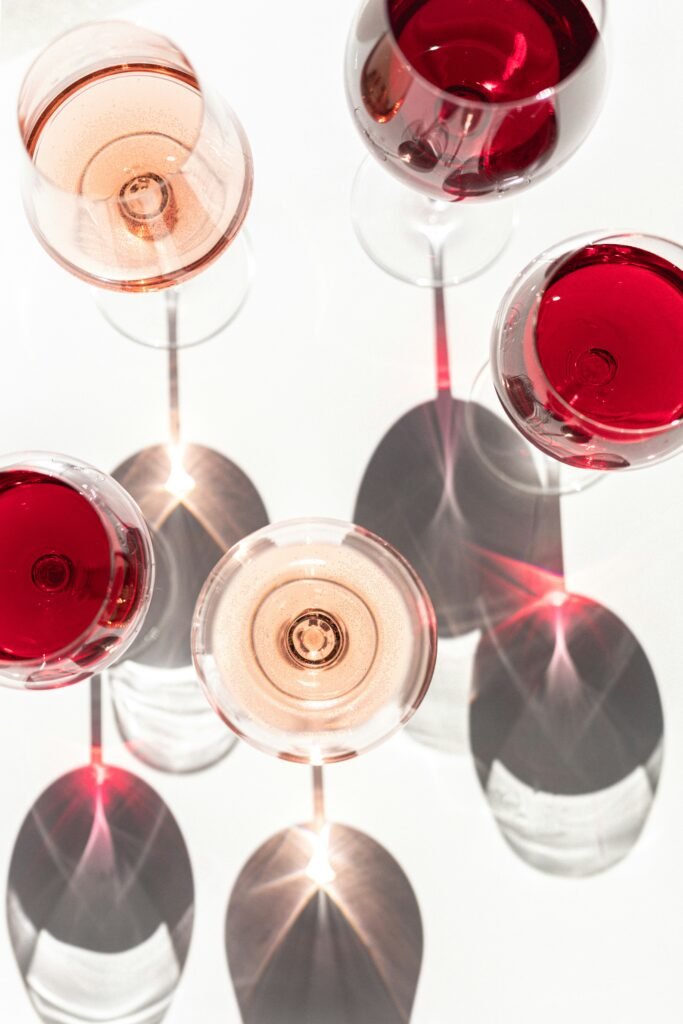
The claim everyone half-remembers: resveratrol, SIRT1, and why the math doesn’t work
Resveratrol is the compound that made red wine famous, scientifically speaking. It’s a polyphenol found in grape skins — concentrated more than you’d think, given how little of the skin actually ends up in the bottle — and in the 1990s and 2000s it got tangled up with a gene called SIRT1, a sirtuin linked to cellular stress resistance and, in mice, extended lifespan. Activate SIRT1 enough, the early hope went, and you get some of the same protective effects as caloric restriction, without the restricting.
It’s a real mechanism. It’s just not a real dose, in wine.
Here’s the part that doesn’t make it into the marketing copy: the resveratrol concentrations used in the mouse studies that got everyone excited translate to human doses in the range of grams per day — not milligrams. A typical glass of red wine contains somewhere around 0.3 to 2 milligrams of resveratrol, depending heavily on grape variety, region, and how the wine was made. To hit the doses that produced measurable SIRT1 activation in animal trials, you’d need to drink somewhere in the neighborhood of 100 to 1,000 glasses of wine in a day. Which is not a health regimen. That’s a hospital admission.
(I looked this up twice, honestly, assuming I’d misread the units the first time. I hadn’t.)
When evaluating polyphenol benefits against alcohol toxicity
This is the actual tradeoff, stated plainly instead of dressed up: polyphenols in red wine have antioxidant and mild anti-inflammatory properties, observed in vitro and in some human studies at modest doses. Ethanol, in the same glass, is a Group 1 carcinogen according to the International Agency for Research on Cancer — the same classification tier as tobacco and asbestos, which surprises people every time it comes up, including me the first time I read it. The polyphenol benefit is real but small. The ethanol cost scales with volume and is not small. They’re not on the same side of the ledger, and no amount of tannin cancels out ethanol’s effect on the liver, on sleep architecture, or on long-term cancer risk.
- Resveratrol — clinical trial dose: 150–500mg/day | Biological target: SIRT1 activation, some anti-inflammatory signaling in human supplementation trials. One glass of red wine delivers roughly 0.1–1% of the low end of this range.
- Proanthocyanidins (condensed tannins) — concentration driver: skin contact time & tannin-forward varietals | Biological role: antioxidant capacity, some evidence for vascular endothelial support; found in meaningfully higher concentration than resveratrol in most red wines, especially tannic ones.
- Ethanol — WHO/IARC classification: Group 1 carcinogen | Biological cost: disrupts REM sleep architecture even at moderate intake, taxes hepatic metabolism via alcohol dehydrogenase pathways, and its cancer risk appears to scale from the first drink — there is no clean “safe” floor, only lower relative risk at lower volume.
The French Paradox, or: how a real observation became a marketing department
The French Paradox is the origin story for most of this. In the late 1980s and early 1990s, epidemiologists noticed that French populations had comparatively low rates of coronary heart disease despite diets relatively high in saturated fat — and, notably, relatively high wine consumption. The conclusion that got repeated in a thousand headlines: wine protects the heart, cancels out the butter and cheese.
What actually seems to explain the paradox is messier and less bottle-shaped. Confounding variables did a lot of the work — different smoking patterns across the studied cohorts, different reporting standards for cardiac death across countries at the time, and general lifestyle differences (meal structure, portion size, walking as transportation) that had nothing to do with what was in the glass. Later re-analyses have generally walked the “wine saves the French” framing back substantially. It was never disproven outright, exactly. It’s more that the explanation got reassigned, quietly, to a dozen other factors, while the wine industry kept the original headline.
I used to repeat the French Paradox as a fact at dinner parties. I don’t anymore. Which took longer to unlearn than I’d like to admit, mostly because it’s such a satisfying sentence to say out loud.
For choosing low-sugar, high-tannin bottles without overconsuming
If someone’s going to drink red wine anyway — and most people are, this isn’t a temperance pamphlet — there’s a version of that choice that’s meaningfully better than another, on polyphenol content and on sugar load, even if neither variable moves the needle on longevity by itself.
- Tannat, Nebbiolo, Cabernet Sauvignon — tannin/polyphenol profile: high | Practical note: these varietals spend more time in contact with grape skins during fermentation, which is where proanthocyanidins concentrate; dry-finished versions also tend to run lower in residual sugar.
- Residual sugar — target threshold: under 3g/L for “dry” classification | Why it matters: wines finished sweeter carry a higher glycemic load per glass on top of the alcohol itself, compounding the metabolic cost rather than offsetting it with polyphenols.
- Sulfite sensitivity — low-sulfite threshold: under 100ppm (organic-certified reds often lower) | Limitation: relevant mainly for people who report headaches or flushing from wine; sulfite level has no bearing on resveratrol or tannin content, so it’s a separate axis of selection, not a health hack.
- Serving volume — standard pour: 5oz (150ml) | Limitation: most people pour closer to 6–8oz at home without measuring; this alone can push someone from “one drink” to “one and a half” without them noticing, which matters more for total ethanol exposure than any varietal choice does.
None of this makes a glass of Nebbiolo a supplement. It makes it a better-considered glass of wine than a sweet, low-tannin blend would be, if you’re drinking one anyway and want to optimize within that choice rather than pretend the choice doesn’t have a cost.
What moderate actually means, and why the sleep data is the part people skip
“Moderate drinking” gets thrown around like it’s a fixed, agreed-upon quantity. It roughly is, on paper — current U.S. dietary guidance and most cardiology bodies define it as up to one drink per day for women and up to two for men, where one drink is that 5oz pour. But the guidance has been getting quietly revised downward for years as more longitudinal data comes in, and several national health bodies (Canada notably, in 2023) now decline to name any consumption level as risk-free.
The part that gets left out of most wine-and-health writing, though, is sleep. Alcohol — even a single glass, even well before bed — measurably suppresses REM sleep in the first half of the night and then produces a rebound effect in the second half that fragments sleep and increases nighttime waking. This isn’t a moderate-drinker-only problem or a heavy-drinker-only problem; it shows up at low doses too, just less dramatically. People routinely misattribute the next-day fog to “just being tired” rather than to the glass of Cabernet with dinner, mostly because the wine feels finished hours before the sleep disruption actually happens.
I didn’t notice this pattern in myself for probably two years. Two glasses on a Tuesday, tired all Wednesday, no connection made. In fairness, it’s an easy thing to miss, since the wine and the fog are separated by a night’s worth of unconsciousness in between.
A Glass Worth Choosing, If You’re Choosing One
Editor’s Note: I think the wellness industry owes red wine an apology of sorts — not for overselling it, but for turning a perfectly reasonable, moderate pleasure into a health product, which is a worse fate. A glass of dry, tannic red with dinner is a fine thing. It is not resveratrol therapy, and treating it like one is what actually erodes people’s trust in the real, smaller benefit that does exist.
How to apply this, by situation:
- Bottle selection: favor dry-finished, tannin-forward reds (Nebbiolo, Tannat, Cabernet Sauvignon, tannic Syrah) over sweeter or lighter-bodied styles if polyphenol density is the goal.
- Dose control: measure the pour at least once — a real 5oz, not a kitchen-counter estimate — since most home pours run 25–50% larger than the standard used in the moderate-drinking guidelines.
- Sleep protection: stop pouring at least three hours before bed if REM disruption is a concern; the effect shows up even at one glass.
- Resveratrol expectations: if resveratrol specifically is the goal, a supplement at a clinically studied dose will get there in a way wine mathematically cannot — treat the two as separate decisions, not substitutes.
- Framing: drink it for the taste, the ritual, the dinner it’s paired with — not as a longevity strategy standing in for sleep, movement, or diet, none of which a tannic red can replace.
This article is for general interest and does not constitute medical advice; if you have liver conditions, are pregnant, take medications with alcohol interactions, or have a history of alcohol use disorder, the calculus above doesn’t apply to you and is worth discussing with a doctor instead of a magazine.
Leave a Reply