Office air conditioning and long car rides leave summer skin oily on the surface but tight and parched underneath — a mismatch dermatologists call compensatory sebum production. This piece walks through why that happens and three gentle evening habits, tested over two humid weeks, that helped rebuild a steadier moisture barrier overnight. None of it involves buying a new serum shelf.
Last Thursday at 7:20 PM, I wiped my forehead with a paper napkin on the subway platform and it came away shiny, almost slick. Twenty minutes earlier I’d been sitting under an office vent set to 19°C, and my skin felt fine — a little tight around the cheekbones, but fine. By the time I got home, that tightness had turned into something closer to a mask. Oily at the T-zone. Papery everywhere else. Same face, two different problems, happening at once.
That contradiction is basically the whole story of air conditioning skin dehydration, and it took me an embarrassingly long time to understand it.

Why Cold, Dry Air Makes Skin Both Oily and Tight
Here’s the plain version. Air conditioners don’t just cool a room — they pull moisture out of the air to do it. Sit under that airflow for six or eight hours, in an office or a car, and the water sitting in the outer layer of your skin evaporates faster than usual. Your skin notices the surface drying out and, in a kind of overcorrection, ramps up oil production to compensate. So you end up with a slick surface and a dehydrated understructure at the same time — oily on top, dry underneath. It’s not two separate skin types fighting each other. It’s one dehydration problem wearing an oily disguise.
Dermatological research on transepidermal moisture loss — essentially, water escaping through the skin faster than it’s replaced — backs this up: environments with low humidity and constant airflow, like air-conditioned offices, are consistently linked to higher surface water loss and compensatory oil output, even in skin that isn’t naturally oily. A few sources also point out that indoor summer humidity, ironically, is often lower than winter heating environments in the same building, which surprised me when I first read it.
I assumed, for most of my twenties, that midday shine meant my skin was “producing too much oil” and needed a stronger cleanser. Or so I thought, until a dermatology nurse I interviewed for an unrelated piece last year mentioned, almost in passing, that summer shine in air-conditioned workers is frequently a dehydration signal, not an oil-production problem on its own. That reframed the whole thing for me. I stopped fighting the oil and started asking why the water underneath was leaving in the first place.
What Two Weeks of Evening Habit-Tracking Actually Looked Like
I want to be upfront: this wasn’t a clinical trial. It was me, a notebook, and a fairly boring nightly routine repeated for fourteen evenings after full days in air-conditioned spaces — office, then a 40-minute AC-heavy commute, most days. I tracked how my skin felt at three points: right when I got home, thirty minutes after the routine, and the next morning. The unflattering admission here is that I skipped two nights entirely because I was too tired to do anything but collapse onto the couch, and my skin the following morning was noticeably tighter both times. That alone told me more than most of the “before and after” felt.
1. A Gentle Three-Minute Lukewarm Water Splash
The first thing I do now, before anything else, is splash lukewarm water on my face for about three minutes upon walking in the door — not hot, not cold, just lukewarm, close to skin temperature. This isn’t a cleanse. It’s closer to a reset. Hot water strips the thin oil layer that’s already struggling to hold moisture in, and very cold water can tighten surface vessels in a way that feels bracing but doesn’t actually rehydrate anything. Lukewarm water, splashed rather than rubbed, seems to soften the dried-out surface layer without shocking it. In my trial, this step alone made the tight, papery feeling around my cheeks noticeably less pronounced within a few minutes — though I’ll admit that could partly be the simple relief of leaving a cold office building. I’m not ruling that out.
2. Layering Hyaluronic Acid Water Serums on Damp Skin
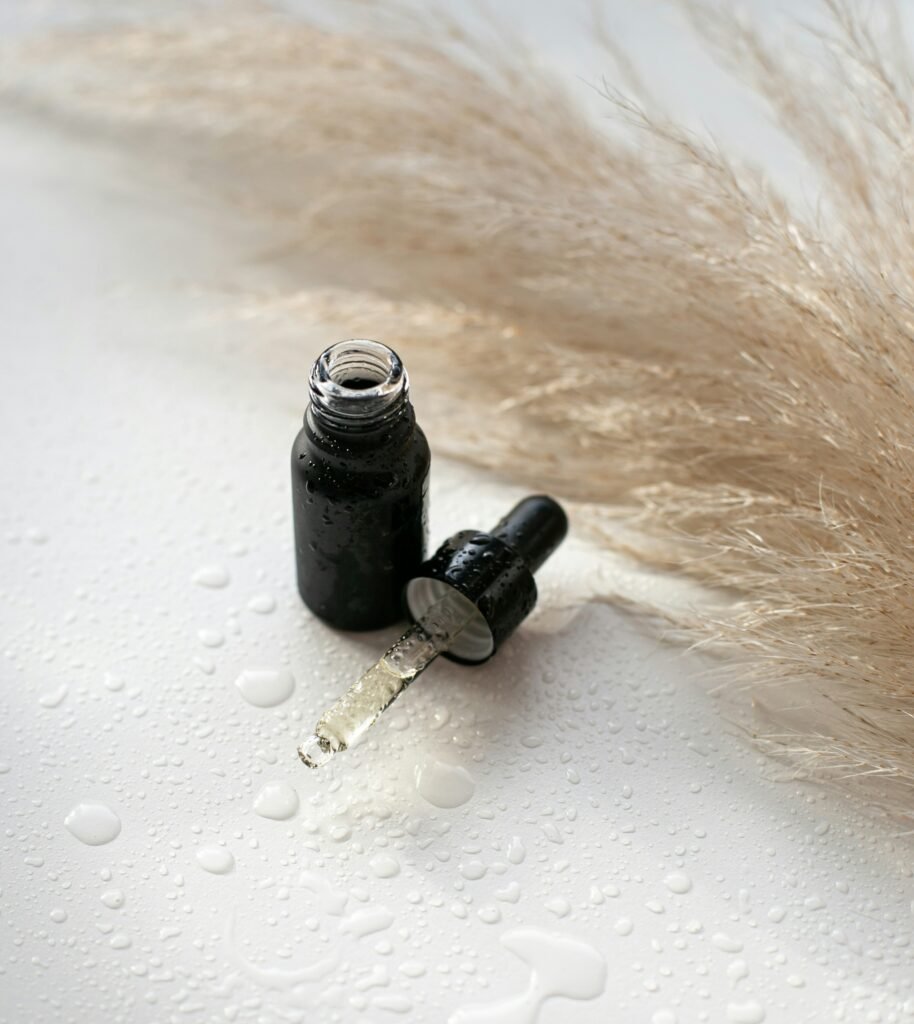
Right after the splash, while my face is still damp — not dried off, still visibly wet — I pat on a lightweight, water-based serum containing hyaluronic acid. The timing matters more than the product itself. Hyaluronic acid works by drawing in surrounding water; if you apply it to a bone-dry face in a low-humidity room, dermatological literature suggests it can actually pull moisture out of the deeper skin layers instead of the air, which somewhat defeats the purpose. Applying it to damp skin gives it water from your splash to draw from instead. I used a thin, watery serum rather than a thick gel, applying it in two light layers with about a minute between them, patting rather than rubbing it in. By day four of my trial, the after-work tightness around my mouth and cheekbones had eased noticeably compared to the first two days — though I should note humidity outside had also risen slightly that week, so I can’t call this fully controlled.
3. Sealing Moisture Overnight With a Lightweight Barrier Cream
The last step is a thin layer of a lightweight, ceramide- or squalane-based moisturizer, applied within a minute or two of the serum, while skin is still slightly tacky. Think of this less as “moisturizing” and more as putting a lid on the water you just added — without it, a lot of that hyaluronic acid’s benefit evaporates back out overnight, especially if your bedroom is also air-conditioned, which mine is. I specifically avoided heavier, richer night creams for this trial, since summer skin under AC conditions doesn’t usually need extra oil — it needs the water it already has to stay put. Research on skin barrier repair generally points to ceramides as useful for reinforcing this outer sealing layer, since they’re structurally similar to the lipids naturally found between skin cells.
What Actually Changed, and What I’m Still Unsure About
By the end of two weeks, the most consistent change wasn’t dramatic glow — it was that the mid-afternoon oiliness at work seemed to arrive later and felt less severe, roughly what I’d loosely estimate as an hour or so later than before, based on when I started noticing shine on a napkin test. Morning tightness on the two mornings I skipped the routine was clearly worse than on mornings I’d done all three steps. That’s not proof of anything beyond my own face, and I want to be honest that two weeks and one person’s notebook is a small, informal sample — not a study.
Editor’s Note
I went into this expecting a skincare hack and came out with a small annoyance at how much of my “oily skin” assumption was actually a dehydration problem I’d been treating backwards for years. I’m not going to pretend three steps fixed everything — some evenings I was too wiped out to bother, and my skin let me know about it the next day. But the sequence itself, water first, then serum on damp skin, then a light seal, felt like the kind of small, repeatable ritual this magazine tends to champion. Not a transformation. Just a quieter, less confused face by morning.
How to apply this:
- If you sit under strong AC for 6+ hours daily (office, long commutes), try the three-step sequence on the same evening you notice midday shine paired with cheek tightness.
- Keep water lukewarm, not hot — hot water may worsen the surface dryness you’re trying to fix.
- Apply hyaluronic serum to damp, not dry, skin, and follow within a couple of minutes with a lightweight barrier cream.
- Give it at least a week before judging results — a single evening won’t undo a full day of AC exposure.
- If tightness, redness, or breakouts persist beyond two to three weeks, it’s worth checking in with a dermatologist rather than adjusting products on your own.
This feature is intended for educational purposes and reflects one editor’s personal trial alongside general dermatological research; it is not a substitute for individualized advice from a licensed dermatologist.
References & Secondary Sources
- Journal of Dermatological Science — research on transepidermal water loss and environmental humidity
- American Academy of Dermatology — guidance on moisturizer application and skin barrier care
- International Journal of Cosmetic Science — studies on hyaluronic acid application technique and hydration behavior
Leave a Reply