Squeeze a stress ball for ninety seconds and something in the chest loosens before the mind catches up. This piece traces why adults are quietly bringing back a 1980s desk toy in 2026, what hand pressure actually seems to do to a stressed nervous system, and how three low-cost tactile habits held up against a week of real deadlines. None of this replaces therapy or medical care — it’s a small, textured tool for the space between meetings.
Last Wednesday at 3:47 PM, mid-sentence in an email I’d already rewritten twice, my right hand found the drawer handle before my brain gave it permission. Inside: a cracked, sun-faded stress ball I’d bought at a work conference sometime around 2019 and never once used. I squeezed it. Hard. Then again. By the third squeeze my shoulders had dropped about an inch from where they’d been living, somewhere up near my ears.
That’s not a scientific finding. That’s just Wednesday.
But it sent me down a small rabbit hole, and what I found is that I’m apparently not alone — search interest and product listings for stress balls and hand-grip tools have been climbing again through 2025 and into 2026, showing up less as novelty desk clutter and more as something people are calling a “somatic reset.” Which, fine, is a slightly precious phrase for squeezing a rubber ball. But the underlying idea is worth sitting with.
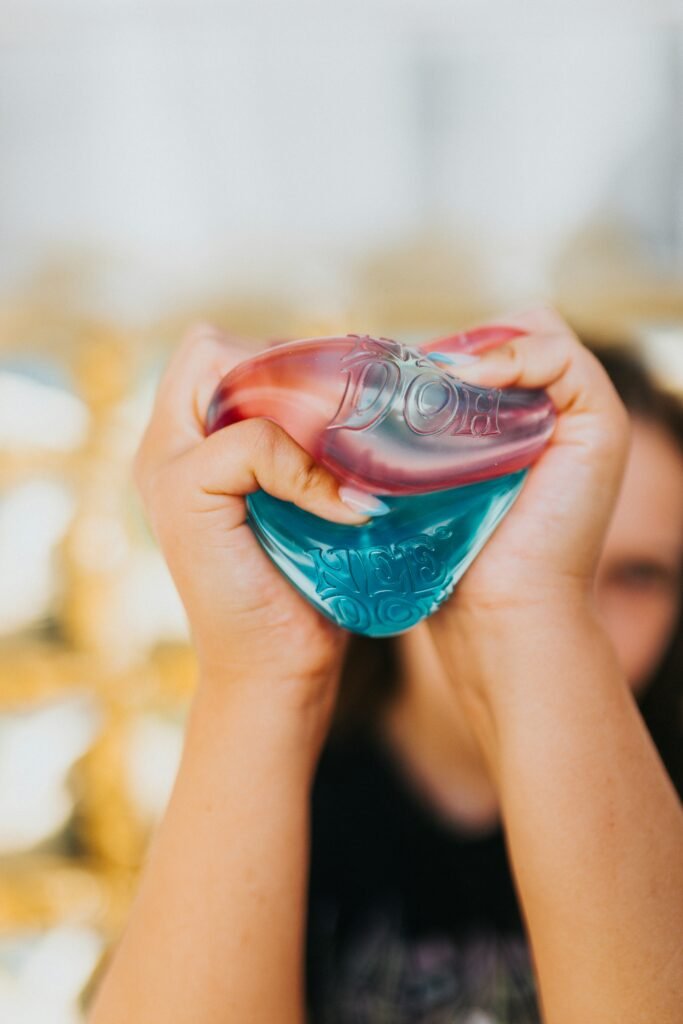
Why a Foam Ball Is Having a Moment Again
The stress ball never really disappeared — it just got embarrassing to admit you used one. Somewhere in the last few years, that embarrassment lifted. Part of it is the broader interest in “somatic” practices, a word that’s crept out of trauma therapy circles and into ordinary wellness conversation. Part of it, I suspect, is plain exhaustion with screens that don’t push back. A stress ball resists your hand. A trackpad doesn’t.
In my own trial, I kept one on my desk for eleven consecutive workdays and logged when I reached for it without thinking. It was almost always in the ten minutes after closing a browser tab full of bad news, or right before opening one. Which lines up, loosely, with what researchers studying workplace stress have described: repetitive, effortful hand movement seems to give an anxious mind something concrete to do instead of spiraling on a screen. I want to be careful here — that’s an observation from occupational health literature, not a claim I’m qualified to make myself.
1. The Sixty-Second Squeeze
This is the plainest version of the habit, and the one I trust most because it asks nothing of you except a closed fist. You squeeze the ball as hard as feels reasonable, hold for four or five seconds, release slowly, and repeat for about a minute. In my trial last Thursday, right before a call I was dreading, I did this at my desk with the door half-closed and felt genuinely sheepish about it — until my voice came out steadier than I expected on the call itself. I can’t prove the squeeze did that. I can only say the timing was suspicious.
What seems to be happening, according to research on grounding techniques for anxiety, is that firm, rhythmic hand pressure sends a strong sensory signal up through the nervous system that competes for attention with whatever’s driving the racing thoughts. Some occupational therapists describe it as giving the amygdala — the brain’s alarm center — a louder, closer, more manageable problem to process than an abstract worry. It’s not that the stress ball erases the worry. It’s more like it turns the volume down enough to hear yourself think again.
2. The Doomscroll Interrupt
This one is less about calm and more about breaking a pattern, and it’s the habit I was most skeptical of before trying it. The idea: the moment you catch yourself opening a news app or social feed out of restlessness rather than intention, you set the phone face-down and pick up the stress ball instead, for as long as the urge to scroll lasts.
Or so I assumed it would work cleanly — until my first real test of it, on a Sunday morning, when I picked the phone back up after eight seconds anyway. The stress ball didn’t stop me. What it did do, on the second and third attempts that same day, was create a small pause where none had existed before. A friend of mine who works nights at a hospital says she keeps a grip-strengthener by her charging station for exactly this reason, and describes the habit less as willpower and more as “giving my hands a job so my thumb stops doing the job on its own.” That’s her language, not a clinical one, but it tracks with what behavioral researchers sometimes call habit substitution — swapping a compulsive action for a physically incompatible one.
3. The Pre-Meeting Reset
Five minutes before anything that makes your stomach tighten — a difficult call, a performance review, a first date you’re already regretting agreeing to — this habit asks you to squeeze the ball in slow, deliberate cycles while doing nothing else. No scrolling alongside it, no rehearsing what you’ll say. Just the squeeze, the release, and whatever thoughts show up.
I tried this before a genuinely tense conversation with a landlord in early July, and I’ll admit the unflattering part: I felt a little ridiculous sitting in my car in a parking lot, squeezing a stress ball like I was auditioning for a stock photo about workplace burnout. But my hands weren’t shaking when I walked in, and normally they would have been. Occupational health writing on pre-performance anxiety suggests that physical grounding rituals — not just stress balls, but any repetitive tactile action — can shift a nervous system out of a reactive state before you actually need to speak or perform. I’d call that a steadier starting point, not a cure for nerves.
4. The Desk-Drawer Rotation
The least glamorous habit on this list, and maybe the most sustainable one: keeping two or three different textures within reach — a firm foam ball, something with ridges, something cold like a smooth stone — and rotating between them depending on what the moment calls for. My own drawer, as of this week, has the cracked 2019 ball, a spiky massage ball my sister left at my apartment, and an ice pack I keep forgetting to refreeze.
There’s nothing dramatic here. The point, as far as I can tell from trying it, is that a single texture stops registering after enough repetition — the brain gets used to it the way it gets used to a ticking clock. Switching objects seems to keep the sensory signal fresh enough to actually notice. This is closer to a personal hunch than anything I’ve read confirmed outright, so treat it as exactly that.

What the Research Actually Says, and Doesn’t
It’s worth being honest about the size of this evidence base, because a lot of wellness writing overstates it. Studies on tactile stimulation and stress tend to be small, often focused on specific populations like hospital patients or students during exam periods, and the mechanisms are still being worked out. Stress ball use specifically hasn’t been studied nearly as much as, say, deep breathing or progressive muscle relaxation, both of which have a much longer research history. What does exist points toward hand pressure and repetitive tactile movement having a mild, short-term calming effect for a lot of people — not a mixed-up-body-signals cure, just a small nudge toward a steadier state. Anyone dealing with ongoing anxiety, panic, or a stress response that feels unmanageable should be talking to a doctor or therapist, not a foam ball.
How to Apply This
- Keep the stress ball somewhere your hand actually passes by — a desk drawer you open daily works better than a shelf across the room
- Pair the squeeze with a specific trigger (before calls, after closing a bad-news tab) rather than trying to remember it randomly
- Give it sixty seconds before deciding whether it’s doing anything — most of the effect seems to fade if you rush it
- If a stress ball feels silly, a smooth stone, a rubber band, or even firmly kneading your own palm works on the same basic principle
- Treat this as one small tool among many, not a replacement for actual rest, movement, or professional support when things feel bigger than a desk habit can hold
Editor’s Note: I went into this expecting to write something gently mocking about grown adults buying novelty desk toys again, and I came out of it having ordered a second stress ball for my bag. I don’t think it’s magic. I think it’s a cheap, low-effort way to interrupt a bad ten minutes, and most weeks, that’s a reasonable thing to want.
This feature is intended for educational purposes and reflects personal experience alongside general research; it is not medical advice, and readers managing ongoing anxiety or stress should consult a qualified health professional.
Leave a Reply