Late August has a way of making even a glass of water feel like a decision. This edit looks at why the ice-cold drinks we reach for in peak heat can leave the stomach heavier, not lighter, and walks through a slower, room-temperature infused water ritual — cucumber, mint, grapefruit, a pinch of pink salt — taken fifteen minutes before meals. It’s less a rule and more a small adjustment, tested over one sluggish week and checked against what digestion research actually says.
Last Tuesday at 1:15 PM, I downed a large glass of ice water straight from the fridge door, thirty seconds before sitting down to lunch. Ten minutes later I was pushing rice around my plate, stomach tight, appetite gone, wondering why a meal I’d been looking forward to suddenly felt like a chore. This has happened more than once this August. Or so I assumed it was just the heat — until I started paying closer attention to what, specifically, I was drinking right before eating.
August digestion sluggishness is such a familiar, unglamorous complaint that most of us never stop to ask what’s causing it. We just blame “summer” and reach for another cold drink, which, it turns out, may be part of the problem in the first place.
1. What Cold Water Actually Does to a Warm Stomach
Here’s the plain version, no jargon: when a large volume of very cold liquid hits a stomach that’s warm and mid-digestion, the surrounding muscles tighten up briefly in response to the temperature shock. Think of it less as “vasoconstriction” and more as your stomach flinching, the way a hand pulls back from a cold doorknob. That tightening can slow the muscle movements that normally push food along, which is part of why a big meal can suddenly sit like a stone after an ice-cold drink.
There’s a second piece, too. Digestive enzymes — the molecules that break food down into something your body can absorb — work best within a fairly narrow temperature range. Flood the stomach with cold water right before or during a meal, and those enzymes get diluted and momentarily cooled, so they simply work slower for a while. Nothing dramatic happens. It’s not damage. It’s more like asking your digestion to run in wet sand instead of on packed dirt.
Gastrointestinal research has looked at this exact pattern — cold fluid intake and short-term changes in gastric emptying — and the general takeaway lines up with what a lot of people notice anecdotally: colder drinks around mealtimes are associated with slower stomach emptying compared to room-temperature fluids, at least in the immediate window after drinking.
2. The Room-Temperature Shift (And Why Fifteen Minutes Matters)
The fix I landed on isn’t dramatic. It’s room-temperature or just slightly cool water, infused, taken about fifteen minutes before I sit down to eat — not with the meal, not right after.
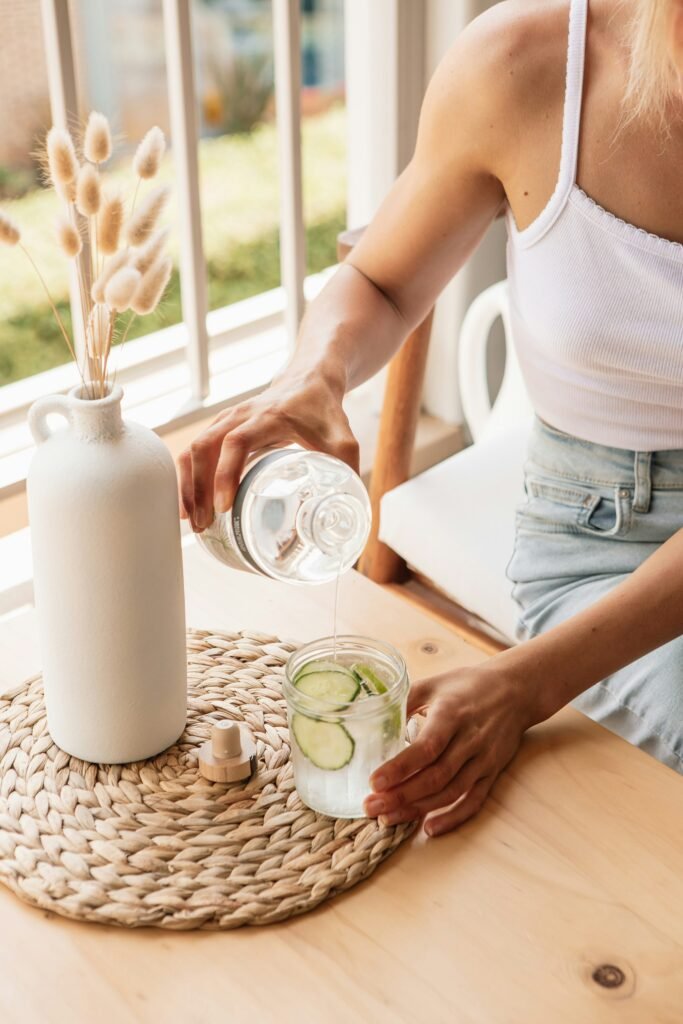
The timing matters more than I expected. Drinking that fifteen minutes ahead gives the stomach a chance to settle back to its working temperature before food arrives, rather than shocking it mid-meal. In my personal trial, I filled a large glass jar each morning — cucumber ribbons, a handful of mint leaves, a few segments of grapefruit, and a small pinch of pink salt — and let it sit on the counter, not in the fridge, so by lunchtime it had drifted to something closer to a cool room temperature rather than straight-from-the-tap warm.
By day three, the difference wasn’t dramatic, but it was noticeable: less of that tight, bloated heaviness after lunch, and honestly, more willingness to actually finish the meal instead of picking at it. I’ll admit I was skeptical going in — this felt like exactly the kind of small wellness ritual that sounds nice and does nothing. I’m still not fully convinced it’s the water alone and not just slowing down enough to drink it mindfully. But the pattern held for five days running, which is more consistency than I expected.
3. Why Cucumber, Mint, Grapefruit, and a Pinch of Salt
Each addition here is doing something specific, not just decorative.
Cucumber is mostly water itself, which sounds obvious but matters — it dilutes the infusion gently without adding sugar or acidity that could compete with digestion. Mint has a long history in folk hydration practices as a stomach-settling herb; some research into peppermint compounds suggests they may support smoother digestive muscle movement, though the studies mostly focus on peppermint oil in concentrated form rather than a few muddled leaves in a jar of water.
Grapefruit brings both flavor and a small dose of natural bitterness, which in some nutritional literature is associated with stimulating digestive juices before a meal — this is closer to the old European tradition of a bitter aperitif than to any modern supplement claim. And the pink salt isn’t there for taste alone. A small pinch supplies trace electrolytes, particularly sodium, which the body loses more readily through summer sweat. Hydration research consistently points out that water alone, without any electrolytes, doesn’t rehydrate as efficiently as water with a small mineral load, especially after a hot day.
None of this is a formula to follow exactly. Swap grapefruit for lemon if that’s what’s in the kitchen. Use basil instead of mint. The mechanism — mild, room-temperature, slightly mineralized water, taken ahead of the meal rather than during it — matters more than the specific fruit floating in the jar.
4. What This Isn’t (A Necessary Correction)
I want to be honest about the limits here, because it’s easy for a hydration ritual like this to get oversold. This is not a bloating cure, and it won’t undo a meal that’s genuinely too large or too rich. On the Thursday of my trial, I ignored my own advice, gulped ice water mid-meal at a barbecue, and felt exactly as heavy as before — the infused water habit only works as prevention, not damage control after the fact.
It’s also worth saying plainly: if digestive discomfort is severe, persistent, or paired with other symptoms, that’s a conversation for a doctor, not a wellness edit. What’s described here is a gentle daily adjustment, not a treatment for anything.
5. Building It Into an Actual August Routine
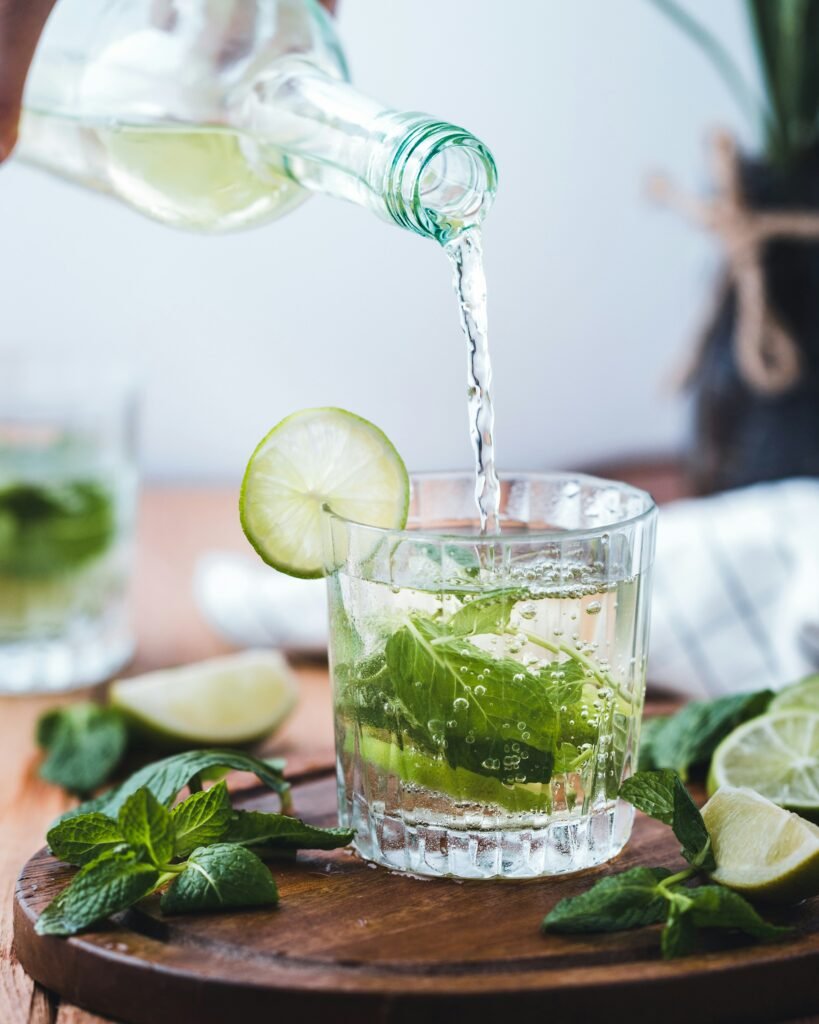
The version of this that’s stuck for me is unglamorous. A large jar, filled once in the morning, kept on the counter rather than in the fridge so it warms slightly through the day. A glass poured about fifteen minutes before lunch and again before dinner, sipped slowly rather than downed. No ice added, ever, during that pre-meal window — ice comes back later in the afternoon, away from meals, when a genuinely cold drink is just a cold drink and not a digestive interruption.
It takes maybe four minutes of prep each morning. The jar sits there as a kind of quiet reminder to actually pause before eating, which may be doing as much work as the water itself.
Editor’s Note: I went into this expecting a nice-sounding ritual with no real effect, and came out with a habit I’ve actually kept past the trial week — though I’ll caveat that hard, because five days of one person’s lunch isn’t research. What convinced me wasn’t the mineral water alone; it was the pause it forced into a meal I’d otherwise rush through standing at the counter. Take the cucumber and mint as a pleasant vehicle for a genuinely useful habit: drink something room-temperature, and drink it before you eat, not during.
How to apply this:
- Fill a large jar with room-temperature water, cucumber, mint, and a few grapefruit segments each morning; leave it on the counter, not in the fridge
- Add a small pinch of pink salt if you’ve been sweating heavily or spent the day outdoors
- Pour a glass roughly fifteen minutes before lunch and dinner, and sip it slowly rather than all at once
- Save ice-cold drinks for well outside meal windows, particularly in the hour before and during eating
- If bloating or discomfort is severe or ongoing, treat this as a small daily habit, not a substitute for speaking with a doctor
This feature is intended for educational and lifestyle purposes only and does not replace personalized medical or nutritional advice.
Leave a Reply