Somewhere between 2023 and now, the activewear industry quietly stopped selling leggings and started selling mornings. This piece walks through three brand approaches — Alo Yoga’s sound and meditation sanctuaries, Sporty & Rich’s pilates-and-smoothie mornings, and Vuori’s neighborhood run clubs — and what happened when I tried to recreate the feeling of one at home, alone, with a bad Bluetooth speaker. It is part observation, part borrowed research, and, I’ll admit, part confession about how badly my living room floor imitation went.
Last Saturday at 7:40 AM, I stood in a stranger’s driveway in a borrowed windbreaker, holding a paper cup of pale green juice I did not order, watching eleven people I had never met stretch their calves against a mailbox before a run club start line. Nobody was buying anything. Or so I assumed, until — halfway through the warm-up — a woman next to me mentioned she’d already ordered the shorts everyone was wearing, straight from her phone, mid-stretch. That was the moment the whole “wellness event” thing stopped feeling like a marketing gimmick to me and started feeling like something closer to a genuinely new kind of store.
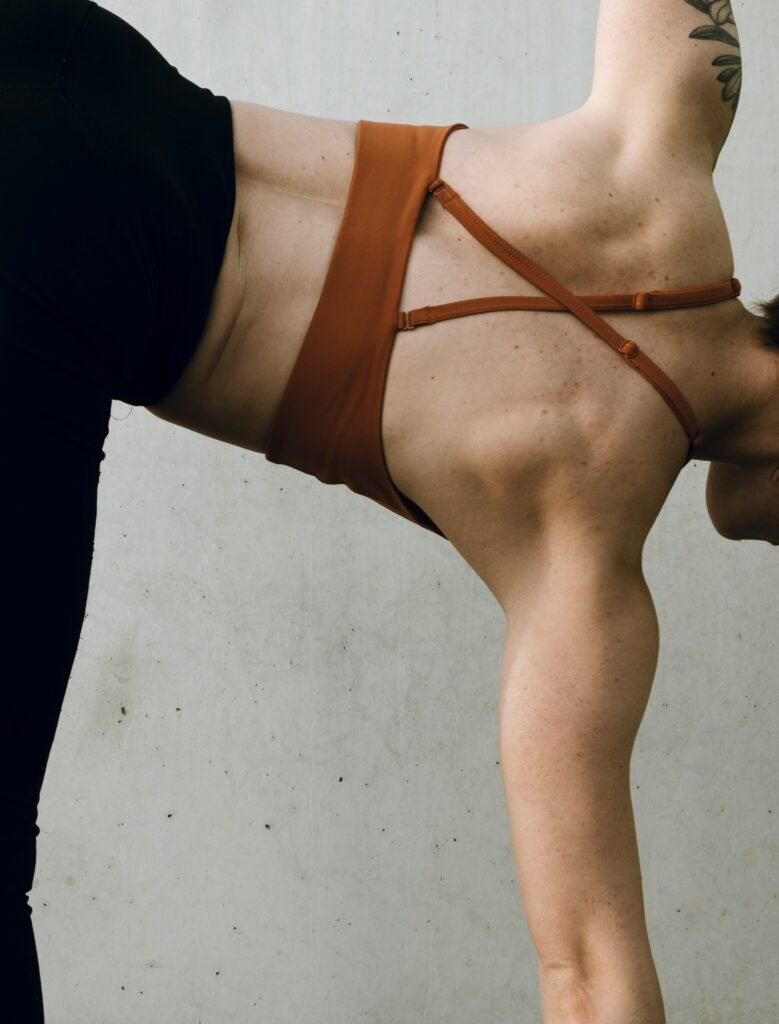
From Last Call to First Light
For a long stretch of the 2010s, brand-hosted “experiences” meant a DJ, a step-and-repeat, and free drinks after 9 PM. Activewear houses have spent the last two years quietly rebuilding that same playbook around 7 AM instead of 11 PM — pilates instead of cocktails, sound bowls instead of speakers, smoothies instead of seltzer. Consumer lifestyle research on Gen Z and millennial social habits has pointed to a broader pullback from late-night nightlife toward earlier, lower-stimulation gatherings, and activewear brands appear to have read that shift closely. A store that used to close at 8 PM now sometimes opens its doors before sunrise for a class that has nothing to do with checkout, at least not directly.
I want to be honest about something unflattering here: my first reaction to all of this was mild irritation. A yoga mat unrolled next to a clothing rack felt, at first glance, like retail cosplay — a Kinfolk-adjacent aesthetic slapped over what is still, underneath, a sales floor. Spending three mornings actually inside these spaces mostly changed my mind, though not entirely. The tension between “sanctuary” and “store” never fully disappears. It just gets quieter.
1. Alo Yoga’s Sound and Meditation Sanctuaries
Alo has built its version of this shift around its Sanctuaries — flagship-adjacent spaces in cities like Beverly Hills, Fashion Island, and the Miami Design District that host recurring sound bath and meditation programming rather than one-off pop-ups. According to trade coverage from WWD, Alo’s March 2026 International Women’s Day programming alone stretched to roughly 270 classes across studios in nine countries, spanning pilates, yoga, meditation, and sound baths, with community wellness walks beginning and ending at Sanctuary locations. That is not a single activation; it is closer to an ongoing calendar.
In my own experience visiting one of Alo’s monthly meditation sessions in a Los Angeles studio, the retail floor had been pushed to the edges of the room, mats laid in loose rows facing a low platform where two practitioners worked crystal bowls and a frame drum. The lighting was dim enough that I genuinely couldn’t tell what was folded on the nearby shelving — shirts, towels, who knows. Forty-five minutes in, lying flat on a mat that was not mine, in a room that smelled faintly of palo santo, I stopped thinking about the brand at all. That, I think, is the actual product being sold: forty-five minutes where the commerce disappears from view, even if it’s three feet away.
2. Sporty & Rich’s Morning Pilates and Smoothie Bar
Where Alo leans toward stillness, Sporty & Rich leans toward brisk, sociable movement followed by a very photogenic beverage. The brand’s SoHo flagship was built from the start with a juice bar and treatment space woven into the retail layout, under founder Emily Oberg’s stated push to be understood as a wellness and lifestyle label rather than a pure streetwear name. Its recurring events page has featured recurring pairings — a pilates class run alongside a partner studio, followed directly by a smoothie bar service — rather than isolated fitness classes.
A recent write-up from wellness events outlet WellUp Collective described a Sunday morning Bare Pilates session staged with Sporty & Rich at a hotel lawn in Coral Gables: mats lined under stone arches, branded gifting waiting at each spot, a clean fifty-minute flow followed by a slow group brunch. I have not personally attended that particular session, so I’ll flag this one clearly as secondary reporting rather than my own trial — but the shape of it matches what I saw at a smaller New York pop-up: pilates first, smoothies after, and a real emphasis on lingering rather than rushing back into the workday. The “Health is Wealth” framing on the brand’s own product pages isn’t subtle, and it doesn’t try to be.
3. Vuori’s Local Run Clubs
Vuori’s version skips the studio floor almost entirely and moves outside. Its ACTV Club program — born, per reporting from Modern Retail, out of pandemic-era virtual classes and expanded once in-person gathering became possible again — now runs recurring run clubs tied to specific storefronts, often paired with a partner studio like a local Barry’s or Lifetime location. A Vuori executive described these events in that same reporting as less about driving an immediate sales spike and more about introducing the store to a neighborhood, with any purchase lift treated as a secondary benefit rather than the goal.
I joined one of these on a weekday morning: a short check-in period, a five-kilometer loop through nearby streets, then an open invitation back into the store for refreshments and browsing. What struck me was how little selling actually happened. Nobody handed me a discount code at the finish line. The store was simply there, open, with people I’d just run alongside now standing near the same rack of jackets, which — or so it seemed to me — did more for brand affinity than any coupon could have.
Building a Version of This at Home
None of this requires a flagship store, a sound bowl practitioner on retainer, or a neighborhood running route with good sidewalks. The underlying pattern — movement, stillness, a shared beverage, a fixed morning time — travels reasonably well into a living room or a small backyard, even if the results are a little rougher around the edges.
What tends to work when I’ve tried this at home:
- Pick one fixed morning slot, ideally before 9 AM, and treat it like a real appointment rather than a “maybe.”
- Choose a single anchor activity — a fifteen-minute guided meditation track, a short mat pilates sequence, or a neighborhood walk — instead of trying to cram in three.
- Prepare one communal element in advance, like a pitcher of smoothie base or a pot of tea, so there’s something to gather around afterward.
- Keep the group small. Four or five people on a living room floor recreates the intimacy of a studio session far better than a large, sprawling gathering does.
- Turn phones face-down or into another room for the activity itself. Community morning routines seem to depend heavily on nobody checking a notification mid-stretch.
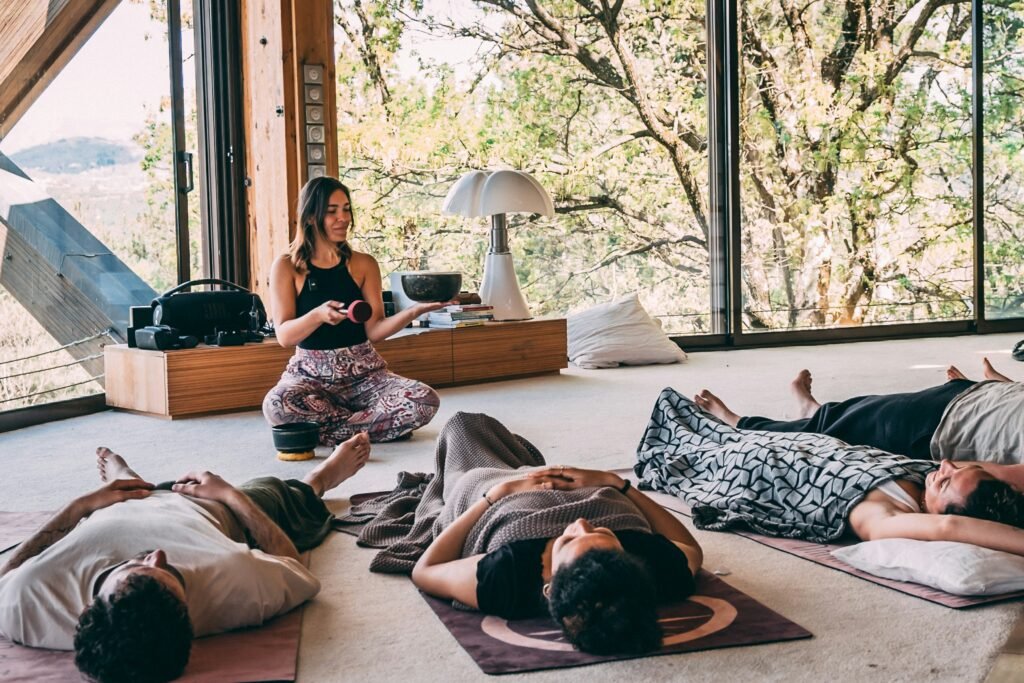
My own attempt — a Sunday sound-bath-adjacent session using a phone app and two mismatched speakers — was, if I’m being fair to myself, a little bit of a mess. The audio cut out twice, my dog investigated the singing bowl app sounds with real suspicion, and one friend fell asleep hard enough to snore through the closing minutes. Sleep researchers might call that a good sign; I mostly call it a good story. Either way, everyone stayed for tea afterward, which felt like the actual point.
Editor’s Note: I went into this piece assuming these events were mostly styling exercises dressed up as community — and some of that skepticism holds. But watching a room full of strangers genuinely settle into forty-five quiet minutes together, on a Tuesday morning, before any of them had opened their laptops, is hard to write off as pure marketing theater. It may be both things at once. I’m not sure that’s a problem.
How to apply this:
- If you’re near a flagship location, check the brand’s own events page rather than a general search — most of these sessions fill through direct sign-up rather than paid promotion.
- Start with one recurring session per month before committing to a weekly habit; the routine tends to stick better once the format feels familiar.
- If replicating at home, budget for imperfection — a slightly awkward first attempt is normal and does not mean the format “doesn’t work” for your household.
This feature is intended for educational and inspirational purposes and reflects the editor’s personal observations alongside publicly available lifestyle and retail reporting; it is not a substitute for professional fitness or wellness guidance.
Leave a Reply