Three Korean facial devices, one sunburned editor, and a week spent figuring out whether a clinic-grade glow is something you can actually rebuild on a bathroom counter. This edit compares the Medicube AGE-R for morning depuffing, the Thome for barrier repair after sun exposure, and the Centellian24 Madeca Prime for pore tightening and glow — with honest notes on what each one is genuinely good at, and where it falls short.
Last Tuesday at 9:40 PM, I was sitting cross-legged on my bathroom floor with three chargers plugged into the same power strip, untangling cords like some kind of skincare electrician. My face still had the faint outline of sunglasses tan lines from a coastal trip that ended four days earlier. My cheeks felt puffy in that specific late-summer way — too much salt, too many iced coffees, not enough sleep on a plane. I had three devices lined up on a towel: a chrome roller-headed thing, a sleek RF wand, and a triangular gadget that looked more like a letter opener than a beauty tool. The plan was simple, or so I assumed, until I actually tried to use all three in one week and realized my skin had opinions about the order.
This is the problem with late-August skin. You come back from somewhere with sun, salt water, and airplane air, and your usual routine — the toner, the essence, the good cream — doesn’t seem to be landing the way it should. A dermatology visit is one option. So is doing nothing and waiting it out. But there’s a third option that a lot of Korean skincare culture leans on: home devices that borrow the same underlying technologies as in-office treatments, dialed down for daily, unsupervised use. That’s what this edit is actually testing — not whether these gadgets replace a clinic, but whether they can meaningfully support post-trip recovery in the hands of someone who is, very clearly, not an aesthetician.
A quick disclosure before we get into it: I am a wellness editor, not a licensed skin professional. Everything below is either something I personally observed using each device over the course of a week, or something I found in device technology write-ups and brand research documentation. I’ve tried to keep those two things clearly separated, because I think readers deserve to know which is which.

1. Medicube AGE-R — For Morning Depuffing and Contour Sculpting
The AGE-R has two metal roller heads that you glide along the jaw and cheekbone using a water-based conductive gel, and it runs on what’s generally described as mid-frequency EMS — a gentle electrical pulse that gets facial muscles to contract and release, the same basic idea behind a workout, just much smaller in scale and intensity. Medicube’s own device documentation frames this as a way to give sub-dermal muscle a kind of passive massage, rather than anything closer to a medical treatment.
In my personal trial, I used it every morning for six days, always before makeup, always on the Up mode with the green indicator light. The gel is non-negotiable — I tried it dry once out of laziness and immediately regretted it, since the roller heads need a slick surface to glide instead of dragging. The sensation itself is mild, almost ticklish along the jaw, more noticeable and slightly odd around the cheekbones. What surprised me was less the tingling and more the immediate visual difference in puffiness. My under-eye area and the sides of my jaw looked less swollen within about ten minutes, which lines up with something skincare device literature repeatedly points to: manual massage motion combined with mild electrical stimulation is thought to support circulation, and better circulation is one of the more established explanations for why depuffing devices work at all, even before any longer-term muscle-toning claims come into play.
I’ll admit an unflattering detail here — on day three I fell asleep with the gel still on my jaw and woke up with a slightly tacky patch of skin and a faint pillow crease that took an hour to fade. Not a device failure, just an honest reminder that these things ask for a little attention, not blind trust.
Where the AGE-R earns its keep is specifically in that morning, post-flight, slept-badly window. It is not, in my trial, a dramatic contouring transformation over one week — the visible lift claims that circulate online tend to describe cumulative use over months, not days — but as a quick de-puff before you leave the house, it did its job every single time I used it correctly.
2. Thome — For Barrier Repair and Deeper Serum Absorption
Where the AGE-R is mechanical and roller-based, Thome’s device works through a combination of radiofrequency warmth and dual LED light, paired with a vibration motion that’s meant to help product glide in rather than just sit on top of skin. Radiofrequency, in plain terms, gently warms the surface layers of skin using a small electrical current, and that warmth is generally associated with encouraging skin to behave the way it does after light heat exposure — slightly more receptive, slightly more relaxed. Some Thome models pair this with LED, alternating between tones that are marketed toward tone-evening and toward general skin comfort.
I want to be careful here, because “radiofrequency” and “LED” can sound more clinical than they are in a device this size. This is not the same intensity as an in-office RF treatment. It’s closer to a warm, glowing wand that you move slowly across freshly applied serum.
In my personal trial, I used the Thome four evenings that week, directly after my post-vacation skin started flaking slightly along my nose and cheekbones — the classic aftermath of sun and dry cabin air. I applied a barrier-support serum first, then moved the device in slow upward strokes for roughly eight minutes per session, following the brand’s suggested routine length. The warmth builds gradually rather than all at once, which I appreciated, because my skin was genuinely a little reactive that week and I did not want anything intense. By the fourth session, the flaking along my nose had noticeably calmed, and my skin held moisture longer through the day — though I want to be honest that a humidifier and a heavier night cream were also part of that week, so I can’t credit the device alone. What I can say with more confidence, based on how the device is described in dual radiofrequency and LED skincare technology overviews, is that the underlying mechanism — gentle heat plus light, applied while a hydrating serum is still wet on skin — is a reasonable, low-risk approach to supporting a compromised barrier, even if it isn’t a guaranteed fix.
One practical note: this is the device I’d recommend using at night rather than the morning, purely because the warmth and slower pace felt more like a wind-down ritual than a wake-me-up one.
3. Centellian24 Madeca Prime — For Pore Tightening and a Gua Sha–Style Glow
The Madeca Prime looks the least like a “device” of the three — its triangular head is closer in shape to a jade gua sha tool than to anything electronic, which turns out to be the point. It runs on microcurrent, a lower-intensity current than EMS, generally associated less with muscle contraction and more with a subtle, cumulative toning effect, and it’s designed to be used with the same kind of sweeping, gliding motion you’d use with a traditional stone tool, following the contours of the cheek and jaw rather than sitting in one spot.
In my trial, I used it on the three evenings when my skin felt tightest and most sun-tired, gliding it from the center of the face outward, the way the included guide illustrates. It has multiple light-based modes — one aimed at gentle surface renewal, one meant to help serum move past the very top layer of skin, and one focused on longer-term elasticity support — and I mostly stuck to the absorption-focused mode, applying a centella-based ampoule first and letting the device work it in. The sensation is the mildest of the three devices by a clear margin, more of a low hum than a tingle, and that’s consistent with how skincare device technology sources generally describe microcurrent tools relative to EMS or RF — gentler, slower-building, less immediately dramatic.
Where it genuinely surprised me was pore appearance around my nose and cheeks, which had looked slightly congested after days of sunscreen layering and salt air. After using it alongside the ampoule for three consecutive nights, that area looked visibly smoother and less textured by morning — a difference I noticed while doing my normal skincare, not while actively looking for one, which felt like a fairer test. Dermatological engineering studies on microcurrent and electroporation-style devices generally attribute this kind of short-term glow to improved product penetration and mild lymphatic-style movement rather than any structural skin change, and that tracks with what I saw: real, but closer to “good skin day” than “different face.”
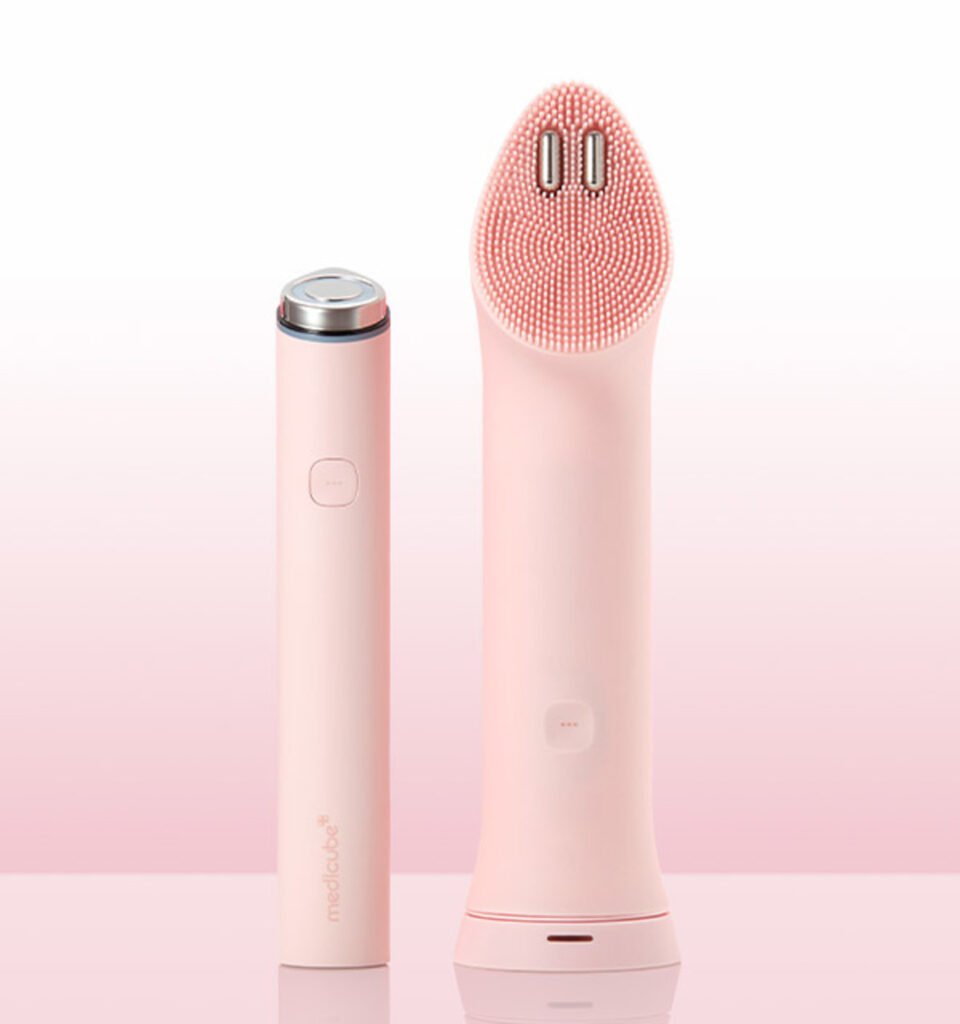
What a Week of Rotating Devices Actually Taught Me
None of these three devices are interchangeable, and using them back to back made that obvious in a way that reading spec sheets never would have. The AGE-R is a morning tool built for puffiness and quick contour. Thome is an evening tool built around warmth, light, and absorption, better suited to skin that’s dry or mildly irritated. The Madeca Prime sits in between — quiet, gentle, and best saved for nights when your skin looks congested rather than inflamed.
If I had to build a realistic late-August recovery week, I’d rotate rather than layer all three daily. My own week ended up looking like AGE-R most mornings, Thome on nights my skin felt tight or flaky, and Madeca Prime on the one or two nights my pores looked their worst. That rotation, more than any single device, is what actually got my skin back to a place that looked like mine again by the following Monday.
Editor’s Note: I went into this trial expecting to pick a favorite, and I didn’t, which is probably the most honest thing I can tell you. The AGE-R is the one I reached for without thinking twice, mostly because mornings don’t leave room for an eight-minute ritual. But if I’d traveled somewhere drier or harsher on my skin, Thome would have earned that spot instead. My real takeaway is less about which device wins and more about matching the tool to what your skin is actually doing that week, instead of running the fanciest one on repeat out of habit.
How to apply this:
- If you’re dealing with morning puffiness after travel, reach for an EMS-style device like the AGE-R before makeup, always with conductive gel, never on dry skin.
- If your skin feels tight, flaky, or sun-stressed, an RF-and-LED device like Thome paired with a barrier serum is a gentler evening option than adding new active ingredients.
- If pores look congested or texture feels rough after heavy sunscreen use, a microcurrent tool like the Madeca Prime, used slowly with an ampoule, tends to show results before more intense options.
- Patch test any new device on your inner arm the first time, and stop immediately if you notice unusual redness, stinging, or irritation that doesn’t settle within a few minutes.
- None of these are substitutes for basic sun protection — the best recovery routine still starts with not needing one.
This feature reflects one editor’s personal trial alongside general device technology research, and is intended for educational and inspirational purposes only — not as a substitute for professional dermatological advice.
Leave a Reply