This edit breaks down athletic footwear by what your body actually does in each session, not by which logo is trending. We separate running shoes, lifting shoes, and daily wellness shoes by midsole geometry, ankle stability, and toe space, then walk through a fitting checklist you can use in a store aisle tonight. A few popular brand profiles — On, Hoka, Nike Metcon, Nobull — are compared on fit character rather than marketing copy. None of this replaces a proper gait assessment, but it should stop you from buying the wrong shoe twice in one year.
Last Tuesday at 6:50 AM, I was standing in my kitchen in yesterday’s running shoes, about to do a set of goblet squats because my actual training shoes were still damp from a rained-out walk the day before. My heel kept lifting a fraction of an inch at the bottom of each squat. Small thing. Annoying thing. By the third set my left knee was complaining in a way it doesn’t usually complain, and I stopped to actually look at what was on my feet — a soft, stacked running shoe with a rocker curve built for forward motion, not for standing still under a weighted bar.
That’s the whole premise of this edit, really. Not “which shoe is best,” because that question doesn’t have an answer. The better question is: what is this shoe built to do, and does that match what I’m about to do to it.
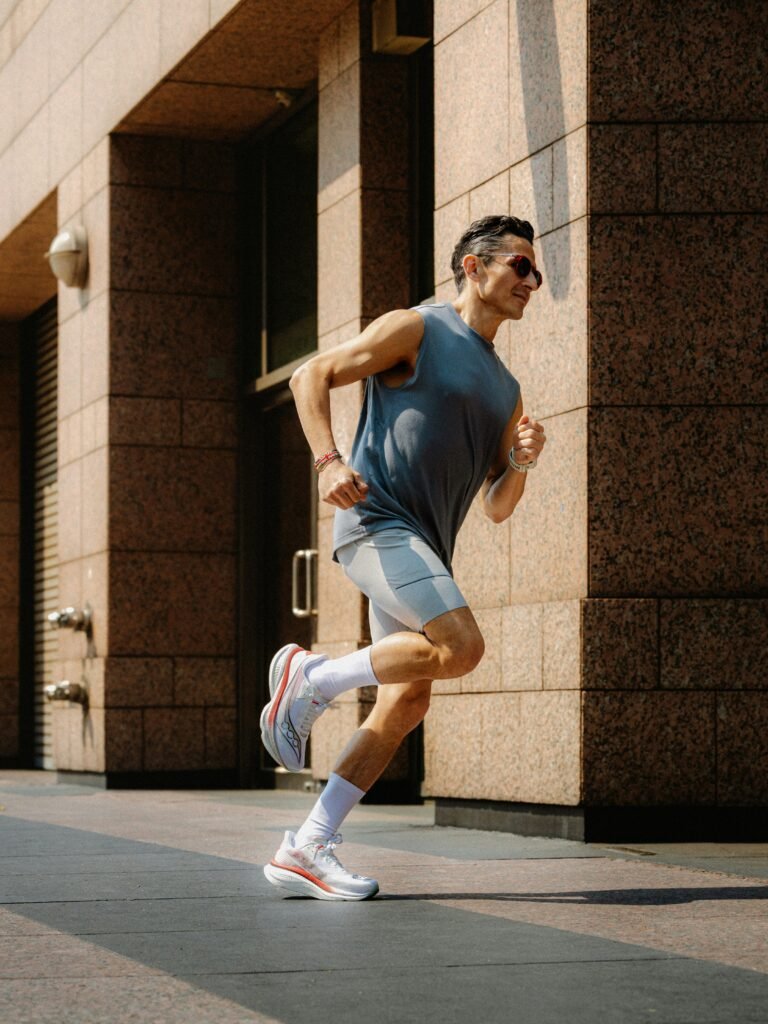
1. Running Shoes
Running shoes are built around one central idea — absorb impact, then help the foot roll forward into the next stride. The midsole is doing most of that work. Thicker, softer foam stacks (the kind you’ll see on nearly everything in 2026’s running walls) cushion the repeated pounding of pavement or treadmill belt, and many now use a rocker sole — a curved bottom profile that tips your foot forward at toe-off so you’re not relying purely on ankle flexibility to finish the stride.
In my own easy-run sessions, I’ve noticed the rocker shoes feel almost like they’re gently pushing me along by the last mile, when my form would otherwise start to sag. That’s a real, felt difference, not a marketing line. Sports biomechanics research on rocker-soled and highly cushioned running shoes has generally suggested they can reduce loading rates through the foot and lower leg during repetitive impact, which is one reason they’ve become the default recommendation for higher-mileage runners. The trade-off — and this took me longer to notice than I’d like to admit — is that a very soft, high midsole can feel unstable the moment you ask it to do anything sideways, like a quick cutting drill or a hill scramble over loose rock.
If most of your week is forward motion on a predictable surface, this category earns its shelf space. If your “run” is really a mixed circuit with lateral movement mixed in, it starts to work against you.
2. Lifting & Training Shoes
Lifting shoes solve almost the opposite problem. Where running shoes cushion and roll you forward, training shoes want you planted, flat, and stable — a firm, low, often zero-drop sole that keeps your heel close to the floor instead of elevated on foam. That flatter platform gives your foot a more direct connection to the ground under a barbell, which matters more than people expect until they’ve felt the alternative.
I learned this the embarrassing way, in a deadlift session a few months back, wobbling through a set in the same cushioned running shoes from the story above — or so I assumed would be fine, until my back foot rolled slightly on the last rep and I had to bail the bar. A flat, firm sole removes that soft give underneath you, and the good ones add a wider, grippier outsole at the midfoot for lateral ankle support during side-to-side drills, box step-ups, or agility work. Training shoe research and coaching literature on footwear stability during resistance training tends to point in the same direction: less compressible material under the heel generally means better force transfer and less unwanted foot movement during heavy, vertical lifts.
The catch is comfort over distance. These shoes are not built to be walked in for miles, and most lifters I’ve talked to keep a separate pair just for the platform and a real running shoe for everything else.
3. Daily Walking & Wellness Shoes
This is the category people skip past because it sounds boring, and it’s probably the one doing the most quiet damage when it’s wrong. Daily wellness shoes need to handle hours, not sets or intervals — long walks, standing at a counter, errands, the in-between movement that adds up to more total foot-time than any workout. The two things that matter most here are a roomier toe box, so the front of the foot can spread naturally with each step, and genuine arch support that holds the midfoot instead of just cushioning it.
On a personal note, I switched my everyday pair last spring after a podiatry-adjacent physical therapist mentioned, almost in passing, that a narrow toe box over many walking hours can contribute to the kind of arch heel tightness I’d been quietly living with for months. I didn’t expect a shoe swap to change much. It did, within about two weeks — not dramatically, but noticeably less end-of-day ache. Podiatry-aligned research on toe box shape and midfoot support has generally suggested that adequate forefoot splay and arch contact may ease strain associated with prolonged standing and walking, though individual foot shape plays a large role in how much any single pair helps.
A Practical Fitting Checklist
None of the category advice above matters much if the shoe doesn’t actually fit the foot standing in it. A few things worth checking before you buy:
- Check your natural pronation alignment — stand barefoot and watch how your ankle sits; a foot that rolls noticeably inward or outward at rest will need different support than a neutral one, and this is worth confirming with a specialty running store’s gait check rather than guessing.
- Fit shoes in the evening. Feet swell over the course of a day, sometimes by half a size, so an evening fitting — the closest thing to a golden hour for shoe shopping — gives a more honest read than a morning try-on.
- Leave 0.5–1cm of space at the longest toe, roughly a thumb’s width, so the foot has room to move forward slightly on impact without jamming into the front.
- Walk, don’t just stand, in the store. A shoe that feels fine stationary can reveal heel slip or midfoot pinch the moment you’re actually moving.
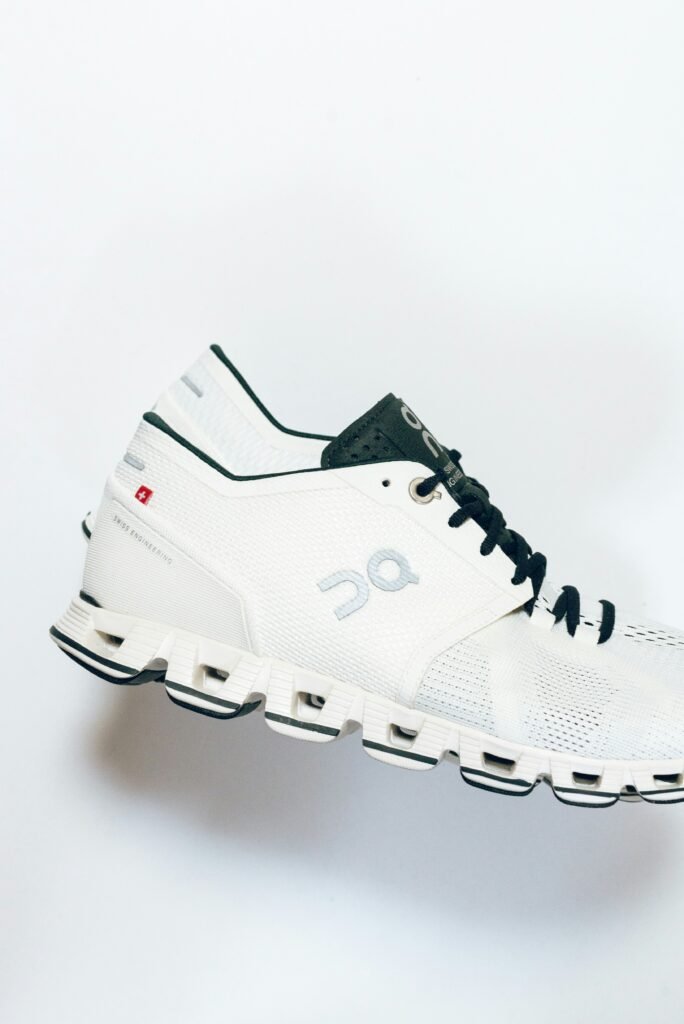
A Few Popular Brand Profiles, Compared Honestly
On Running shoes tend to lean toward a firmer, more responsive ride than their soft-looking sole design suggests, which makes them a reasonable middle ground for people who run and do some general training in the same week. Hoka built its identity on maximum-stack cushioning and a pronounced rocker, and in my own longer, slower runs that shape has genuinely eased end-of-run soreness in my shins — though the same stack height can feel oddly disconnected during quick direction changes. Nike Metcons sit at the other end entirely, with a firm, largely flat platform and a reinforced heel meant for barbell work and rope climbs, not distance. Nobull takes a similar flat, no-frills approach but with a simpler upper and less cushioning overall, which training-focused reviewers and everyday lifters alike tend to describe as closer to a minimalist training shoe than a hybrid one. None of these is objectively superior — they’re just built around different assumptions about what your foot will be doing.
Editor’s Note: I used to think owning one “good” pair of athletic shoes was enough, mostly because buying two felt indulgent. I don’t think that anymore. The kitchen-squat morning made the case better than any research citation could — the wrong sole under the wrong movement asks your joints to compensate, quietly, workout after workout, until something finally complains loudly enough to notice. Buy for the movement, not the season’s most photographed release.
How to apply this:
- If your week is mostly steady-state running or treadmill cardio, prioritize a cushioned, rockered shoe and rotate pairs if mileage climbs.
- If your week includes barbell lifts, box jumps, or lateral drills, keep a flat, firm-soled training shoe separate from your running pair.
- If most of your movement is walking, standing, or daily errands, choose for toe box room and arch contact over stack height or looks.
- When in doubt about your own foot mechanics, a short gait assessment at a specialty store or with a physical therapist is worth more than any single article, including this one.
This feature is intended for educational and inspirational purposes only and is not a substitute for a personalized fitting or professional podiatric assessment.
Leave a Reply