Gua sha isn’t a miracle tool, and it won’t erase a bad night’s sleep. What it can do — gently, and with the right angle and enough slip — is nudge stagnant fluid along, soften a clenched jaw, and give five puffy minutes back to your reflection. This guide walks through the material choices, the actual technique, and where the research does and doesn’t back up the hype, based on three weeks of testing three different tools on the same tired face.
Last Tuesday at 6:50 AM, standing in front of a fogged-up bathroom mirror with four drops of squalane oil pooling in my palm and a jade gua sha stone in the other hand, I looked, frankly, like a marshmallow. Salty ramen the night before, a glass of wine I didn’t need, and eight hours flat on my back had done what they always do — my jaw had disappeared, my under-eyes had a faint shine to them, and my forehead felt tight in that specific way that has nothing to do with wrinkles and everything to do with tension I didn’t know I was holding. I pressed the flat edge of the stone against my jawline and dragged it, slowly, toward my ear. Nothing dramatic happened. That’s kind of the point.
What Gua Sha Actually Does (and Doesn’t)
The word itself comes from a much older practice — traditional Chinese medicine used a coin or a spoon’s edge to scrape the skin on the back or neck, usually hard enough to raise small red marks, in order to relieve muscle pain and what practitioners described as stagnant “sha,” or blood. The facial version popular now is a different animal almost entirely. It uses far lighter pressure, a smaller tool, and it’s aimed at the lymphatic system rather than deep muscle tissue.
Here’s the plain-English version of what’s going on under the skin. Your face has a network of lymph vessels that carry away waste fluid, the same way a slow drain clears a sink. When you sleep flat, eat something salty, or just sit hunched over a laptop for ten hours, that fluid can pool instead of moving, which shows up as puffiness — especially under the eyes and along the jaw. Lymphatic research suggests that light, directional pressure toward the lymph nodes near the ears and collarbone can encourage that fluid to drain more efficiently, similar in principle to manual lymphatic drainage massage used in physical therapy settings. It’s not that the tool is pulling toxins out of your face, or so I assumed until a dermatologist friend corrected me over coffee — it’s closer to encouraging traffic that’s already backed up to start moving again.
The second half of the appeal is about tight facial tissue and muscle tension, not “sculpting” in the way filler or a jawline exerciser might sculpt. A lot of us carry tension in the jaw and forehead without noticing — clenching while we sleep, or squinting at screens. Gentle, sustained pressure along those areas is thought to ease that tightness the same way a shoulder rub eases a knotted trapezius. It won’t change your bone structure. It might change how relaxed your face looks by 9 AM.
1. Jade and Rose Quartz — Gentle Daily Cooling
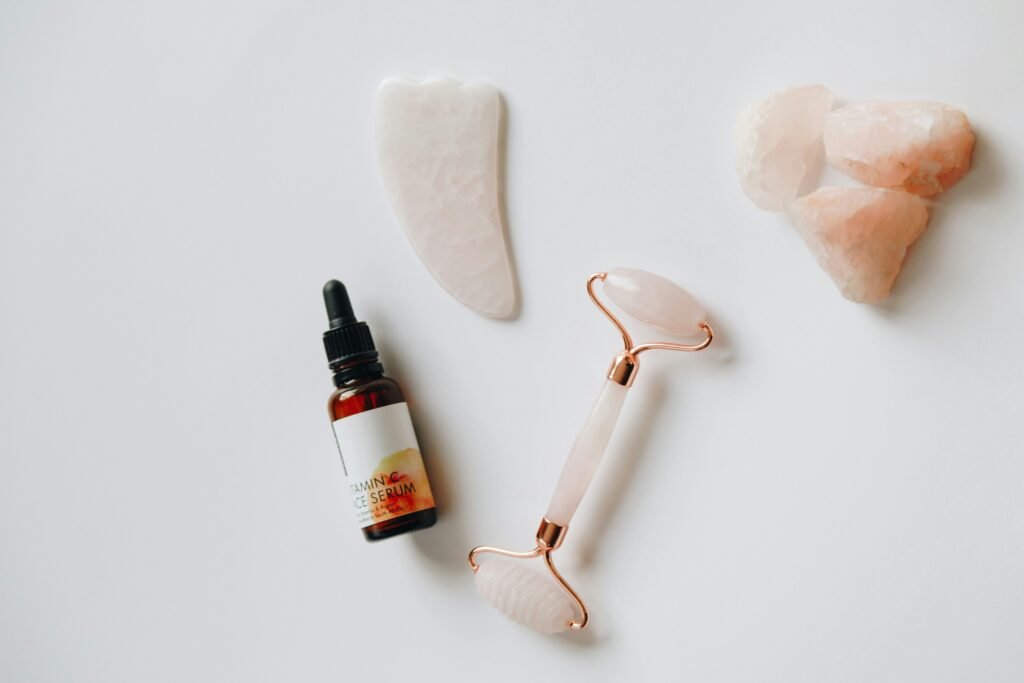
These are the two stones most people picture when they hear “gua sha,” and for good reason: they’re forgiving. Jade has a slightly cooler, denser feel in the hand, while rose quartz runs a touch warmer and softer to the touch, though the difference is subtle enough that most people choose based on color rather than performance. Both hold a light chill for a minute or two after they’ve been in the fridge, which feels genuinely nice on a puffy morning face, and both are soft enough on the skin that they’re close to foolproof for a beginner. In my own trial, the rose quartz tool was the one I reached for on lazy mornings — low commitment, low risk of dragging too hard, and it looked pretty enough sitting on the sink that I actually remembered to use it. The tradeoff is that stone tools chip and crack if dropped on tile, so they need a slightly babied kind of care.
2. Stainless Steel — Ultra-Hygienic Cooling
Steel is the newer entrant, and it’s popular for reasons that have less to do with feel and more to do with practicality. It’s non-porous, so it doesn’t harbor bacteria in tiny surface cracks the way some lower-grade stones can, and it wipes clean with a drop of soap and water in seconds — genuinely useful if you’re using gua sha daily and don’t want to think too hard about hygiene. It also holds cold far longer than stone does, so if depuffing is your main goal, a steel tool kept in the freezer door delivers a noticeably colder, longer-lasting sensation. The tradeoff, at least for me, was that it felt almost too slick and cool against my skin first thing in the morning — a small thing, but it changed how long I wanted to hold it against my face. Worth trying if under-eye puffiness is your main complaint.
3. Ceramic — Deeper Muscle Pressure
Ceramic tools tend to be a bit heavier and less forgiving than stone, with a firmer edge that’s better suited to people who want more pressure on the jaw and cheek muscles rather than a light surface glide. I found the ceramic tool I tested worked best after a stressful workday, when my jaw genuinely felt clenched rather than just puffy — the extra weight did more of the work for me instead of me pressing harder with a lighter tool. It’s not the one I’d hand a total beginner, since the firmer edge makes it easier to drag too hard or catch a fold of skin if your technique isn’t dialed in yet. But for anyone who’s outgrown the gentle stones and wants to feel like the tool is actually doing something, it’s the better upgrade.
The Technique That Actually Matters More Than the Stone
Everyone asks which material is “best,” and honestly, the tool matters far less than how you use it — this is the part most tutorials rush through. Two rules make or break the whole routine.
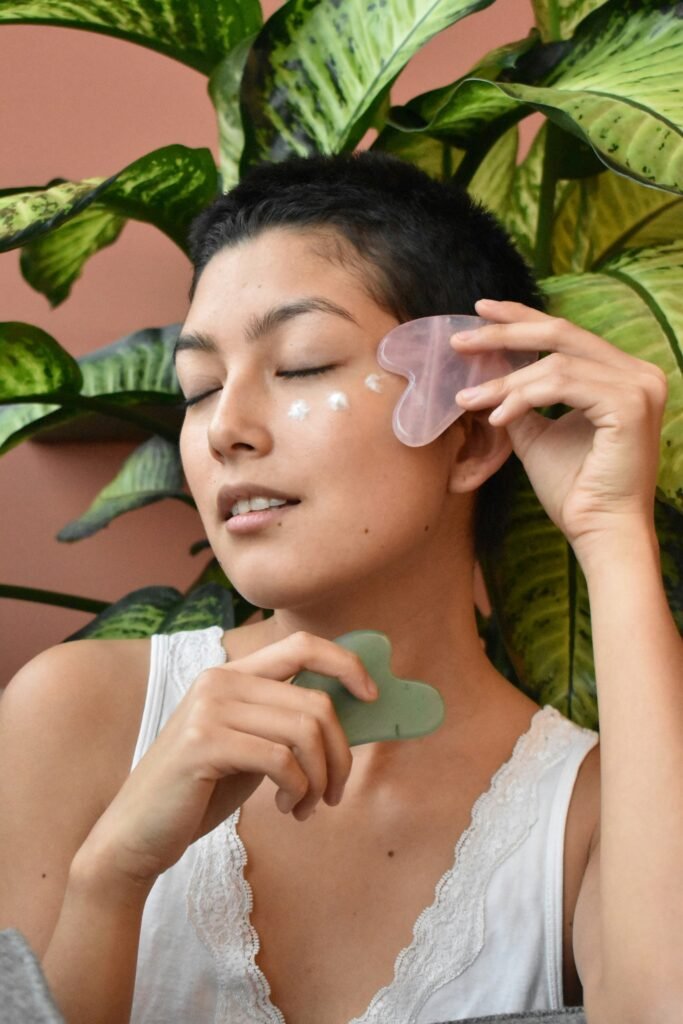
First: slip. A dry gua sha pass across dry skin doesn’t glide, it tugs, and tugging is where people accidentally create irritation or, over time, contribute to skin laxity rather than helping it. You need a generous layer of facial oil or a slippery cream underneath — enough that the tool moves without any resistance at all. I under-oiled my face during my first two attempts and could feel the difference immediately; by the third morning, using nearly double the oil I thought I needed, the whole process finally felt the way it’s supposed to.
Second: angle. The tool should stay close to flat against your skin, tilted at roughly a 15-degree angle rather than held up on its edge like a butter knife. A steep angle concentrates pressure into a thin line and can scrape rather than glide; a flat angle spreads the pressure across a broader surface, which is both gentler and, per most facial massage guidance, more effective at moving fluid rather than just moving skin. Strokes should be light — think the pressure of smoothing on a sheet mask, not the pressure of scraping ice off a windshield — and always directed outward and upward, toward the lymph nodes at the ear and down the neck, never back toward the center of the face.
An Honest Admission About Timing
I wanted to report back that gua sha transformed my face in three weeks. It didn’t, not in any way a camera would catch. What it did do, consistently, was take the edge off morning puffiness within about five to ten minutes of a session — a genuinely useful trick before an early meeting — and it gave me a small, calming ritual that made we want to actually finish my skincare routine instead of half-doing it and scrolling my phone instead. The depuffing effect is real but temporary, generally fading back within several hours, which lines up with the current, still-developing research: this is a fluid-movement effect, not a structural one. Anyone expecting a jawline that stays sharper for good is going to be disappointed. Anyone hoping for a genuinely soothing five minutes and a slightly less puffy face for their commute is going to be satisfied.
Editor’s Note: I was skeptical going into this — gua sha has that slightly overhyped, TikTok-skincare-trend sheen to it that makes me want to roll my eyes on principle. Three weeks in, I’m not converted into a believer in facial sculpting, but I am a believer in the five minutes of stillness it forces into a rushed morning, and in the genuinely visible depuffing on a bad-sleep day. Buy whichever stone feels good in your hand. The angle matters more than the price tag.
How to apply this:
- Choose jade or rose quartz if you’re new to gua sha and want a gentle, low-risk entry point
- Reach for stainless steel if under-eye and morning puffiness is your main concern and you want maximum chill retention
- Try ceramic once you’re comfortable with the basics and want more pressure on a genuinely tense jaw
- Always apply a generous facial oil first — more than feels necessary
- Keep the tool nearly flat, around a 15-degree angle, and stroke outward and upward toward the ear and down the neck
- Treat any lasting depuffing or sculpting result as temporary, not permanent
This feature is intended for educational and inspirational purposes only and does not substitute for professional dermatological or medical advice.
Leave a Reply