Somewhere between the overhead bulb that makes you squint at 7 p.m. and the phone screen that keeps your brain awake at 11, most homes are quietly running a low-grade stress experiment on the people inside them. This piece breaks down what color temperature and fixture placement actually do to your nervous system — not in theory, but room by room. It’s less about buying nicer lamps and more about where light hits your eyes, and when. By the end, you’ll have a setup you can build this weekend, not someday.
I was on my hands and knees under the couch, hunting for an earring back, when the overhead light buzzed on above me — one of those flat 6500K daylight bulbs someone (me, past me, six months ago) installed because it was “brighter for cleaning.” My eyes actually hurt. Not dramatically. Just that dry, tight squint you do without noticing, the one that makes your jaw clench a little too. I found the earring back. I did not feel calm about it.
That moment is basically the whole article, so let’s start there instead of pretending this is some abstract wellness concept.
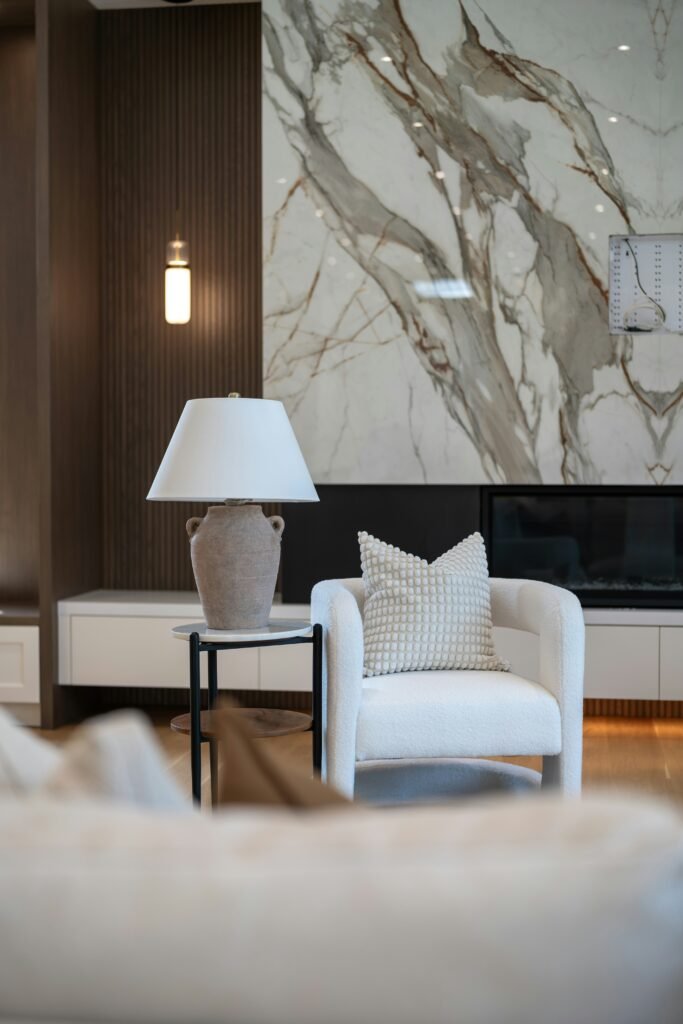
The overhead 6500K bulb is doing more than lighting the room
Most daylight-temperature bulbs — the ones labeled 5000K to 6500K, the cool-white or “daylight” option at the hardware store — mimic the color of the sky around noon. Which sounds harmless. It isn’t, at least not after dark.
Light in that range is heavy on blue wavelengths. Your eyes have specialized cells (intrinsically photosensitive retinal ganglion cells, if you want the term) that respond specifically to blue light and report straight to your hypothalamus — the part of your brain regulating your internal clock. When those cells fire in the evening, your body reads it as “still daytime,” which suppresses melatonin and keeps cortisol from doing its normal evening decline. So you’re standing in your kitchen at 8 p.m. under a bulb that’s telling your nervous system it’s noon. Your body believes it.
This is the mechanism behind why so many people feel a specific, hard-to-name tension in rooms lit by overhead daylight bulbs at night — it’s not the room, it’s the wavelength.
The fix isn’t “dimmer lights.” It’s warmer ones, placed lower, out of your direct sightline. More on that below.
For lowering evening cortisol without dark-room squinting
This is where 2700K comes in — the warm, amber-leaning temperature you get from most “soft white” bulbs and nearly all candlelight. It sits at the opposite end of the spectrum from daylight bulbs, low in blue wavelength output, and it doesn’t trigger the same alertness response in those retinal cells.
The research on this is fairly consistent: warmer light in the evening correlates with lower measured cortisol and easier sleep onset, compared with cool white light at the same brightness. Same lumens, different chemical response. It’s the color, not the intensity, doing most of the work — which surprised me, honestly, because I assumed dimmer was the whole answer until I actually swapped bulbs and realized brightness wasn’t the variable that mattered.
Here’s the asymmetric breakdown, because a lighting comparison shouldn’t look like a spreadsheet:
2700K Warm White — Table lamps, floor lamps, wall sconces below eye level | Minimal blue-wavelength stimulation; supports natural melatonin rise starting around dusk
3000K Soft White — Kitchen task lighting, bathroom vanity | Mild alertness support without full daylight suppression; usable pre-9 p.m.
5000K–6500K Daylight — Overhead fixtures, garage, home office desk lamps | High blue-wavelength output; appropriate for daytime focus, disruptive after sundown
Under 2200K “Ember” or candle-style LED — Bedside, hallway night lighting | Near-zero circadian interference; best for the final hour before sleep
None of this means you need four different lamp categories. It means the same bulb type in your kitchen at noon should probably not still be running at 9 p.m.
Why indirect up-lighting calms the nervous system in a way overhead light doesn’t
Here’s the part that isn’t about color temperature at all — it’s about geometry.
Direct overhead light hits your eyes from above at a steep angle, which is close to how your visual system reads “exposed” or “unshaded.” Evolutionarily, wide-open, top-lit environments are associated with vigilance — you can be seen, there’s nowhere to retreat to, your visual system stays slightly more activated scanning the space. Indoors, in 2026, that translates to a subtle, low-level “on” feeling that most people never consciously connect to their light fixtures.
Indirect lighting — light bounced off a wall or ceiling from a lamp placed low, rather than shone straight down or straight at you — removes the light source from your direct line of sight. You get illumination without the visual stimulus of a bright point. This is the actual mechanism behind why uplighting “feels” calmer, and it’s measurable: studies using ambient lighting conditions in clinical and hospitality settings show lower reported anxiety and lower skin conductance (a stress-response marker) under indirect, wall-washed light compared with direct overhead exposure at equal brightness.
(I’ll admit I was skeptical of this one specifically — it sounded like the kind of claim that gets repeated in design blogs without much behind it. Then I moved one lamp from my desk to the floor behind a bookshelf, angled at the wall, and stopped getting that tight, watched feeling by 9 p.m. Correlation, not proof. But my nervous system didn’t ask for a citation.)
Practical placement, for the room that needs it most:
Floor lamp behind furniture, angled at wall — Living room, reading corner | Removes direct glare from peripheral vision; reduces low-grade vigilance response
Wall sconces at or below shoulder height — Hallways, bedrooms | Keeps light source out of primary sightline while walking or lying down
Under-cabinet or plinth lighting — Kitchen, bathroom | Provides task visibility without a single bright overhead point
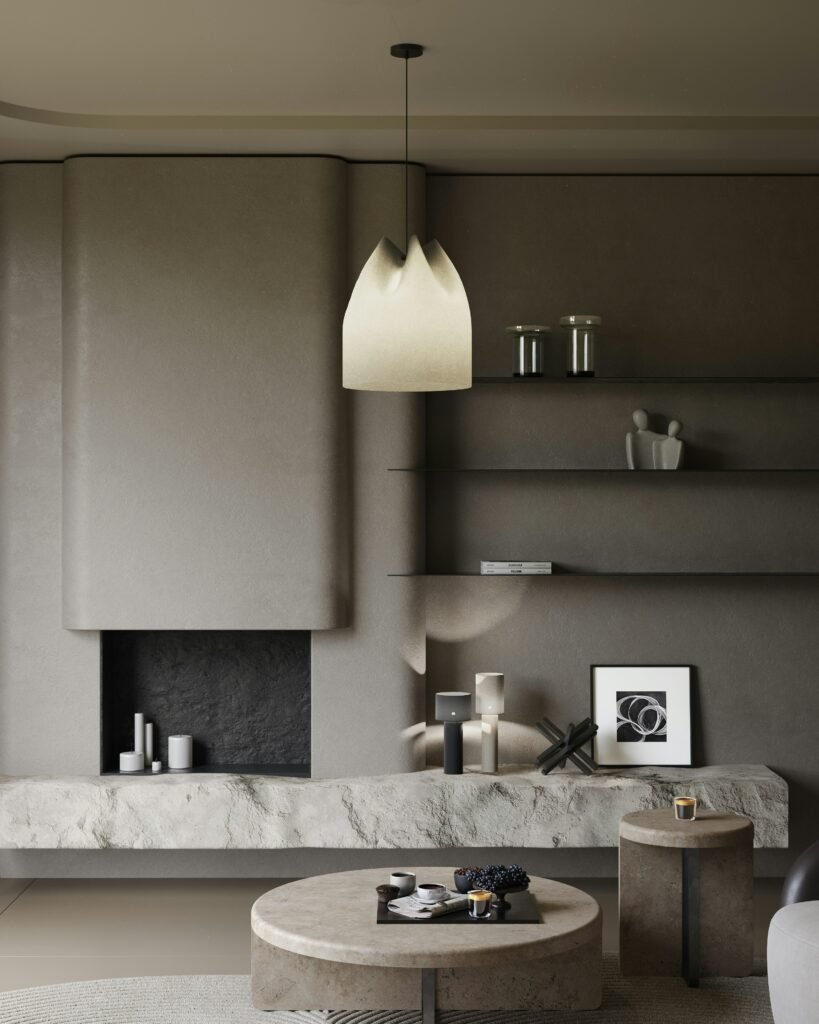
Setting up dimmers and smart bulbs for actual circadian alignment (not just “mood lighting”)
Smart bulbs get marketed as a luxury upgrade, but the stress-reduction case for them is fairly plain: your light should shift color temperature and brightness across the day the way daylight naturally does, and doing that manually with lamp swaps is not realistic for most people. Which is fair — I don’t swap bulbs at 6 p.m. either.
A basic circadian-aligned setup, described by trigger rather than clock time:
- When shifting the brain out of high-alert daytime mode — set smart bulbs or a dimmer switch to drop from daylight (5000K+) to warm white (2700–3000K) as soon as the sky starts changing outside, not at a fixed hour. Sunset time moves; your lighting should move with it.
- For protecting evening melatonin flow without dark-room squinting — layer low-level warm lamps instead of one bright source. Three dim lamps at 2700K beat one bright lamp dimmed halfway; the eye responds to the brightest point in a room, not the average.
- For pre-sleep wind-down (last 30–45 minutes) — drop to sub-2200K “ember” tones if your bulbs support it, and get the source below eye level. A bedside lamp on the floor does more here than a dimmed ceiling fixture ever will.
- For mornings, the reverse applies — cooler, brighter light early helps cortisol do its normal healthy morning rise, which is part of what makes you feel alert rather than groggy. This is the one place daylight-temperature bulbs are actually doing their job correctly.
Smart dimmers (Lutron Caséta and Philips Hue are the two most commonly recommended, though there are cheaper options now) let you schedule this instead of remembering it, which matters — I set mine up once, badly, forgot to adjust it for daylight saving time, and spent about six weeks with my “evening” warm-light trigger firing an hour too early. Small thing. Fixed it eventually. It still worked better than no schedule at all.
The Room-by-Room Reset
Editor’s Note: Everyone talks about blackout curtains and white-noise machines when they talk about sleep and stress, and almost no one talks about the bulb over their kitchen sink — which is, in my experience, doing more damage most evenings than the mattress ever will. If I could get people to change one thing, it wouldn’t be their skincare routine or their supplement stack. It would be moving one lamp off the desk and onto the floor.
How to apply this, by situation:
- Kelvin transitions — daylight (5000K+) before 5 p.m., soft white (3000K) through early evening, warm (2700K) after dark, sub-2200K in the final hour before bed
- Shadow layering — at least one light source below eye level in every room you spend evening time in; overhead-only lighting is the pattern to break first
- Evening dimmers — set to shift automatically at sunset, not a fixed clock time, so the transition tracks the actual season
- Screen pairing — if a phone or laptop is on after dark, warm ambient lighting in the room does more to offset the blue-light exposure than a screen filter alone
I still have that 6500K bulb, for what it’s worth. It’s in the garage now, where it belongs, lighting a workbench instead of my evenings.
This article reflects general lighting and circadian-health research and is not a substitute for medical advice — if stress or sleep issues are persistent, a doctor is a better resource than a lamp.
Leave a Reply