Water used to be the thing you drank so you could stop thinking about drinking water. Now it comes with a mineral count, a sourcing story, and a price tag that would’ve bought a bottle of decent wine a decade ago. This is about why that happened — the real chemistry behind it, not just the packaging — and where the line sits between genuine cellular benefit and expensive marketing. Some of it holds up. Some of it doesn’t, and I say so.
The receipt was already printing before I saw the price on the shelf tag properly — $9.80, for a bottle of water, next to the oat milk. Not flavored, not vitamin-spiked. Just water, with a mineral profile printed on the back in numbers that meant nothing to me at the time: TDS 1,200 mg/L, magnesium 108mg, bicarbonate 1,715mg. I didn’t put it back. I did stand in the aisle for a second longer than a person buying water probably should.
That’s the moment worth naming, because it’s happening in kitchens and gyms and hotel minibars everywhere right now: water has quietly crossed out of the survival category and into the self-care aisle, sitting next to the serums and the adaptogens. Not because we suddenly need more of it — the body’s water requirement hasn’t changed — but because what kind of water has become a wellness decision people are willing to pay for, the same way they pay for extra virgin over regular olive oil.
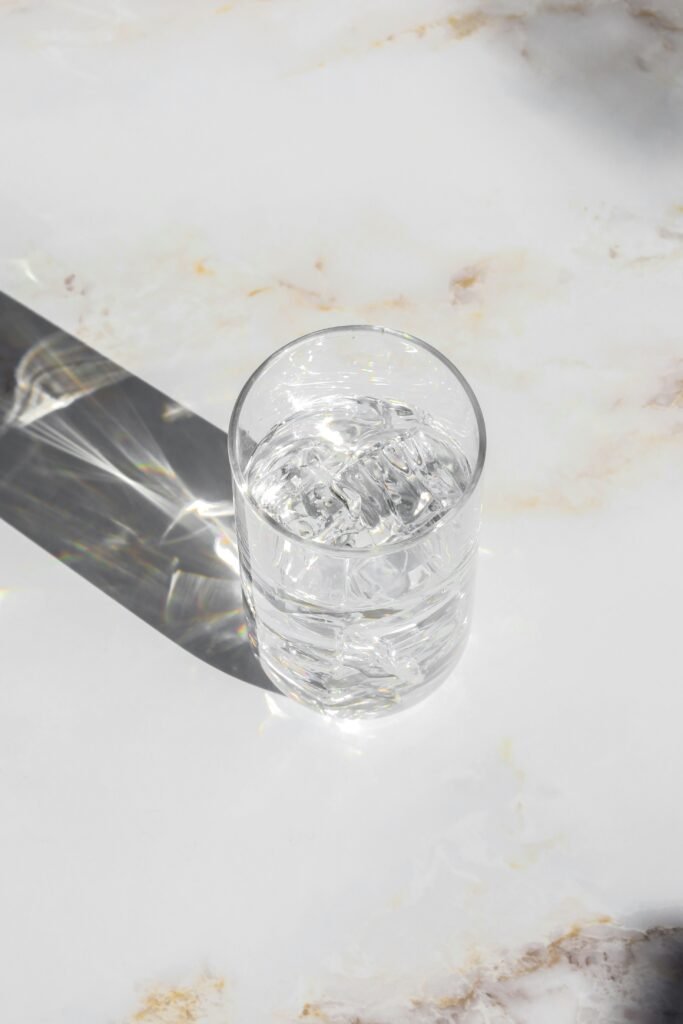
When plain tap water stops feeling like enough
There’s a specific point where people start questioning their water — usually not from thirst, but from a symptom. A headache that won’t lift with two glasses of tap water. A workout that leaves someone flatter than it should, cramping despite drinking “enough.” A hangover that plain water barely touches. That’s usually the entry point into mineral water as a category, not marketing copy but a felt experience of this isn’t working the way I expected it to.
The reason is straightforward, if underexplained: purified and distilled water is functionally empty. Reverse osmosis and distillation strip out contaminants, yes, but they also strip out the dissolved minerals — magnesium, calcium, potassium, bicarbonate — that were doing quiet metabolic work in natural spring water. Drinking stripped water isn’t harmful, exactly. It’s just less efficient at the one job people are drinking it for.
TDS: the number on the label that everyone misreads
TDS, or total dissolved solids, gets thrown around on premium water labels like it’s a badge of honor, higher is better, more is more. That’s not quite true, and it’s worth slowing down on.
TDS measures the combined weight of minerals and salts dissolved in a liter of water, expressed in milligrams per liter. Tap water usually sits somewhere between 50 and 400 mg/L depending on your municipal supply. Distilled and most purified bottled water hover near zero. Natural mineral waters — the kind sourced from protected aquifers in places like the French Alps, Fiji, or the Italian Dolomites — can range from 300 mg/L on the lighter end up to 1,500+ mg/L for the heavily mineralized varieties.
Higher TDS isn’t automatically better for you (a TDS of 3,000 would taste unpleasant and could stress the kidneys over time, which nobody wants). What matters more is composition — which minerals make up that number, and in what ratio. This is where the asymmetry lives, and it’s why a single “TDS score” on a label is a starting point, not the whole story.
Take magnesium, for example — usually somewhere between 20 and 130mg/L in these bottles, which sounds like a small number until you learn it’s a cofactor in over three hundred enzymatic reactions in the body. The one that matters most here regulates the sodium-potassium pump, which is the mechanism actually pushing water across a cell membrane. That’s the whole “better absorption” claim, stripped of the marketing language: it’s magnesium doing that specific job, not some vague vitality.
Calcium runs a wider range, anywhere from 50 to 500mg/L depending on the source, and it’s doing two things at once — supporting the electrical signaling behind muscle contraction in the short term, and, less glamorously, bone density if you’re drinking it consistently over years rather than weeks. Bicarbonate is the one I didn’t expect to care about, honestly, but it can run as high as 1,800mg/L in some heavily mineralized spring waters, and it’s one of the few dissolved compounds with real evidence behind easing digestive acidity after a rich meal. Sodium tends to stay low on purpose in premium “still” waters, usually under 20mg/L, because it works in the opposite direction from magnesium in that same pump — too much of it and the balance tips toward retention instead of the intracellular hydration you’re paying for.
And then there’s silica, which shows up in trace amounts, somewhere between 5 and 90mg/L, and gets talked about on labels with more confidence than the research actually supports. A handful of smaller studies link it to connective tissue support. That’s about where it stands — not nothing, but not settled either, and worth saying plainly since not every mineral on a bottle has equally strong science behind it.
The part where the science actually holds up
This is the section I expected to poke holes in. It didn’t fully cooperate — the research here is more solid than I assumed going in.
Cellular absorption isn’t about how fast water moves from your mouth to your bladder. It’s about how efficiently water crosses from your bloodstream into your actual cells, where hydration does its real work — regulating temperature, supporting joint cushioning, keeping cognitive function sharp. Osmosis drives that transfer, and osmosis is a mineral-gradient process. Water with zero dissolved solids has nothing pulling it across the cell membrane efficiently; it just sits in the bloodstream longer, which is part of why plain water alone doesn’t rehydrate as fast as, say, an electrolyte-rich mineral water after a long run or a flight.
This matters most in a few specific situations:
- During or after intense physical exertion, when sodium and magnesium are actively being lost through sweat
- On long-haul flights, where cabin pressure and dry air pull moisture out of tissue faster than usual
- The morning after drinking alcohol, when the body is already flushing electrolytes
- During illness involving fever or gastrointestinal upset, when fluid loss outpaces plain water’s ability to keep up
Outside those windows, plain filtered water does the job fine — which is, in fairness, not what the ten-dollar-bottle industry particularly wants people to hear.
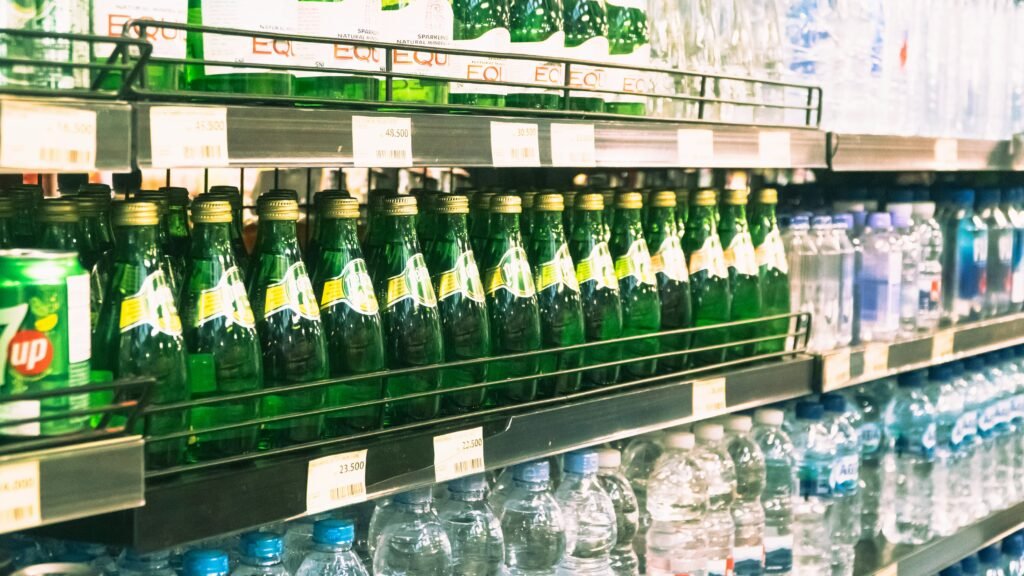
Mineral layering, or building a hydration ritual instead of a hydration habit
“Mineral layering” sounds like it was invented by a brand consultant, and it partly was, but the underlying idea is reasonable: don’t rely on one water source to do everything. Layer different mineral profiles depending on what your body’s asking for.
A lighter, low-TDS still water in the morning, before food, when the goal is simply flushing overnight dehydration without overwhelming an empty stomach. A higher-magnesium mineral water alongside or after physical activity, timed to when sweat loss is actually happening rather than on some fixed clock. A bicarbonate-forward sparkling mineral water with or after a heavy meal, where the buffering effect genuinely does something for digestion — this is one of the few claims in the category I’d actually stand behind without caveats.
My own fridge door currently has two bottles in it, not three, because the sparkling one kept going flat before I finished it and I gave up buying it. The still-water swap, though — keeping something lighter for mornings, separate from whatever mineral-heavy bottle I’m working through — that one stuck without me trying very hard. Less of that puffy, sluggish feeling before coffee. Small thing. Not nothing.
So is the ten-dollar bottle actually worth it
Here’s where I’ve landed, for what it’s worth, after going through all of this: most of what you’re paying for in the luxury water aisle is the glass, the sourcing story, and the shelf real estate — not superior science. The mineral chemistry underneath it is real, and it does something measurable in the body. But that ten-dollar price tag mostly isn’t about the chemistry. My own rule now is to spend on the good water when my body’s actually asking for it — post-workout, mid-flight, the morning after wine — and skip the premium bottle for the glass of water I drink at my desk at three in the afternoon. That one, tap does the job.
If you want to put any of this into practice without overthinking it, here’s roughly how I’ve been sorting it by situation, not by clock:
- Waking up, before coffee: low-TDS still water, small volume, to rehydrate without taxing digestion
- Pre- or post-workout: magnesium- and sodium-rich mineral water to support the cellular exchange that plain water can’t drive on its own
- After a rich or heavy meal: bicarbonate-forward sparkling mineral water for the buffering effect on digestion
- Flying, or any day in dry recycled air: consistent small sips of a mineral water with moderate TDS, rather than one large glass before or after
- The morning after alcohol: an electrolyte-forward mineral water, ideally before coffee, not instead of it
- Ordinary daytime sipping with no specific trigger: plain filtered water is genuinely fine — save the mineral-rich bottle for when your body’s chemistry is actually asking for it
This piece reflects general hydration science as understood at time of writing and isn’t a substitute for guidance from a doctor, especially for anyone managing kidney function, blood pressure, or electrolyte-sensitive conditions.
Leave a Reply