Six herbs, two very different medical philosophies, and one small ceramic mortar that humbled me on a Tuesday morning. This is a working comparison of eastern vs western medicinal herbs — ginseng, ginger, and centella asiatica against ashwagandha, chamomile, and rosemary — built for people who want to know what actually goes into their body before they take another supplement on faith. No rigid dosage charts here, just what each root, leaf, and extract is actually doing to your cortisol, your gut, your skin, and your sleep.
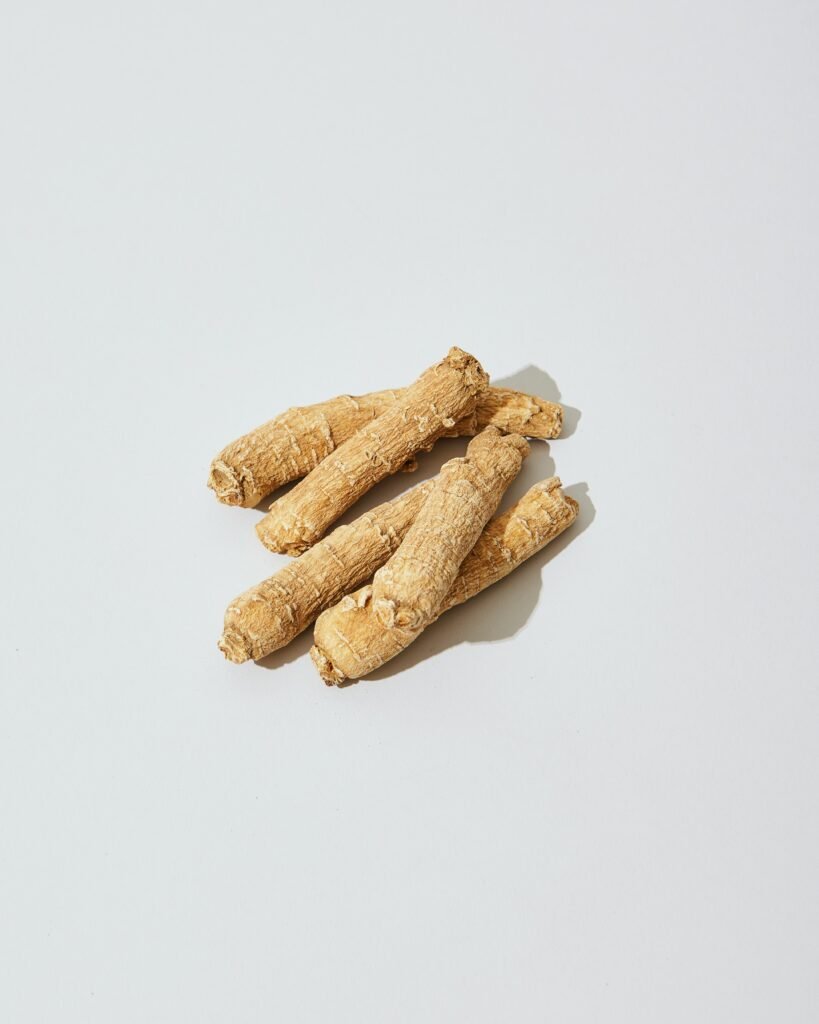
The root wouldn’t break. I had a dried slice of red ginseng in the mortar, maybe four centimeters across, and I was leaning my whole forearm into the pestle like I was trying to start a fire. It didn’t crack. It splintered a little at the edge and then just sat there, smug, while my coffee went cold on the counter behind me. I’d bought it because a friend swore it fixed her afternoon crash. I had no idea, at that point, that I was holding one half of a much older argument — Eastern herbalism versus Western herbalism — that most wellness content flattens into a single tidy “adaptogen” category and calls it a day.
It isn’t one category. That’s the first thing worth saying plainly.
Ginseng Doesn’t Calm You Down, and That’s the Point
Red ginseng — Panax ginseng, steamed and dried, which changes its chemistry — is not a relaxant. People expect it to feel like ashwagandha and then get confused when it doesn’t. Its active compounds, ginsenosides, work more like a metabolic nudge: they support mitochondrial energy production and immune modulation rather than sedating the nervous system. If ashwagandha is a hand on your shoulder telling you to sit down, ginseng is closer to a coach telling you to finish the set.
Panax Ginseng (Red) — Ginsenosides (Rb1, Rg1) | Immune modulation, mitochondrial ATP support, vitality and stamina under physical stress
The traditional use, going back over two thousand years in East Asian medicine, centered on qi — vital energy — and ginseng was considered a tonic for depletion, not a fix for acute anxiety. Modern research has focused mostly on its effects on immune cell activity and fatigue resistance, which, in fairness, took me longer to find solid sourcing on than I expected, since a lot of the ginseng literature is either overstated marketing or narrow rodent studies.
I never did get that root crushed properly. Ended up shaving it with a knife instead, which is apparently the more traditional approach anyway — mortars are for powders, not whole roots, a distinction nobody tells you until you’ve already dulled a pestle.
Ginger Is the One Herb Both Traditions Actually Agree On
This is the quiet exception in the whole comparison. Ginger shows up in Traditional Chinese Medicine as a warming digestive agent and in Western herbalism — going back to Greek and Roman texts — as an anti-nausea, anti-inflammatory root. Both traditions landed on roughly the same use independently, which is rare enough that it’s worth pausing on.
Ginger Root (Fresh & Dried) — Gingerol, Shogaol | Digestive motility support, systemic anti-inflammatory action via COX-2 inhibition pathways
Fresh ginger and dried ginger aren’t chemically identical, by the way — drying converts some of the gingerol into shogaol, which is more potent and more warming, which is exactly why TCM tends to prescribe dried ginger for “cold” digestive stagnation and fresh ginger for acute nausea. I didn’t know this until embarrassingly recently. I’d been buying whichever jar was cheaper at the store for about three years.
Centella Asiatica Is Doing More for Your Skin Than Your Serum Is
For repairing a skin barrier that’s been over-exfoliated, over-treated, or just tired — this is where centella, also called cica or gotu kola, earns its keep. It’s been used in Ayurvedic and Traditional Chinese medicine for wound healing for centuries, and now it’s the ingredient quietly listed on the back of half the “barrier repair” serums in Korean skincare, usually with none of the historical context attached.
Centella Asiatica (Cica) — Madecassoside, Asiaticoside | Collagen synthesis stimulation, wound-healing acceleration, barrier lipid restoration
The mechanism is fairly well-documented: madecassoside supports fibroblast activity, which is the cell type responsible for producing collagen and repairing connective tissue. It’s not a miracle compound. It’s a plant extract that happens to be good at one specific job, and the skincare industry noticed before the supplement industry did.
Ashwagandha Is Not a Sedative, Even Though It Gets Marketed Like One
Here’s the ashwagandha vs ginseng cortisol comparison people actually want, stated plainly: ashwagandha is classified in Ayurveda as a rasayana, a rejuvenating tonic, but its dominant modern research angle is HPA-axis regulation — the hypothalamic-pituitary-adrenal loop that governs your cortisol response to stress. Multiple human trials have shown measurable reductions in serum cortisol with consistent use, typically over eight weeks or longer, not overnight.
Ashwagandha Root Extract (Withania somnifera) — Withanolides | HPA-axis modulation, serum cortisol reduction, GABAergic support for stress resilience
I took it for about six weeks last winter and genuinely couldn’t tell if it was working, which is its own kind of honest data point — some people feel it distinctly, some people (me, apparently) need bloodwork to notice anything at all.
Chamomile Is Doing Chemistry, Not Just Ritual
For winding an overstimulated brain down before bed — chamomile’s reputation as a bedtime tea isn’t just cultural habit. Its primary flavonoid, apigenin, binds to GABA receptors in the brain, the same receptor family targeted by anti-anxiety medications, just far more mildly. That’s a real pharmacological action, not a placebo dressed up in a teacup.
Chamomile Flower (Matricaria chamomilla) — Apigenin | GABA-A receptor binding, mild anxiolytic and sleep-latency reduction
Western herbal medicine has used chamomile for digestive and nervous complaints since at least ancient Egypt. The tea ritual works partly because the compound works, and partly because making tea before bed is itself a signal to your body that the day is closing — the placebo and the pharmacology aren’t in competition, they’re doing the job together.
Rosemary Is for Focus, Not Just Roast Chicken
For brain fog and afternoon focus without reaching for more caffeine — rosemary’s rosmarinic acid has documented antioxidant and neuroprotective properties, and there’s a small but real body of research on ambient rosemary aroma improving memory performance in cognitive testing. It sounds like a stretch until you read the actual studies, which I did, skeptically, expecting nothing.
Rosemary Leaf (Rosmarinus officinalis) — Rosmarinic Acid, Carnosic Acid | Antioxidant neuroprotection, acetylcholinesterase inhibition supporting memory recall
Western tradition has used rosemary as a memory herb since antiquity — “rosemary for remembrance” isn’t just a Shakespeare line, it reflects centuries of folk use that modern neuroscience is now partially explaining.
Where East and West Actually Diverge, and Where They Don’t
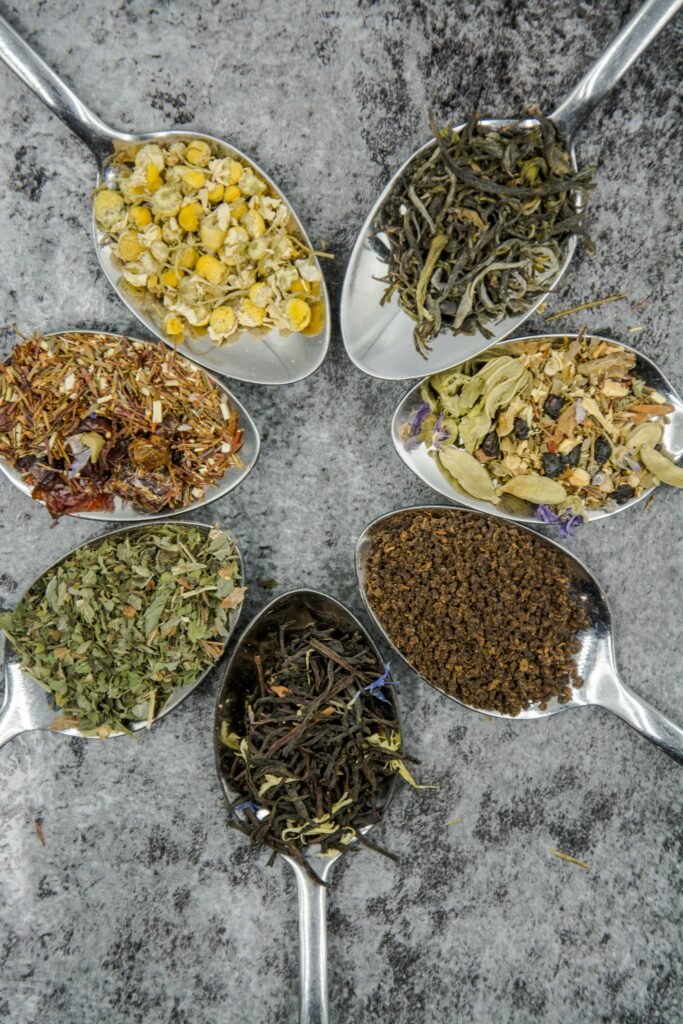
Eastern herbalism — TCM and Ayurveda both — tends to treat these plants as tonics for a whole constitutional pattern: your qi, your dosha, your long-term vitality. Western herbalism has generally isolated single compounds for single symptoms: apigenin for sleep, rosmarinic acid for cognition. Neither approach is more “correct.” One is systemic and slow. The other is targeted and mechanistic. Ginger is the rare herb both traditions claim with almost identical reasoning, which says something about how universal a good digestive anti-inflammatory really is.
Building an Actual Routine From This, Not Just a Supplement Drawer
Editor’s Note: Most “East meets West” wellness content treats these six herbs as interchangeable stress-relief tools, and that’s the part I’d push back on hardest. Ginseng and ashwagandha are not substitutes for each other — one is stimulating, one is calming — and taking both without understanding that distinction is how people end up wired and exhausted at the same time. Pick based on what your actual problem is, not on which root has better branding.
When managing systemic inflammation and sluggish digestion, Eastern roots first:
- Fresh ginger tea after heavier meals
- Red ginseng in small doses earlier in the day, never at night
When modulating cortisol and mental fog, Western botanicals first:
- Ashwagandha taken consistently, same time daily, for at least six to eight weeks before judging it
- Rosemary as tea or diffused oil during focused work blocks
When supporting skin barrier and tissue recovery:
- Centella-based topicals after any exfoliation or retinoid use
- Chamomile tea in the evening, partly for the apigenin, partly for the wind-down cue itself
None of this requires a cabinet full of tinctures. It requires knowing, before you buy anything, whether the herb in your hand is built to calm you or built to charge you — and reading the label like it’s actually going to answer that.
This article reflects general herbal traditions and available research, not personalized medical guidance — check with a doctor before combining any of these with existing medications, especially ashwagandha and thyroid or sedative prescriptions.
Leave a Reply