Late August does something specific to skin — it bakes the surface outdoors and freezes it indoors, and the result is a shine that looks like oil but behaves like a warning light. This piece walks through what is actually happening under that shine, why reaching for a water mist can make it worse, and the three-step evening routine I have been testing (with mixed early results, if I am honest) to put moisture back where it belongs before bed.
Last Tuesday at 6:47 PM, I stood in my kitchen holding a blotting sheet in one hand and a chilled iced coffee in the other, watching my own reflection in the microwave door look somehow both greasy and tight at the same time. I had been outside for maybe eleven minutes, walking from the subway to my apartment, and before that I had spent six hours under an office air conditioner set to what I can only describe as “meat locker.” My T-zone was shining like I had rubbed a candle across it. My cheeks, when I pressed a finger into them, felt papery. Not oily. Papery.
That contradiction is the whole story of summer skin in late August, and almost nobody talks about it the way it actually happens — mid-commute, mid-frustration, with a blotting sheet in hand.

Why Oily-Looking Skin Can Mean Dry Skin Underneath
Here is the part that took me embarrassingly long to understand, or so I assumed I understood it, until a dermatologist friend corrected me over dinner in July. Skin does not produce extra oil because it has too much moisture. It often produces extra oil because it does not have enough.
When the outer layer of skin loses water faster than it can hold onto it — through UV exposure, heat, and especially through the dry, moving air of an air conditioner — the skin reads that loss as an emergency. Dermatological research on skin barrier function describes this as a defensive response: the sebaceous glands increase oil output to try to slow the water loss and protect what is left. So the shine on my nose that evening was not extra richness. It was closer to a patch job. A slightly panicked one.
This matters because the instinct most people have — myself included, for years — is to treat shiny summer skin like it needs less moisture and more oil control. In my own experience, that instinct made things worse, not better.
The Water Mist Mistake I Was Making Without Noticing
I want to admit something unflattering here: I owned four different facial mists at once this summer. Rose water, thermal spring water, a “cooling” one with menthol, and a green tea version I bought specifically because the bottle was pretty. I sprayed one or another roughly every ninety minutes, convinced I was hydrating.
What I was actually doing, according to the research I read afterward, was closer to the opposite. Plain water sprayed onto dry skin sits on the surface briefly and then evaporates — and as it evaporates, it tends to pull existing moisture out of the skin along with it, a process sometimes called evaporative dehydration. Studies on humectant and occlusive skincare note that water alone, without something to hold it in place, offers a sensation of freshness that is genuinely temporary, sometimes leaving skin drier within the hour than before the spray.
I noticed this myself, unscientifically, on a walk home from the grocery store — my face felt cooler right after each spritz and tighter about twenty minutes later. I had chalked that tightness up to “clean” skin. It was not clean skin. It was thirstier skin.
None of this means water mists are useless. It means they need a partner — something to trap that water against the skin before it disappears into the air conditioning.
The Late Evening Routine I Started Instead
Around the third week of August, after that kitchen-and-blotting-sheet moment, I rebuilt my evening routine around one idea: rehydrate first, then seal, and do both while skin is still damp rather than after it has dried. This is roughly the order dermatology sources describe for barrier-compromised summer skin, and it is also, conveniently, the order that took the least effort at 10 PM when I was tired and not particularly patient.
1. A Lukewarm Water Splash, Not a Hot One
This step sounds almost too small to mention, and I nearly skipped writing about it for that reason. But the water temperature matters more than I expected. Hot water feels satisfying after a day of sweat and sunscreen, yet it strips away natural oils along with the sunscreen and grime, leaving the barrier more exposed than before. Lukewarm water — closer to room temperature than to a hot shower — rinses away the day without scrubbing off what little protective oil remains.
In my own trial, switching from a hot rinse to a lukewarm one didn’t produce any dramatic overnight change. What I did notice, after about four or five nights, was less of that tight, papery feeling the next morning. Small, unglamorous, but real.
2. Layering a Hydrating Water Serum Onto Damp Skin
This is the step most people, myself included, used to get backward. I used to towel-dry completely before applying anything, which — it turns out — wastes most of the benefit.
Ingredients known as humectants, such as hyaluronic acid, glycerin, and panthenol, work by drawing water toward themselves. If skin is bone dry when you apply them, they pull whatever moisture they can find from deeper layers of the skin, which is not the goal. Applied onto skin that is still slightly damp from the lukewarm splash, they instead grab onto that surface water and hold it in place — closer to a sponge soaking up water that is already there than a straw pulling from somewhere else.
I now keep my face damp on purpose, pat it maybe seventy percent dry with a soft towel, and press a water-based serum on in two thin layers rather than one thick one. Two thin layers, applied a minute or two apart, seem to sit better than one heavy coat that just beads up and rolls off — that was my mistake for most of July.
3. Sealing It Overnight With a Lightweight Occlusive
The last step is the one people skip most often in summer, usually out of fear of looking greasy by morning, and it is the one that made the biggest difference for me personally.
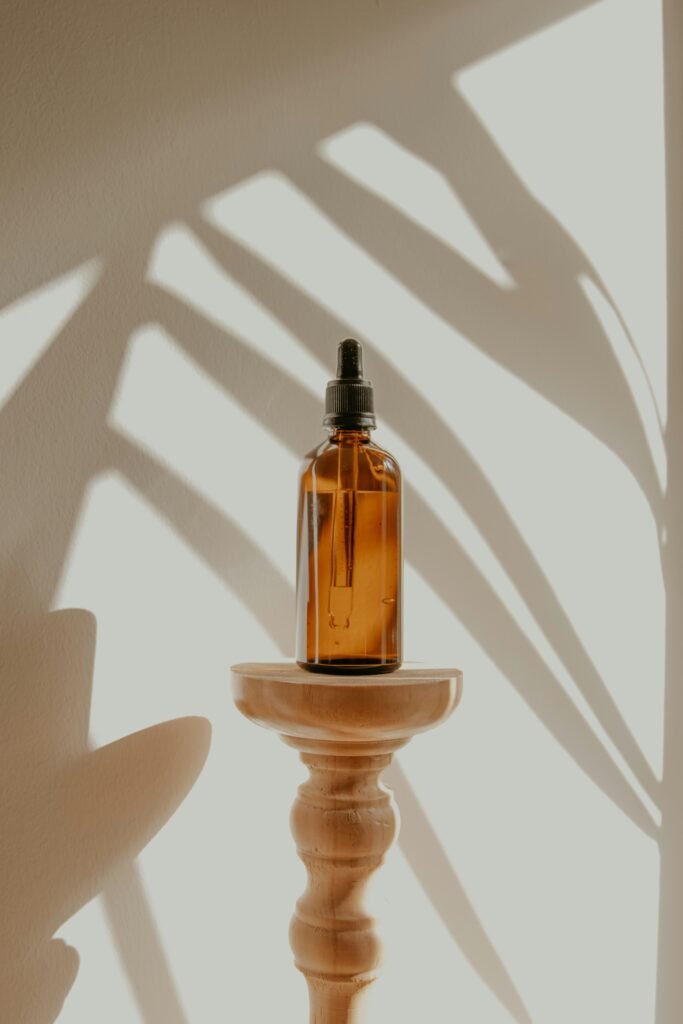
Occlusive ingredients — think squalane, certain plant oils, or a thin ceramide-based cream — form a light film over the skin that slows water from evaporating overnight. Dermatological literature on barrier repair frequently points to this combination of humectant plus occlusive as more effective than either used alone, since the humectant supplies the water and the occlusive keeps it from leaving. The key word for summer is lightweight. A heavy, thick night cream can feel suffocating in August heat; a thin layer of something like squalane oil, pressed on rather than rubbed in hard, tends to sit more comfortably.
I was nervous about waking up shiny. Mostly I didn’t. Two mornings out of the two weeks I tried this, my pillowcase told a different story, and I adjusted the amount down slightly. That adjustment period is, I think, the honest part nobody mentions — it is not a perfect formula from night one.
What This Isn’t
I should say plainly that this routine is not a fix for every kind of summer breakout, and it is not a substitute for sunscreen during the day or for seeing a dermatologist if skin is persistently inflamed, painful, or breaking out in a way that feels beyond ordinary dehydration. What it addressed, in my case, was the specific late-August combination of outdoor heat and indoor AC — the shine-and-tightness pattern rather than active skin conditions.
Editor’s Note: I am not going to pretend three steps solved a summer’s worth of air-conditioned skin damage in two weeks. They didn’t. What changed was smaller and, honestly, more useful — I stopped reaching for the mist bottle as a reflex and started thinking about what happens to that spray of water thirty seconds after it lands. If there is one thing worth taking from this whole exercise, it’s that sequence matters as much as product. Damp skin, then humectant, then something to seal it in. In that order, not reversed, not skipped.
How to apply this tonight:
- Rinse with lukewarm water in the evening, especially after a day spent moving between outdoor heat and air-conditioned rooms
- Pat skin only partially dry — it should still feel slightly damp to the touch
- Press on a hydrating water serum in two thin layers rather than one heavy application
- Follow with a lightweight occlusive (a thin oil or ceramide cream), pressed gently rather than rubbed in
- Skip the mid-day water mist unless you are applying a moisturizer or oil immediately after, while skin is still wet
This feature is intended for educational and inspirational purposes and reflects personal experience alongside general research; it is not a substitute for advice from a licensed dermatologist.
Leave a Reply