At-home LED masks are not mere marketing gimmicks; they deliver real cellular benefits by utilizing specific light wavelengths to stimulate collagen and soothe inflammation. While consumer devices operate at lower energy levels than professional clinical machinery, consistent daily or weekly usage yields visible skin firmness and clarity over time.
There is a particular kind of skepticism reserved for skincare tools that look like they belong in a spaceship. A glowing mask, a faint hum, a face bathed in red or blue light for fifteen minutes on a quiet evening — it feels equal parts spa ritual and science experiment.
For years, LED light therapy lived exclusively behind the doors of dermatology clinics. Today, it sits on bathroom shelves, marketed as a shortcut to firmer, clearer skin. But the question worth asking before spending on one of these devices is simple: is this legitimate cellular science, or an expensive glow-in-the-dark placebo?
The answer, backed by dermatological research, is more nuanced than either extreme. LED light therapy is grounded in real biology. The distinction lies in dosage, consistency, and realistic expectations.

The Science of Wavelengths: How Light Stimulates Skin Cells
LED therapy works because skin cells are, in a sense, light-sensitive. Different wavelengths penetrate the skin to different depths, and each depth reaches different cellular structures. This is the foundation of led light therapy wavelengths and why color matters far more than it might seem.
Red Light (~633nm) — Collagen and Firmness Red light penetrates the epidermis and reaches the dermis, where it interacts with mitochondria inside fibroblasts — the cells responsible for producing collagen and elastin. This interaction boosts cellular energy production, which in turn encourages fibroblasts to generate more collagen. Over weeks of consistent exposure, this shows up as smoother texture and firmer-looking skin. This is the mechanism most closely tied to collagen production claims.
Near-Infrared Light (~830nm) — Deeper Tissue Support Near-infrared wavelengths travel even deeper than red light, reaching subcutaneous tissue. It is often paired with red light in premium devices to support circulation and calm inflammation at a deeper structural level, complementing surface-level collagen stimulation.
Blue Light (~415nm) — Bacteria and Breakouts Blue light works through an entirely different mechanism. At approximately 415nm, it targets porphyrins — natural compounds produced by C. acnes, the bacteria linked to breakouts. When blue light hits these compounds, it triggers a reaction that helps neutralize the bacteria, making it a go-to wavelength for those managing acne-prone skin rather than signs of aging.
In short: red for firmness, near-infrared for depth, blue for clarity.
Leading Benchmark Devices in the Market in 2026
Not all LED masks are engineered equally, and output strength varies significantly across brands. A few globally recognized, FDA-cleared devices are frequently referenced as industry benchmarks for at-home use:
- CurrentBody Skin LED Mask — Known for a high LED count and even light distribution across the full face, combining red and near-infrared wavelengths for anti-aging support.
- Omnilux Contour — Originally developed from clinical-grade technology, this device is often cited for its flexible, contouring fit and multiple wavelength settings.
- Dr. Dennis Gross DRx SpectraLite FaceWare Pro — A dermatologist-developed mask combining red and blue LEDs, positioned as a dual-purpose device for both aging concerns and occasional breakouts.
What separates these benchmark devices from budget alternatives isn’t just brand recognition — it’s LED density, wavelength accuracy, and even light diffusion across the entire face, all of which directly affect how much of the skin actually receives a therapeutic dose.
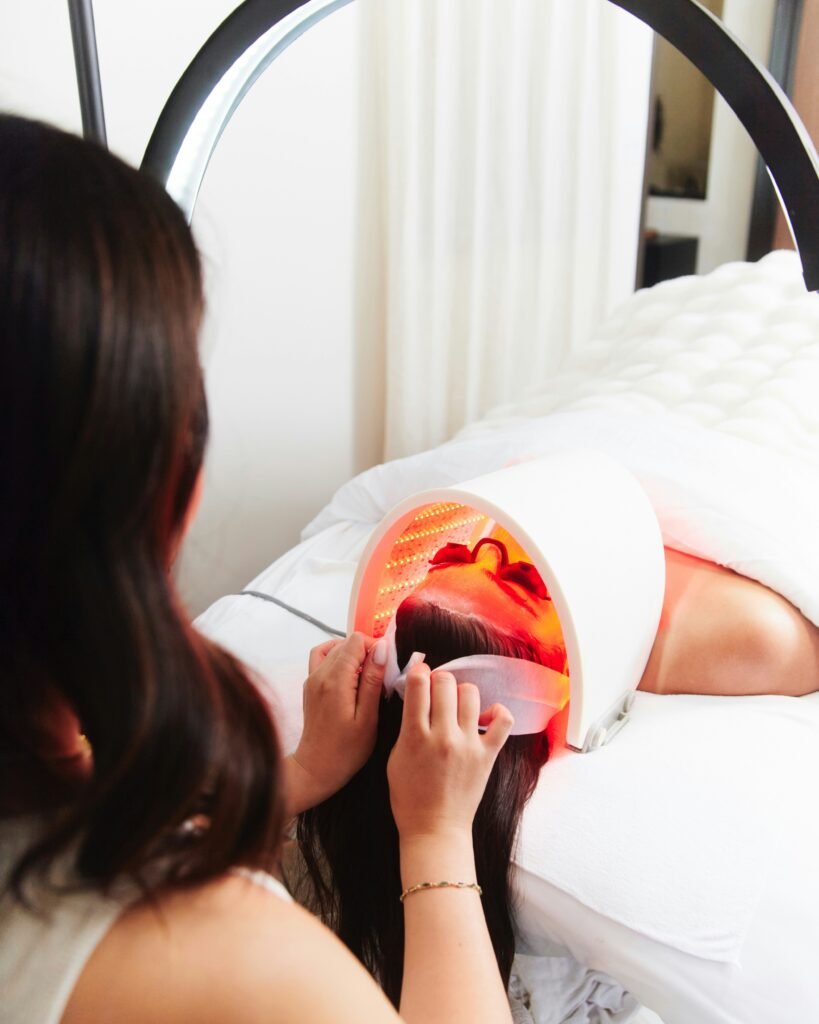
At-Home LED Devices vs. Professional Clinical Treatments
The central difference between beauty device vs dermatologist treatments comes down to power output. Clinical machines are simply stronger, which changes the pace — but not necessarily the direction — of results.
| Factor | At-Home LED Devices | In-Clinic Dermatologist Treatments |
|---|---|---|
| Power Output / Irradiance | Lower energy density; designed for safe, unsupervised daily use | Significantly higher irradiance for deeper, faster cellular response |
| Treatment Frequency | 3–5 times per week, often as an ongoing habit | Typically scheduled in sessions, spaced weeks apart |
| Cost Investment | One-time device purchase, no recurring fees | Per-session pricing, often requiring a treatment package |
| Speed of Results | Gradual improvement over 8–12+ weeks | Faster, more visible results within fewer sessions |
Neither approach is inherently “better” — they serve different needs. Clinical treatments suit those seeking accelerated, dramatic change under professional supervision. At-home devices suit those investing in long-term, low-effort maintenance.
3 Essential Rules for Safe and Effective At-Home LED Routines
Getting real value from an at home led mask isn’t about using it constantly — it’s about using it correctly.
1. The Clean Slate Rule: Bare Skin Application Light needs a clear, direct path to the skin. Apply the device to freshly cleansed, bare skin — before serums, oils, or moisturizer. Heavy products can sit on the surface and block wavelengths from properly penetrating.
2. Consistency Over Intensity: 10–15 Minute Limits More is not better with light therapy. Sessions of 10 to 15 minutes, done consistently several times a week, outperform occasional long or overly frequent use. Cellular response builds cumulatively, not instantly.
3. Post-Treatment Barrier Hydration & Daily Sun Protection Follow each session with a hydrating moisturizer to support the skin barrier while it processes the light exposure. Daily SPF remains essential, as healthy, light-stimulated skin still needs protection from UV damage the following day.
RAWZY’s Final Notes
- On Eye & Skin Safety: FDA-cleared LED masks are safe for daily skin tissue when used correctly. Just ensure your device includes physical eye shields, and skip light therapy sessions if you’re currently on photosensitizing medications or recovering from aggressive chemical peels.
- On Results Timeline: Don’t expect overnight miracles. You’ll likely see a healthy glow and smoother texture within 4 to 6 weeks, but structural firming and fine-line softening require 8 to 12 weeks of consistent, 3-to-5-times-weekly sessions.
Note: Light needs a clear path. Always use your LED device on freshly cleansed skin before layering thick serums or barrier creams.
Disclaimer: The information provided in this article is for educational and informational purposes only and does not constitute dermatological or medical advice. Always consult a qualified dermatologist or medical professional before introducing new light-emitting devices to your skincare regimen.
Leave a Reply