Fruit isn’t the villain in summer bloating — timing is. Eaten right after a heavy meal, high-water fruits like watermelon and pineapple can sit and ferment behind slower-digesting food, which is where the gas and the 3pm crash actually come from. Move that same fruit to fifteen minutes before eating, or pair it with a little protein, and the enzymes in it (bromelain, papain) get to do their actual job instead of stalling in a digestive traffic jam. None of this requires giving up fruit. It requires moving it.
Standing over the sink with a half-eaten slice of watermelon, sticky juice running down my wrist, and there’s this heaviness sitting right under my ribs that wasn’t there twenty minutes ago. I’d just finished a full lunch — rice, grilled fish, the works — and then, because it was 34 degrees out and the fruit was already cut and chilled in the fridge, I ate it anyway. Immediately. Standing up, over the sink, like a raccoon.
That heaviness isn’t imagination. It’s fermentation.
Why the fruit-right-after-lunch habit backfires in summer
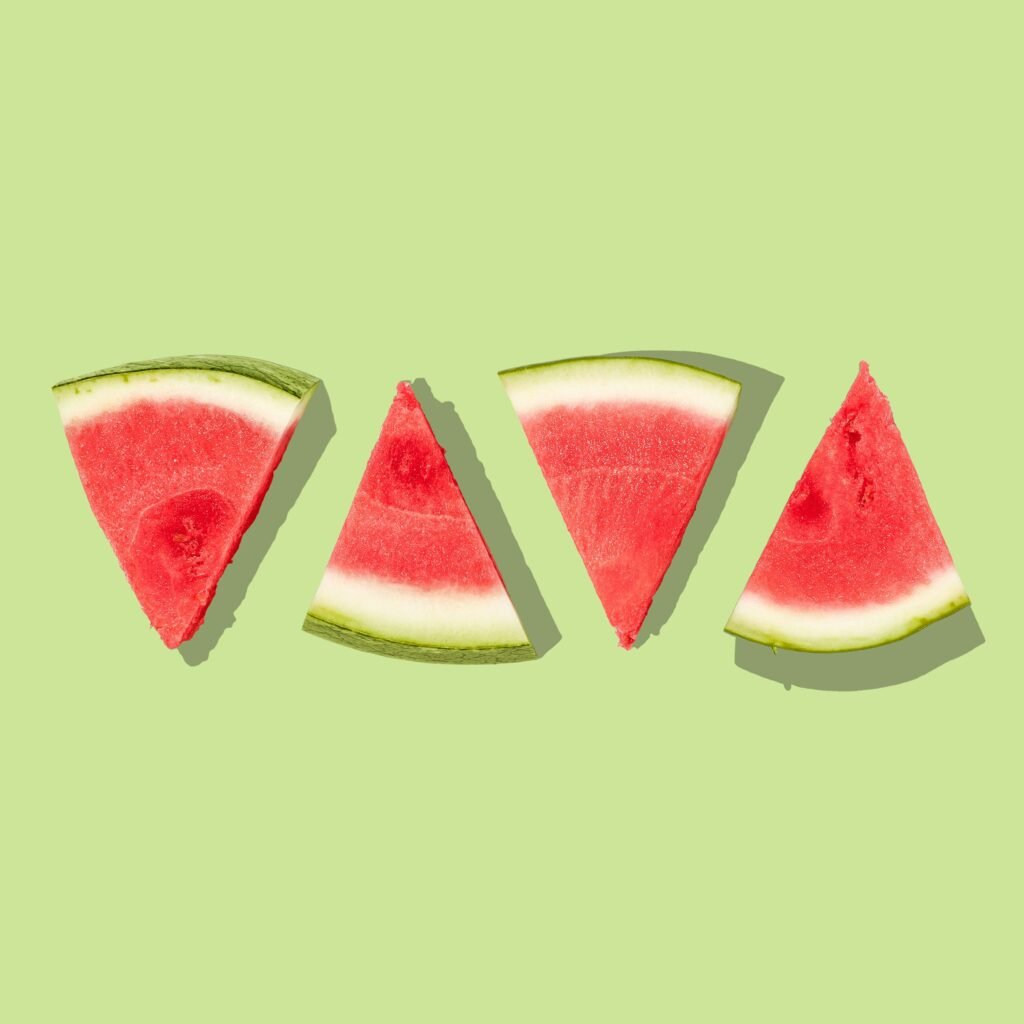
Watermelon, oriental melon, pineapple — these are fast fruits. High water content, simple sugars, minimal fiber to slow things down. On their own, they clear the stomach in under 20 minutes. But stomachs don’t process food in the order it arrives; they hold everything together and work through it as a mixed batch, roughly at the pace of the slowest item on the plate.
So when fast fruit lands on top of a protein- and fat-heavy meal — which, in summer, is often still sitting there two-plus hours later — the fruit’s sugars don’t get a clear runway. They wait. And in a warm, moist stomach environment, waiting sugar starts to ferment. That’s the gas. That’s the pressure under the ribs. That’s not “your body being sensitive,” it’s chemistry doing something chemistry reliably does when you give it the conditions for it.
This is the whole mechanism behind why summer fruit timing prevents bloating in a way that summer fruit avoidance never really addresses — the fruit isn’t the problem, the queue position is.
(I was skeptical of this the first time someone explained it to me — it sounded like one of those wellness rules invented to make people anxious about a piece of fruit. It isn’t. It’s just sequencing.)
The fruit glucose spike nobody blames on timing
There’s a second, separate issue, and it’s about blood sugar rather than gas.
Fruit like watermelon has a high glycemic index — its sugar is simple and absorbs fast. Eaten alone, that’s a quick, short spike that resolves cleanly. Eaten after a full meal, though, it lands on top of glucose that’s already elevated from the meal itself, pushing the total spike higher than either the meal or the fruit would cause separately. Insulin responds hard to bring it back down — and it often overcorrects, which is the actual mechanism behind that flattened, foggy, needs-a-nap feeling around 3pm. Not “the heat.” Not “just tired.” A stacked glucose spike followed by an insulin overcorrection.
This is where eating fruit before meals digestion research gets genuinely practical instead of abstract: fruit eaten on a relatively empty stomach, roughly 15 minutes ahead of the meal, spikes and clears before the meal’s own glucose load even begins. Two separate, manageable curves instead of one compounded one.
Situational fixes, not a fruit schedule
I don’t think in mealtimes anymore for this, honestly — I think in triggers. Here’s roughly how that breaks down:
When a high-water fruit is about to follow a heavy, starchy meal — watermelon, melon, pineapple after rice, noodles, or anything fried — that’s the fermentation-risk combination. Shift the fruit earlier, or push it out 90 minutes to let the meal clear first.
For consuming natural digestive enzymes 15 minutes before protein intake — pineapple and papaya both carry active enzymes (bromelain and papain respectively) that assist in breaking down protein. Eaten before a protein-heavy meal, they arrive early enough to actually help digestion instead of just contributing to backlog.
When blood sugar stability matters more than convenience — a mid-afternoon slice of fruit on its own, stomach not full, is a clean, self-resolving glucose spike. The same fruit stacked onto a full plate is a compounded one.
A rough spec breakdown, organized by mechanism rather than a rigid table:
- Watermelon — 92% water, high GI (~72) | Ferments fast when delayed behind a full stomach; best 15–20 min pre-meal or as a standalone snack, not a topper.
- Pineapple — Bromelain-active, moderate GI (~59) | Enzyme works best on an empty-ish stomach ahead of protein; loses most of its digestive benefit when eaten as dessert after the protein’s already been chewed and swallowed.
- Oriental melon (chamoe) — ~90% water, high natural sugar | Similar fermentation risk to watermelon; smaller portions spread earlier in the day outperform one large serving post-dinner.
- Papaya — Papain-active, lower GI (~60) | Gentlest on digestion of the four; still benefits from a gap before or after heavier meals rather than immediately following one.
None of this is a ban list, to be clear. It’s a sequencing list.
I’ll admit the habit took a while to stick for me — I kept forgetting and eating melon straight out of the fridge the second lunch ended, out of pure reflex, for probably two weeks before it became automatic to just… wait, or eat it first. Old habits don’t restructure themselves in a day, even ones this small.
Where this actually shows up in a day
It’s not really about watermelon at 3pm versus watermelon at noon. It’s about what’s already in the stomach when the fruit arrives.
A morning bowl of fruit before anything else — plain, unstacked — is close to a best-case scenario digestively. Fruit as a pre-lunch appetizer, 15 minutes ahead, gives the sugar its own runway and lets enzymes like bromelain get a head start on the meal that follows. Fruit as dessert, immediately after a full plate, is the version most likely to produce both the bloated, heavy feeling and the crash an hour or two later.
Small shift. Same fruit, same amount, different position in the sequence.
The Real Fix Isn’t Less Fruit, It’s Better Placement
Editor’s Note: Most “summer bloating” advice tells people to eat less fruit, which is backwards and, frankly, a little lazy as advice goes. Fruit isn’t the aggressor here — meal sequencing is. I’d rather see someone eat more watermelon, moved fifteen minutes earlier, than less watermelon eaten at the wrong moment out of guilt.
How to apply this:
- Pre-Meal Timing: Eat high-water fruit (watermelon, melon) 15–20 minutes before a meal, not after — lets sugar clear before the meal’s glucose load starts.
- Protein Pairing: Eat bromelain- or papain-rich fruit (pineapple, papaya) ahead of protein-heavy dishes so the enzymes are active when digestion needs them.
- Glycemic Balance: If fruit must follow a meal, wait at least 60–90 minutes rather than eating it as an immediate dessert.
- Portion Awareness: Smaller, more frequent fruit servings across the day beat one large post-dinner bowl for both bloating and energy stability.
This reflects general digestive patterns, not individual medical guidance — if bloating is persistent or severe, that’s a conversation for a doctor, not a magazine article.
Leave a Reply