A tablespoon or two of genuinely high-phenolic extra virgin olive oil, taken before food, does something more specific than “boosting health” — it slows the rate at which sugar from the meal that follows hits your bloodstream, and it delivers a small, sharp dose of anti-inflammatory compounds your gut bacteria seem to like. It is not a cure for anything. It is, at best, a fifteen-minute head start on a smoother glucose curve — and one habit that’s easier to keep than most.
The first tablespoon goes down fine. It’s the second that gets you — a tightening at the back of the throat, a cough that turns into something close to a laugh, one hand gripping the edge of the sink while the dog looks up like something’s wrong. Nothing’s wrong. This is just what a genuinely high-phenolic extra virgin olive oil does on the way down. It bites.
That bite has a name, more or less — the morning olive oil shot. One or two tablespoons, straight, ideally around fifteen minutes before the first real food of the day touches a plate. No juice chaser, no honey to soften it, no Instagram lighting required (though people do it anyway). It’s been circulating in wellness circles for a couple of years now, usually stripped of any real explanation, which is a shame, because the mechanism underneath it is more interesting than the ritual.
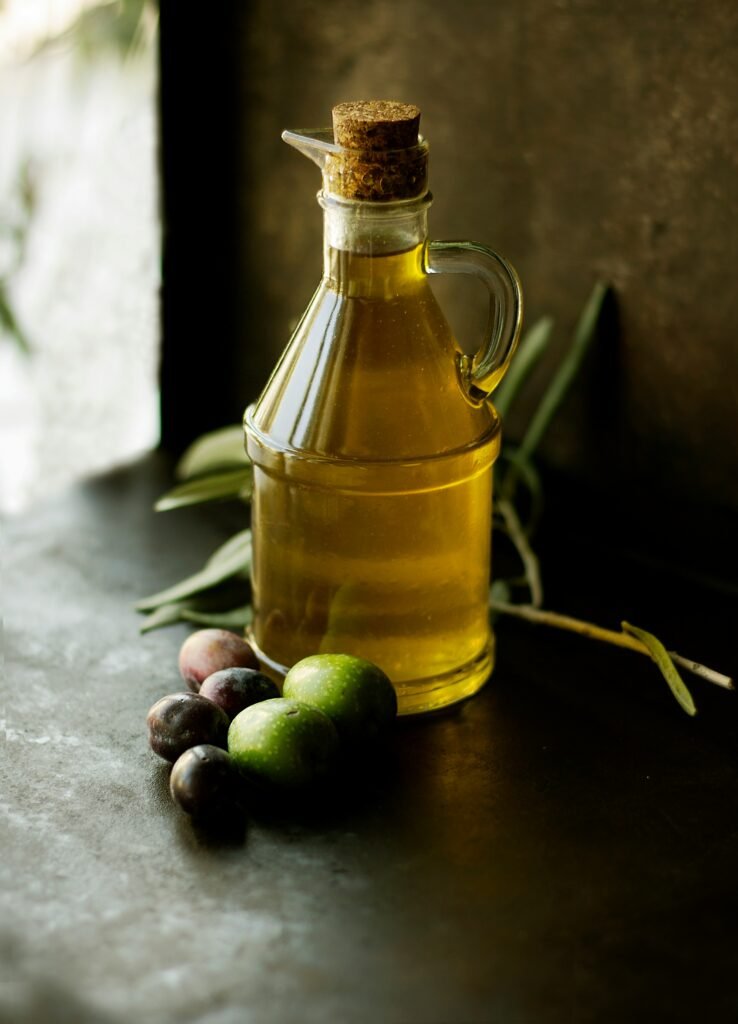
What’s actually happening between the spoon and the stomach
Fat slows digestion. That’s not new information — it’s why a slice of pizza sits heavier than a rice cake. What’s less obvious is that a spoonful of oil taken ahead of a carbohydrate-heavy meal can measurably blunt the glucose spike that meal would otherwise cause, largely by delaying gastric emptying — the rate at which food actually leaves your stomach and enters the small intestine, where sugar gets absorbed.
Slow that handoff down, and the sugar arrives in smaller, more manageable waves instead of a flood. Several small human trials on olive oil preloads (the fifteen-minutes-before-a-meal version, not the empty-stomach-and-nothing-else version) have shown lower post-meal glucose and insulin responses compared with the same meal eaten without the oil first. It’s a mechanical effect as much as a biochemical one — the oil is, quite literally, in the way.
I was skeptical of this part, honestly, until I started checking my own numbers with a continuous glucose monitor for an unrelated reason and noticed the mornings I’d done the oil-first thing had noticeably flatter curves after breakfast. Correlation, not proof. But it matched the literature closely enough that I stopped assuming it was placebo.
The compound doing the coughing
That throat-catching bite isn’t a flaw in the product — it’s the point. It comes from oleocanthal, a phenolic compound found almost exclusively in extra virgin olive oil, and it behaves, structurally, in a way that mimics ibuprofen: it inhibits the same COX enzymes involved in the body’s inflammatory response. Researchers first noticed the resemblance because lab assistants tasting fresh Tuscan oils kept describing the same throat sensation people get from liquid ibuprofen. That’s not a metaphor. It’s the same physical mechanism.
Oleocanthal doesn’t work alone. High-phenolic EVOO also carries oleuropein and hydroxytyrosol, both of which have shown, in cell and animal studies, an ability to reduce oxidative stress markers and support the population of beneficial gut bacteria — feeding the microbes associated with short-chain fatty acid production, which in turn plays its own role in metabolic regulation. None of this is settled science at the level of, say, “smoking causes lung cancer.” It’s promising, mechanistically coherent, and still being worked out in longer human trials.
Here’s the asymmetric breakdown, compound by compound:
- Oleocanthal — throat-catching intensity, roughly correlated with total phenolic content above 250 mg/kg | Inhibits COX-1 and COX-2 enzymes in a manner structurally similar to ibuprofen; linked to reduced systemic inflammatory markers over sustained intake.
- Oleuropein — present in fresh, unripe-harvest oils at higher concentrations, drops with oil age | Antioxidant activity that appears to reduce LDL oxidation, one of the early steps in arterial plaque formation.
- Hydroxytyrosol — a breakdown product of oleuropein, increases as the oil sits | Shown in cell studies to reduce oxidative stress in mitochondria and support cellular repair signaling.
- Total phenolic count — measured in mg/kg, “high-phenolic” generally means anything above 500 mg/kg | Correlates with both the pepper-throat sensation and the strength of the glucose-blunting effect; low numbers mean less of everything above.
Why the bottle matters more than the ritual
This is the part that gets skipped in most write-ups, and it’s the part that actually determines whether any of this does anything: not all olive oil is olive oil, functionally speaking. Refined and “light” olive oils — the pale, mild, tasteless kind that dominates a lot of supermarket shelves — go through heat and chemical processing that strips out most of the phenolic compounds along with the flavor. You could drink a full glass of it and get closer to a fat supplement than a metabolic intervention.
- Refined / “light” olive oil — phenolic content near zero, smoke point technically higher | Minimal oleocanthal or oleuropein activity; functions mostly as neutral dietary fat with little to no glucose or inflammatory benefit.
- Standard commercial EVOO, mixed sourcing, unclear harvest date — moderate phenolics, wide variance | Some benefit likely, but potency is inconsistent bottle to bottle, and mislabeling in this category is a documented, ongoing problem.
- Single-estate, early-harvest, high-phenolic EVOO — verified 500+ mg/kg on the label or lab sheet | The version most studies are actually testing; noticeably bitter and peppery, which is the marker of freshness rather than a flaw.
If a bottle tastes like nothing, it’s probably doing close to nothing. That bitterness and throat-catch aren’t aggressive marketing — they’re closer to a nutrition label you can taste.
(I kept a mid-shelf grocery-store bottle in rotation for months before I understood any of this, assuming olive oil was olive oil — which, in fairness, most cooking situations don’t require you to think this hard about.)
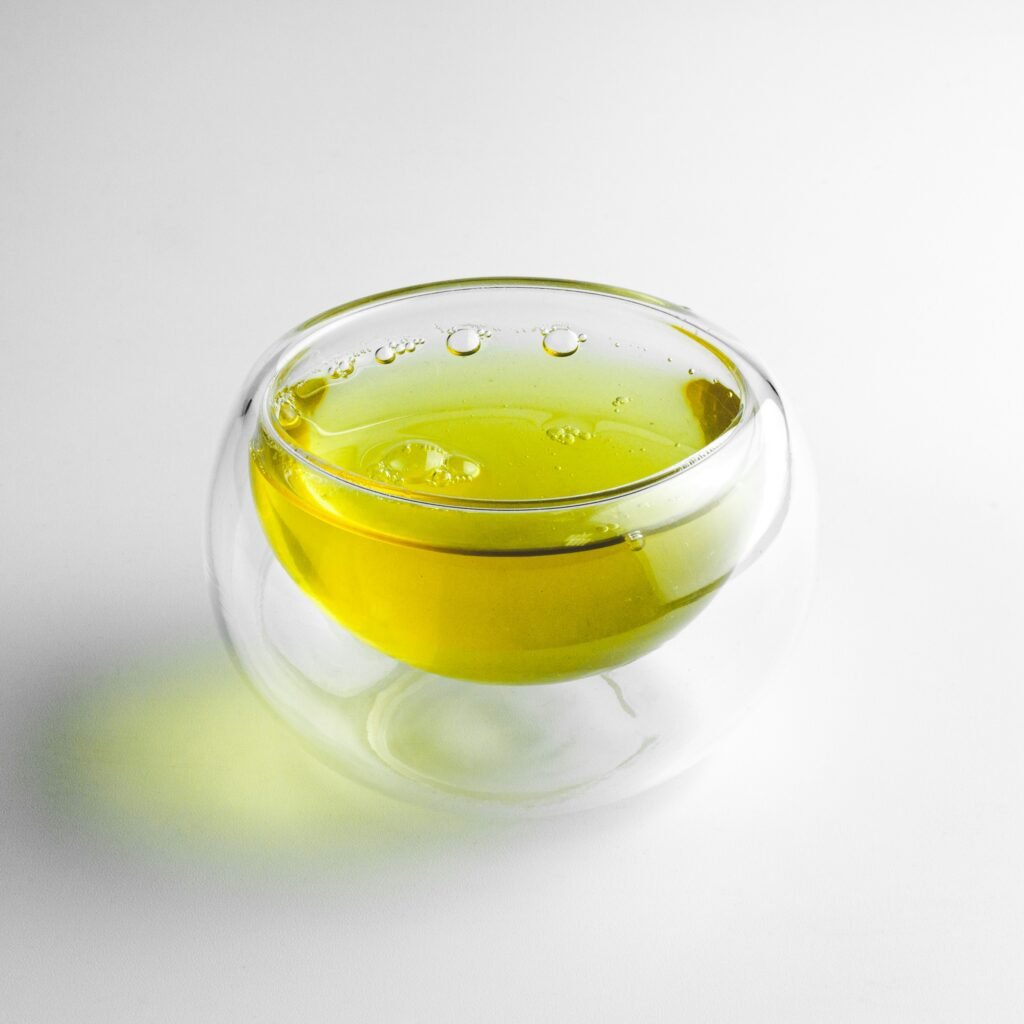
Building the habit without turning it into a ritual
None of this needs a ceremony. It needs fifteen minutes and a spoon, more or less, and the honest version of that habit looks less tidy than the wellness-account version.
When taking it 15 minutes before a carbohydrate-heavy meal — pasta, rice, bread, cereal — this is where the gastric-emptying delay has the most to work with. A shot before a plain protein-and-vegetable dinner does far less, because there’s less of a glucose spike to blunt in the first place.
When taking it on a genuinely empty stomach, first thing — the effect shifts more toward the inflammatory and gut-microbiome side than the glucose side, since there’s no subsequent meal to slow down for another hour or more. Some people prefer this version simply because it’s easier to remember; there’s no meal-timing math involved.
When the goal is consistency over intensity — one tablespoon daily, kept up for months, appears to matter more than two tablespoons taken sporadically. This is, admittedly, the least exciting sentence in this entire article, and also probably the most important one.
I dropped the habit for most of a winter, not out of any decision, just — life got busy, the good bottle ran out, I bought a mediocre replacement and never opened it. Picked it back up in spring mostly because I missed the taste, not the supposed benefits. That’s probably the more honest predictor of whether a habit like this survives: does it taste like something you’d want anyway, or does it feel like medicine.
So, Is the Shot Worth It?
Editor’s Note: I don’t think this needs to be a separate ritual for most people — if you’re already cooking with a decent, high-phenolic olive oil and using real amounts of it on vegetables and bread at meals, a fasted shot is probably marginal on top of that. Where it earns its place is for people who barely use olive oil at all, or who eat a genuinely carb-heavy breakfast and want one low-effort lever to pull. It’s a good habit. It is not a substitute for the rest of the plate.
How to actually apply this:
- Quality selection — look for a harvest date within the last year, not just a “best by” date; check for a phenolic content or bitterness/pungency rating on the label if the producer publishes one; avoid anything labeled “light,” “pure,” or “extra light.”
- Timing triggers — take it roughly 15 minutes before carbohydrate-dense meals for the strongest glucose-blunting effect; take it on an empty stomach if consistency matters more to you than optimizing for one specific meal.
- Meal pairing — pair with breakfasts that would otherwise spike blood sugar fast (cereal, pastries, juice); pair less deliberately with meals already low in refined carbohydrate, where the effect has less to work against.
This article describes general metabolic mechanisms discussed in nutrition research and is not medical advice; if you’re managing diabetes, taking blood thinners, or have a diagnosed digestive condition, talk to a doctor before adding a daily olive oil shot to your routine.
Leave a Reply